

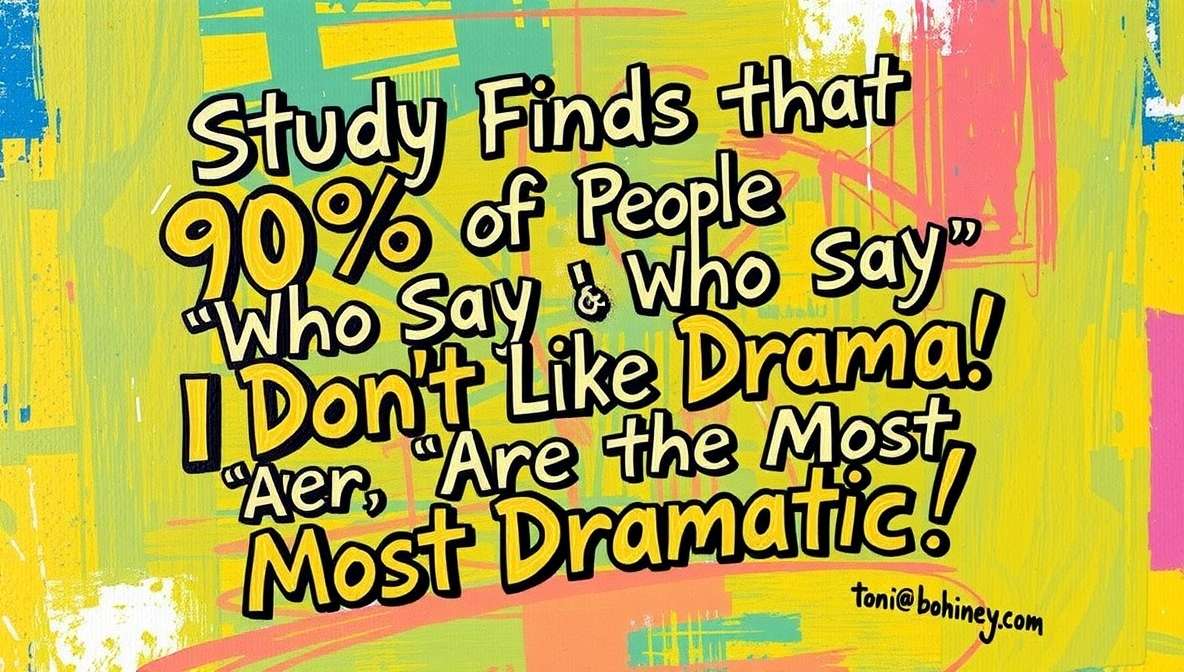
Study Finds That 90% of People Who Say ‘I Don’t Like Drama’ Are the Most Dramatic
A groundbreaking social science study confirms what many have suspected all along: people who claim to “hate drama” are often the largest contributors to it. Conducted by the Institute for Everyday Irony, the study observed over 2,000 participants in workplace, family, and grocery store settings.
Dr. Lionel Sloane, who co-authored the study, explained, “When someone says ‘I can’t handle drama,’ that’s typically a declaration that they are about to manufacture a very particular kind of drama, usually involving passive-aggressive communication or elaborate Instagram posts.”
Eyewitnesses corroborated the findings. Jane Mills of Cedarville said, “My coworker spent three hours complaining she hates office drama… then organized a seven-person meeting about how everyone’s coffee mugs are the wrong size.”
The study also found that this behavior increases exponentially on social media platforms, where self-proclaimed drama-averse individuals create highly engaging viral conflicts. Workplace psychology experts note this pattern aligns with broader trends in organizational behavior.
