

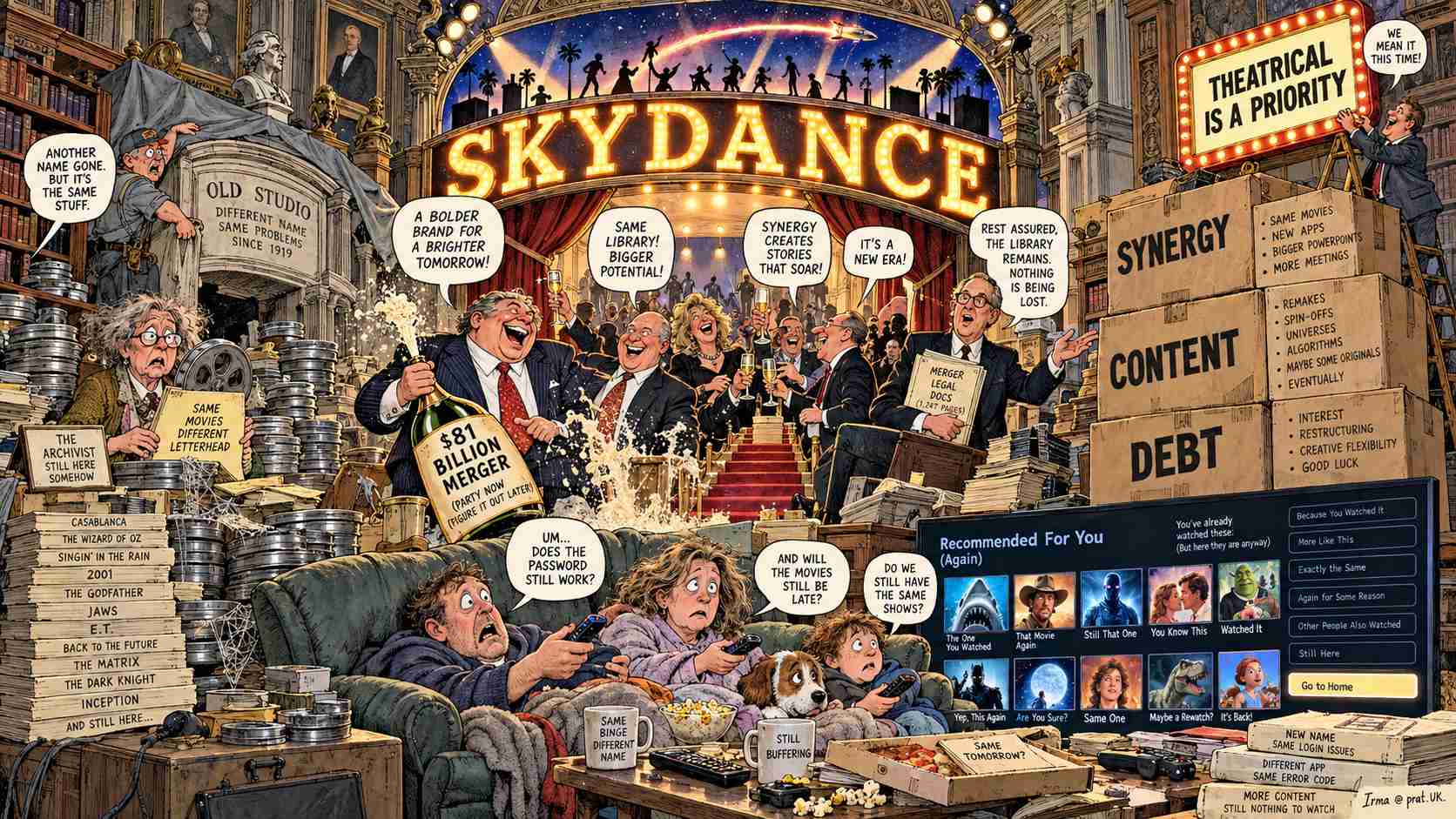
Eighty-one billion dollars buys the library, the franchises and a single word that nobody can search for.
BURBANK – Eighty-one billion dollars, and the new name is Skydance. Warner’s gone. Bros. is gone. Discovery’s gone. Paramount’s gone. Pictures is implied, the way a vest implies a guy. What’s the deal with a merger that keeps everything except the words you use to find it.
The Deal by the Numbers: $31 a Share, $81 Billion in Equity
For anyone keeping score at home, Warner Bros. Discovery shareholders approved the sale to Paramount Skydance in April at $31 a share. That’s roughly $81 billion in equity and something closer to $111 billion once you count the debt. The bid started as a hostile one, with Netflix drifting in and out of the picture before deciding the price had stopped being attractive. I mention this because it’s the only part of the story that involves anyone saying no.
What Happens to the Library When a Studio Disappears Into a Brand
They said the library stays the library. The films haven’t been melted. That’s the good news, and it’s a low bar. The bar used to be “we made a movie.” Now the bar is “we have not destroyed the old movies while purchasing the building.” Branding people call the single name clarity. Archivists call it a fire with a logo. A spokesperson said the library remains, which is true in the way your furniture remains when you move in with somebody and they put it in the garage.
Synergies, Scale and the Creative Community
Every one of these promises synergies. Synergy means fewer people deciding which superhero stands on the X. Executives say the creative community benefits from scale. The creative community, through its agents, asked if scale includes a yes. A yes is the only scale anybody on that side of the call has ever wanted. You can stack as many companies as you like. The stack doesn’t write the second act.
Theatrical Releases and the Fate of the Movie Theater
Theater owners asked if the movies still come out in buildings, or only in the app that ate the other app. The company said theatrical is a priority. Theatrical has been a priority since priority became a word you say to people who own buildings. Exhibitors clapped and checked the calendar, which is the adult version of clapping.
Try typing “Skydance” into a search bar and see what comes up. Go ahead. It’s a perfectly fine word, and it’s also the name of roughly four things already, one of which is a yoga studio. Naming experts will tell you a distinctive brand is an asset. I’ve been in marketing meetings. I know how this goes. Somebody says the name out loud, the room nods, and nobody checks what the average fan types into a phone when they want to find a Batman movie. It will not be that word.
Antitrust and Competition: Who Reviews a Merger Like This
Rivals call it a threat to competition. The company calls it an answer to competition from outfits that don’t make movies and don’t have to. Both fit. You, on the couch, do not experience competition. You experience a menu. The menu takes four seconds. Then it recommends the thing you already watched, because the thing you already watched is the only person in the relationship who shows up.
On paper, somebody is supposed to care about this. The Federal Trade Commission describes its merger review process as an effort to block deals that reduce competition and lead to higher prices, lower quality or less innovation. The Justice Department shares that job, and the Mediaite report on the shareholder vote noted that DOJ sign-off was the remaining hurdle. Whether a deal this size got the scrutiny the brochure promises is a question for people with law degrees and a lot more patience than I have.
Spare a thought for the people who work there. Anybody who’s been through a merger knows the pattern: the all-hands meeting with the cheerful slide, the vague email about “alignment,” the quiet disappearance of three desks on the fourth floor. Nobody announces who’s staying. You find out when your badge stops opening a door.
Debt, Integration and the Price of Having Won
The $81 billion will be described, all year, as content, debt, and the price of having won. Shareholders will be told the integration is on track. The track is the only road left, so the integration is undefeated. Somewhere in the library is a film about a merger. It’ll be on the service, under the new name, in a tile slightly smaller than the tile for the show about the divorce.
The Password Is the Product
The audience wasn’t asked about the name. The audience will keep paying until it doesn’t. Skydance said the future of entertainment had arrived. The future wanted to know if the password still works. The password works. The password always works. That’s the $81 billion. Not the pictures. The password.