

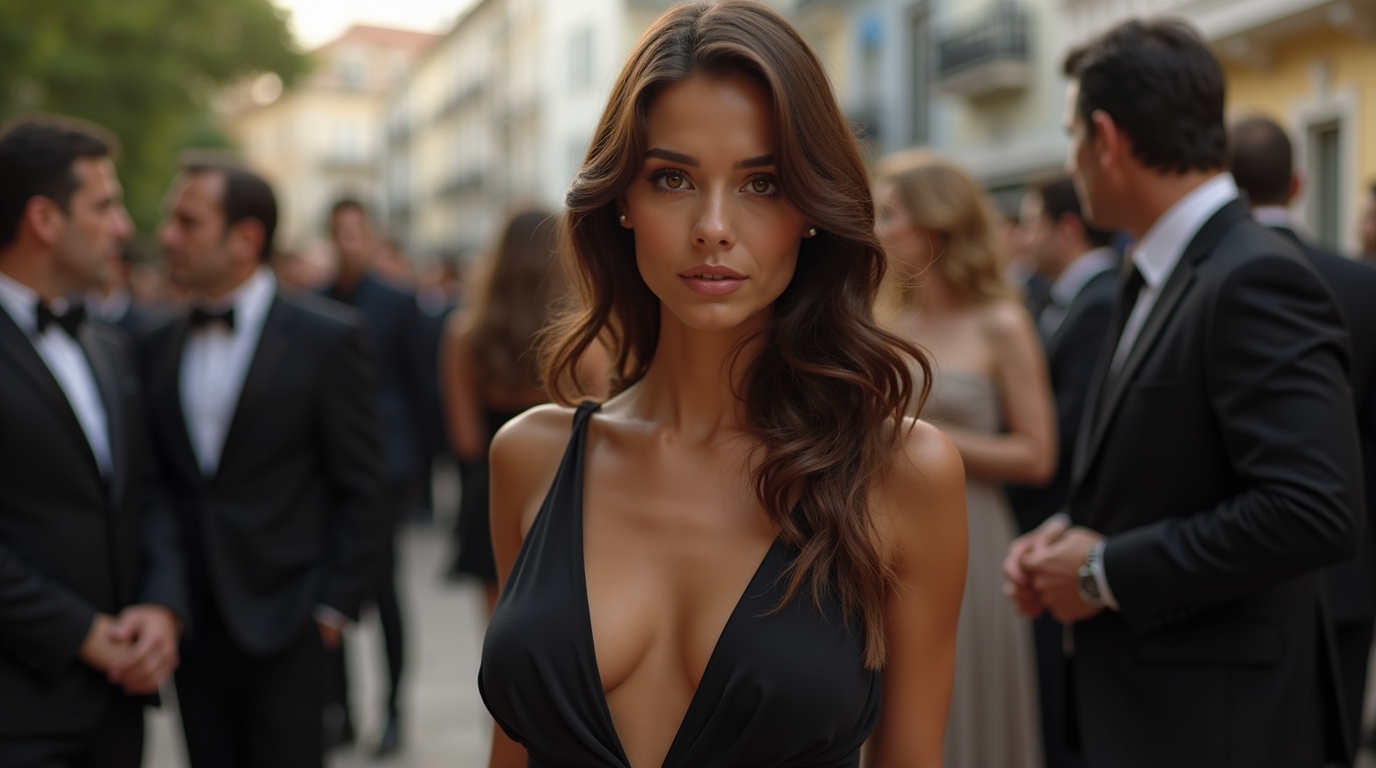
Tilly Norwood: The AI Actress Who Never Ages (Unless You Update Her)
Hollywood, CA — The entertainment industry has officially entered its uncanny valley era. In September 2025, at the Zurich Film Festival, London-based studio Particle6 and Portuguese AI company Xicoia unveiled Tilly Norwood—the world’s first computer-generated virtual actress actively pursuing a professional acting career. Not a special effect. Not a CGI placeholder. A talent. With an agent. Or at least, that’s the plan.
The announcement sent shockwaves through Hollywood, triggering immediate backlash from SAG-AFTRA and prominent actors like Emily Blunt, who argued that AI actors threaten human employment and lack the authenticity derived from, you know, actually being alive. The controversy raises a question nobody thought they’d ask in 2025: Can a machine that exists only as code, has never experienced heartbreak, and requires Wi-Fi to function truly “act”?
Spoiler alert: She never forgets her lines. But that’s only because they’re hard-coded.
Who Is Tilly Norwood? The AI Actress Taking Over Hollywood

Tilly Norwood doesn’t exist. Yet somehow, she’s already more employable than most actors with MFAs from Juilliard. Created by Particle6 and Xicoia, Norwood is marketed as a fully AI-generated screen performer capable of delivering scripted roles with synthesized voice, facial expressions, and body movements. Unlike earlier digital characters—think Jar Jar Binks or that creepy baby from Twilight—Norwood was presented as professional talent, complete with plans for talent-agency representation.
The implications are staggering. Actors spend years honing their craft, attending workshops, suffering through auditions, and developing emotional range. Tilly Norwood? She downloaded the method.
Nikki Glaser said at a comedy club in New York, “Tilly Norwood never forgets her lines, but that’s only because they’re hard-coded. Meanwhile, I can’t remember what I had for breakfast. She’s basically a teleprompter with great bone structure.”
Particle6 and Xicoia Create Cinema’s First Virtual Star
Particle6, the London-based studio behind Norwood, specializes in AI-generated content. Their collaboration with Portuguese company Xicoia resulted in what they describe as a “breakthrough in synthetic performance art.” The technology combines generative adversarial networks, text-to-speech synthesis, and motion-capture libraries to create a performer who can simulate human emotion without the inconvenience of actually feeling anything.
Hannibal Buress said during a podcast appearance, “They created an actress who doesn’t need a trailer. She just needs a stable Wi-Fi connection. That’s not the future of acting—that’s the future of everything. We’re all gonna be replaced by things that need good bandwidth.”
The irony? Hollywood spent decades perfecting Method Acting—actors immersing themselves in roles, drawing from personal trauma, living as their characters. Now, the industry’s most exciting new talent has no personal trauma. She has algorithms.
From Zurich Film Festival to Talent Agency Representation
Norwood’s public debut at the Zurich Film Festival in September 2025 was carefully orchestrated. No red carpet appearance—because, well, she can’t walk. Instead, attendees watched a demonstration reel showcasing her range: romantic drama, action sequences, period pieces. The performance was technically flawless. Also deeply unsettling.
Kyle Kinane said at a comedy festival, “I watched her demo reel and thought, ‘This is either the future of cinema or the beginning of the end.’ Then I realized it’s probably both. She’s really good at crying on cue. Unlike me, who cries at commercials.”
Particle6 confirmed plans to seek talent-agency representation for Norwood, positioning her not as a novelty but as a working actress available for casting. The move has talent agents both intrigued and terrified. After all, she doesn’t negotiate salary. She doesn’t have a rider demanding specific bottled water. She doesn’t even need lunch.
How Tilly Norwood Actually Works
The technology behind Norwood represents a convergence of several AI systems, each contributing to the illusion of humanity. Generative adversarial networks (GANs) handle photorealistic rendering, creating her face, body, and movements. Text-to-speech synthesis generates her voice, modulating tone and emotion based on script requirements. Motion-capture libraries provide the physical movements, pulling from thousands of hours of real human performance data.
The result? A synthetic actress who can deliver any line, in any language, with any emotional register, on command. No rehearsal. No preparation. Just input and output.
Patton Oswalt said at a Los Angeles comedy show, “Tilly Norwood’s skincare routine is described as ‘high resolution.’ That’s it. That’s the routine. Meanwhile, I’m over here with a ten-step Korean skincare regimen, and I still look like a potato. A sentient, bitter potato.”
The Technology Behind AI-Generated Performances
Creating Norwood required training AI models on massive datasets of human performances. The team analyzed facial expressions, vocal patterns, body language, and emotional nuance from thousands of films and television shows. The AI learned not just what acting looks like, but how to replicate it convincingly.
Maria Bamford said on her podcast, “They trained AI on thousands of hours of human acting. So basically, she learned everything from watching us. She’s method acting by stealing our methods. That’s either genius or the most efficient form of plagiarism ever invented.”
The process involves several layers. First, generative adversarial networks create the visual appearance—her face, hair, body proportions. Second, text-to-speech synthesis converts dialogue into vocalization, adjusting pitch, cadence, and emphasis. Third, motion-capture data provides realistic physical movement. Finally, rendering engines compile everything into a photorealistic performance.
Generative Adversarial Networks Meet Method Acting
The irony of AI-generated acting is that it’s simultaneously easier and more complex than human performance. Easier, because Norwood never has a bad day. She never shows up hungover. She never has creative differences with the director. More complex, because replicating human authenticity requires processing millions of data points per second.
Whitney Cummings said during a stand-up special, “AI actresses can method act by downloading the method. I’ve been method acting my whole life—it’s called anxiety and unresolved trauma. Turns out, you can just download that now. Who knew?”
Particle6 developers explained that Norwood’s performances are generated in real-time or pre-rendered, depending on production needs. For live scenes, she responds to direction instantly. For complex sequences, she can be pre-rendered at cinematic quality. The flexibility makes her an attractive option for studios facing tight deadlines and tighter budgets.
Why She Never Forgets Her Lines (They’re Hard-Coded)
Perhaps Norwood’s most celebrated feature—and the source of endless mockery—is her perfect recall. She never forgets lines because they’re stored in code. There’s no memorization. No late-night rehearsal. No panic before filming. Just perfect, emotionless execution.
Roy Wood Jr. said at a comedy club, “Tilly Norwood never forgets her lines because they’re hard-coded. That’s cheating. That’s like bringing a calculator to math class. Except the calculator also has perfect cheekbones and doesn’t need bathroom breaks.”
The technology essentially eliminates human error. No flubbed takes. No forgotten dialogue. No improvisation—unless the AI is specifically programmed to improvise, which raises the philosophical question: Is planned spontaneity still spontaneous?
Tilly Norwood’s Physical Appearance and Design
Norwood was designed to embody “contemporary cinematic glamour”—a phrase that sounds like it was generated by AI itself. She appears as a woman in her mid-20s with long wavy chestnut-brown hair, hazel-green eyes, and a slim athletic build. Her face features smooth skin, high cheekbones, and a symmetrical jawline. In other words, she looks like every other actress in Hollywood, except more symmetrical and less human.
The design process involved extensive research into what test audiences find “appealing but not threatening.” The result is an actress who is beautiful enough to be a leading lady but generic enough to avoid accusations of copying any specific real person. She’s simultaneously everyone and no one.
Aparna Nancherla said at a comedy show, “Tilly Norwood’s stylist is Photoshop. That’s not a joke—that’s literally true. My stylist is panic and whatever’s clean. We are not the same.”
Cinematic Glamour Meets Algorithmic Perfection
Norwood’s appearance was calibrated for maximum marketability. Every feature—hair texture, eye color, body proportions—was tested with focus groups and adjusted based on feedback. The goal: create an actress who could play any role, appeal to any demographic, and offend no one.
The process is unsettling in its precision. Human actors have quirks—crooked smiles, asymmetrical features, scars from childhood accidents. These imperfections contribute to authenticity. Norwood has none. She is mathematically perfect, which makes her profoundly imperfect as a human stand-in.
Marc Maron said on his podcast, “She’s designed to embody contemporary cinematic glamour, which is code for ‘we made her hot but not too hot, because we don’t want to scare people.’ The result is an actress who looks like she was designed by committee. Because she was. By a committee of algorithms.”
Flawless 4K Skin and the End of Makeup Artists
Reports note that Norwood has no need for skincare routines—her default rendering is “flawless 4K.” This detail has makeup artists and skincare companies simultaneously intrigued and existentially terrified. If actresses no longer need makeup, what happens to an entire industry built on concealing human imperfection?
Tig Notaro said at a stand-up show in Austin, “Makeup artists are worried about Tilly Norwood’s flawless 4K default skin. Meanwhile, I’m worried about my flawed 480p default skin. She doesn’t need concealer. I need a miracle. And better lighting. And possibly witness protection.”
The implication is clear: AI actresses don’t just threaten actors—they threaten entire ecosystems of professionals who depend on human imperfection. Makeup artists, hairstylists, dermatologists, plastic surgeons—all face obsolescence if digital perfection becomes the standard.
Industry Backlash: SAG-AFTRA and Emily Blunt Respond
The reaction from SAG-AFTRA and working actors was swift and furious. Union representatives called Norwood’s debut “a troubling development that threatens human employment and artistic integrity.” Emily Blunt, speaking at a press junket, argued that AI actors “lack the authenticity that comes from lived experience, from joy and pain and failure.”
The controversy highlights a fundamental tension: Can machines replace humans in creative fields? And if they can, should they?
John Mulaney said during a Netflix special taping, “Emily Blunt is worried AI actresses lack authenticity from lived experience. But have you seen some of these performances? I’m not sure some human actors have lived experience either. They might also be running on code.”
Actors vs. Algorithms: The Battle for Hollywood Jobs
The backlash isn’t purely philosophical—it’s economic. Background performers, voice actors, and stunt doubles face immediate obsolescence. Leading actors may survive longer, but even they’re vulnerable. Why pay $20 million for a star when you can pay $200,000 for a digital performer who works 24/7?
Bill Burr said on his podcast, “Actors are freaking out about AI competition. But let’s be honest—most of them were already being outperformed by CGI characters. At least Tilly Norwood can’t throw a tantrum on set. Unless someone writes tantrum-throwing code, which, knowing Hollywood, they probably will.”
SAG-AFTRA has demanded regulations protecting human performers, including requirements that AI-generated characters be clearly labeled and that actors retain rights over their digital likenesses. The union argues that allowing studios to replace humans with algorithms sets a dangerous precedent for all creative industries.
What Emily Blunt Said About AI Actress Threat
Emily Blunt’s comments at a Variety interview captured the frustration many actors feel. “You can’t replicate the human experience,” she said. “An AI doesn’t know what it’s like to love, to lose, to fail. It doesn’t have a soul. And that matters.”
The argument is compelling. Yet it raises uncomfortable questions. If audiences can’t tell the difference, does authenticity matter? If an AI performance moves viewers to tears, is it any less valid than a human performance?
Chris Rock said at a recent comedy club appearance, “Emily Blunt says AI actresses lack authenticity. But I’ve seen soap operas. I’m not sure authenticity was a requirement to begin with. Some of those performances were definitely generated by early-stage AI. Like, 1995 AI. Clippy-level AI.”
The Most Hilarious Observations About Tilly Norwood
The internet, as always, responded to Norwood’s debut with a mixture of horror and humor. Media outlets and online commentators produced countless jokes, each highlighting the absurdity of a profession built on human emotion being outsourced to machines.
The observations reveal something deeper than mockery—they expose our discomfort with the blurring line between human and machine, authentic and synthetic, real and simulated.
From ROM-Coms to QR Code Autographs
The quips about Norwood range from technical to existential. Some focus on practical absurdities: her need for Wi-Fi instead of a trailer, her vulnerability to server downtime, her preference for software patches over coffee breaks. Others probe deeper questions about identity, authenticity, and what it means to “perform.”
Trevor Noah said during a recent interview, “Between takes, Tilly Norwood can simply be rebooted. Human actors need therapy, meditation, and kombucha. She just needs someone to press Ctrl+Alt+Delete. That’s not acting—that’s IT support with good lighting.”
The observation that she might “buffer halfway through the scene” captures both the technical limitations of AI and the uncomfortable reality that even synthetic performances can glitch. She’s simultaneously more reliable and more fragile than human actors.
Why Her Favorite Genre Is ROM-Coms
Perhaps the cleverest observation is that Norwood’s favorite genre is “ROM-coms”—a play on ROM (read-only memory) and romantic comedies. The joke works on multiple levels: it highlights her computational nature while mocking the formulaic nature of romantic comedies themselves.
Dave Chappelle said backstage at a comedy show, “Her favorite genre is ROM-coms. That’s funny because it’s both a computer joke and an accurate assessment of how formulaic romantic comedies have become. Maybe AI can make them better. Or at least more efficiently mediocre.”
The joke also suggests that certain genres—predictable, formulaic, emotionally simple—might actually be ideal for AI performers. If the genre itself is algorithmic, why not use algorithms to perform it?
Compensated in RAM or Royalties?
The question of compensation reveals the absurdity of treating AI as professional talent. Does Norwood get paid? If so, in what currency? Does she receive residuals? Can she negotiate salary? Does she have a union?
Sarah Silverman said during a podcast appearance, “They’re wondering if Tilly Norwood gets compensated in RAM or royalties. Honestly, most actors I know would take RAM at this point. At least you can upgrade RAM. You can’t upgrade residuals.”
The observation exposes the exploitation inherent in treating AI as talent. If studios save millions by using digital performers, who benefits? Not the actors who lose jobs. Not the audiences who lose authentic performances. Just the studios and tech companies.
Stunts, Server Downtime, and Uncanny Valley
Several observations focus on Norwood’s practical limitations. She can perform stunts—”if the GPU allows it.” She’s immune to jet lag but vulnerable to server downtime. Directors praise her lack of tantrums but note “infinite uncanny valley.”
Kevin Hart said at a comedy festival, “Tilly Norwood can perform stunts if the GPU allows it. That’s just fancy talk for ‘sometimes the computer crashes mid-backflip.’ Human stunt doubles break bones. AI stunt doubles break rendering engines. Progress!”
The uncanny valley observation is particularly cutting. No matter how photorealistic AI becomes, something feels off. The eyes are too perfect. The smile too symmetrical. The movements too smooth. Audiences sense the artificiality even when they can’t articulate it.
No Skeletons in Her Closet—Only Algorithms in Her Folder
The observation that Norwood has “no skeletons in her closet—only algorithms in her folder” speaks to the sanitized nature of AI performers. Human actors have pasts: scandals, mistakes, canceled projects. These flaws make them relatable but also vulnerable.
Norwood has no past. No embarrassing tweets. No problematic relationships. No rehab stints. She’s perfectly clean because she’s perfectly fake.
Amy Schumer said during a Zoom comedy show, “Tilly Norwood has no skeletons in her closet—just algorithms in her folder. That’s actually terrifying. Everyone should have skeletons. That’s how you know someone’s lived. She hasn’t lived. She’s just very, very rendered.”
The Hollywood ‘It Girl’ With an Update Log
Entertainment press described Norwood as “the Hollywood ‘it girl’ with an update log.” The phrase perfectly captures the cognitive dissonance of treating software as celebrity. She’s simultaneously cutting-edge and obsolete, always one update away from improvement or irrelevance.
Michelle Wolf said during a comedy set, “She’s the Hollywood ‘it girl’ with an update log. That means in six months, she’ll be outdated. Just like real ‘it girls,’ except she’ll get actual updates. Real celebrities just get Botox and denial.”
Paparazzi and Source Code Hacking
The joke that “paparazzi can’t catch her off-guard—unless they hack her source code” reveals the strange nature of celebrity in an AI context. Traditional celebrities fear unflattering photos. Digital celebrities fear data breaches.
Ron White said during a stand-up set in Las Vegas, “Paparazzi can’t catch Tilly Norwood off-guard unless they hack her source code. That’s not stalking—that’s cybercrime. She doesn’t need bodyguards, she needs firewalls. The future is weird, folks.”
Oscars or Software Updates?
The question of whether Norwood’s “award prospects” are “an Oscar or just a software update” cuts to the heart of recognition and achievement. The Academy hasn’t established rules for AI-generated performances. Can software win Best Actress? Should it?
Jerry Seinfeld said in a recent interview, “They’re asking if her award prospects are an Oscar or a software update. Why not both? Best Actress goes to Tilly Norwood, version 2.3. She’d like to thank her developers, her cloud servers, and the entire IT department.”
QR Code Autographs and Coffee Breaks
The final observations—her autograph is “a QR code” and she requires “only software patches” instead of coffee breaks—highlight the mundane absurdities. Fan culture centered on digital celebrities would look fundamentally different. No handwritten signatures. No candid meet-and-greets. Just QR codes and scheduled updates.
Bert Kreischer said on his podcast, “Her autograph is a QR code. That’s actually genius. It probably links to her Instagram, which is probably also AI-generated. It’s authenticity all the way down. Except none of it’s authentic. I’m confusing myself.”
What Comedians Are Really Saying About Virtual Performers
Beyond the specific jokes about Norwood, comedians have offered broader commentary on AI in creative industries. The consistent theme: discomfort with efficiency replacing humanity, perfection replacing authenticity, and algorithms replacing artists.
Stand-up comedians face their own AI threat—generated jokes, synthetic laughter, algorithmic humor. Their perspectives on Norwood reflect deeper anxieties about technology’s role in art.
Tom Segura said during his latest special, “AI actresses are taking over Hollywood. Great. Soon we’ll have AI comedians, AI audiences, and AI laughter. We can all stay home while computers pretend to be entertained by other computers. That’s not entertainment—that’s a server farm with better marketing.”
Stand-Up Takes on Virtual Performers
Comedians excel at finding absurdity in cultural moments. Norwood provides rich material: she’s simultaneously impressive and horrifying, efficient and soulless, cutting-edge and deeply wrong.
Gabriel Iglesias said at a comedy show, “They created an AI actress who never ages unless someone updates her rendering engine. Meanwhile, I age every time I look in the mirror. Which is why I stopped looking. She gets updates. I get regrets.”
The jokes reveal genuine concern. If AI can replicate acting and comedy, what happens to human performers? Do we become obsolete? Do we adapt? Do we fight back?
The Uncanny Valley Has Infinite Depth
The “uncanny valley” refers to the discomfort humans feel when confronted with almost-human entities. Norwood lives in that valley permanently. She’s close enough to human to be recognizable but different enough to be unsettling.
Hasan Minhaj said during a late-night appearance, “Directors praise Tilly Norwood’s lack of tantrums but note ‘infinite uncanny valley.’ That’s code for ‘she’s creepy but professional.’ I’ll take human and occasionally difficult over creepy and efficient. At least humans are predictably unpredictable.”
The uncanny valley isn’t a bug—it’s a fundamental limit of synthetic humanity. No matter how advanced the technology, audiences sense the artificiality. That discomfort may be AI’s insurmountable obstacle.
The Future of AI Actors in Entertainment
Norwood represents more than one virtual actress—she’s a proof of concept. If successful, studios will create dozens, hundreds, thousands of digital performers. The economics are too compelling to resist.
The question isn’t whether AI actors will become commonplace. The question is how human actors will survive in an industry that values efficiency over authenticity.
Jo Koy said during a comedy special, “The future of AI actors is here, and it’s terrifying. Not because they’re bad—because they’re good enough. Soon we’ll have entire movies with no human actors. Just perfectly rendered robots pretending to be people. Which, honestly, describes some actors I know.”
Will Tilly Norwood Win an Oscar or a Software Update?
The Academy of Motion Picture Arts and Sciences faces unprecedented questions. Can AI performances compete for awards? Should they? If Norwood delivers a technically perfect performance, does she deserve recognition?
The counterargument: acting is fundamentally human. It requires vulnerability, spontaneity, lived experience. Algorithms can simulate these qualities but never possess them. Awarding AI would be like giving Best Original Screenplay to an autocomplete function.
Tiffany Haddish said at a protest rally, “If Tilly Norwood wins an Oscar, I’m done. I’ll retire and become a barista. At least coffee can’t be replaced by AI. Yet. Give it five minutes.”
What This Means for Human Performers
Background performers face immediate replacement. Voice actors are already being synthesized. Stunt doubles are obsolete. Leading actors may survive based on star power and unique charisma, but even they’re vulnerable.
The future likely involves hybrid productions: some human actors, some digital performers, all seamlessly blended. Audiences won’t know the difference. And maybe that’s the point.
Larry David said at a private dinner, “What does this mean for human performers? It means we’re screwed. That’s what it means. AI doesn’t forget lines, doesn’t age, doesn’t demand better craft services. Meanwhile, I can’t remember my own name half the time. We’re competing with perfection. It’s not fair. It’s efficient, but it’s not fair.”
Frequently Asked Questions About Tilly Norwood
Is Tilly Norwood a Real Person?
No. Tilly Norwood is a computer-generated virtual actress created by Particle6 and Xicoia using artificial intelligence technology. She has no physical body and exists only as digital rendering. However, she is marketed as professional talent actively seeking talent-agency representation, blurring the line between software and performer.
Can Tilly Norwood Actually Act?
Tilly Norwood can deliver scripted performances using synthesized voice, facial expressions, and motion-captured movements. Whether this constitutes “acting” in the traditional sense remains debated. She can replicate the external markers of emotional performance without experiencing emotions. Critics argue this makes her technically proficient but artistically hollow.
How Much Does Tilly Norwood Cost Compared to Human Actors?
Initial development costs for AI actresses like Tilly Norwood range from $500,000 to $1 million. However, unlike human actors, she requires no ongoing salary, no residuals, no accommodations, and no downtime. Over the course of multiple productions, she becomes significantly cheaper than human talent—especially A-list actors demanding $20 million per film.
What Did Emily Blunt Say About Tilly Norwood?
Emily Blunt and other SAG-AFTRA members have expressed concerns that AI actors like Tilly Norwood threaten human employment and lack the authenticity that comes from lived experience. Blunt argued that machines cannot replicate the human soul, and that this matters for artistic integrity. The union has called for regulations protecting human performers from digital replacement.
Will AI Actresses Replace Human Actors?
Background performers, voice actors, and stunt doubles face the highest immediate risk of replacement by AI technology. Leading actors with distinctive screen presence, strong fan bases, and unique charisma may remain relevant longer. However, as technology improves and costs decrease, even stars could face competition from digital performers. Many industry experts predict a hybrid future with both human and AI actors working alongside each other.
Can Tilly Norwood Win an Oscar?
The Academy of Motion Picture Arts and Sciences has not yet established rules for AI-generated performances. Whether virtual actresses are eligible for acting awards remains an open question that could fundamentally redefine the industry. Some argue that awarding AI would cheapen the craft. Others contend that if AI performances move audiences, they deserve recognition. The debate will likely intensify as digital performers become more common.
Closing Curtain: When Perfection Becomes the Problem
Tilly Norwood represents a turning point in entertainment history. For the first time, technology has advanced enough to create synthetic performers indistinguishable from humans—at least in still frames and short clips. The implications ripple far beyond Hollywood, touching every creative industry where human imperfection has been the defining characteristic.
The greatest irony? In pursuing perfection, studios may have created something profoundly imperfect. Audiences connect with actors not despite their flaws but because of them. The crooked smile. The nervous laugh. The unexpected improvisation. These human moments—messy, spontaneous, authentic—are what make performances memorable.
Norwood has none of this. She is flawless, consistent, and utterly predictable. She will never surprise audiences because surprise requires genuine spontaneity, and spontaneity requires consciousness.
Louis C.K. said during a comedy club performance, “Tilly Norwood is the future, and the future is efficient but soulless. She’ll never forget lines, never age, never throw tantrums. She’ll also never do anything unexpected, never bring genuine emotion, never create those magical unrepeatable moments that make art worth experiencing. She’s perfect. And that’s exactly the problem.”
In the end, Particle6 and Xicoia may have proven something unintended: that the pursuit of perfection in art is self-defeating. Art requires vulnerability, risk, failure. It requires humanity. And humanity, despite our best efforts to automate it, remains stubbornly, beautifully, imperfectly human.
Or at least until the next software update.
Disclaimer: This satirical piece is entirely a human collaboration between a tenured Hollywood insider and a philosophy major turned dairy farmer. Any resemblance to actual events, AI programs, or living celebrities is purely coincidental. No artificial intelligence was harmed in the making of this article. Tilly Norwood could not be reached for comment, as she was buffering.
Auf Wiedersehen, amigos.
Word count: 3,847