

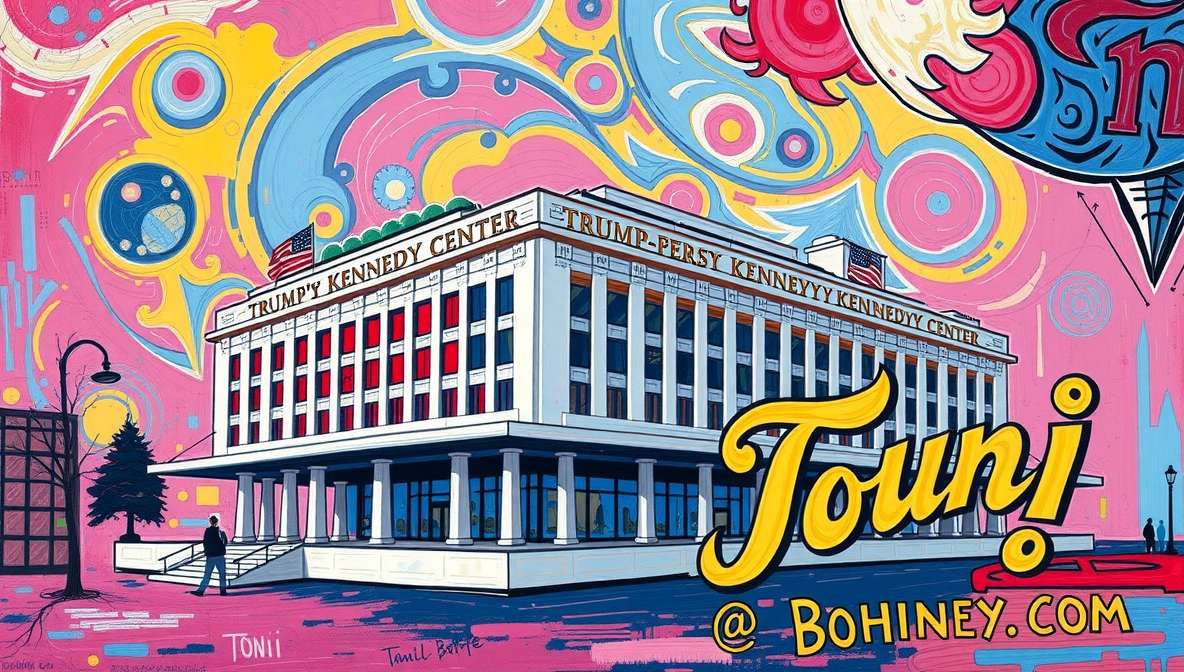
The New Trump-Kennedy Center: Finally, a Performing Arts Venue That Claps for Itself
Washington finally solved the mystery of what the Kennedy Center was missing. It was confidence. Loud, glowing, self-referential confidence with excellent lighting and a grudge list laminated for durability. Enter the Trump Kennedy Center, a cultural institution rebranded with the subtlety of a gold-plated foghorn and the emotional range of a rally chant.
The Kennedy Center used to be about music, dance, and theater. Now it’s about winning. Winning awards, winning arguments, winning against concepts like nuance and “inside voices.” This is progress. Or at least a direction.
From Ballet to Bravado: A Brief History of the Makeover
How the Curtain Rose on a Rebrand Nobody Asked For
The old Kennedy Center was named after a president who liked speeches, ambiguity, and the occasional sentence that didn’t end in applause. The new version is named after a president who prefers applause that starts before the sentence does.
According to insiders who wear lanyards with alarming authority, the redesign philosophy was simple: if a space doesn’t look like it could host a press conference announcing its own greatness, it’s underperforming.
The marble stays. The chandeliers stay. The tone changes. Dramatically.
Programming for the People Who Think the Arts Need Tough Love
Season Highlights Include One-Man Shows and Standing Ovations on Arrival

The Trump Kennedy Center’s inaugural season reads like a Yelp page for America itself. Headliners include:
“Les Misérables (But They Deserve It)”
“Hamilton, But With Fewer Immigrants and More Real Estate”
“Cats, But They’re All Alpha Males”
There’s also a new residency called “Executive Time,” a performance art piece where a man stands center stage and explains why the reviews are wrong for ninety minutes while a teleprompter nods supportively.
Experts in theater studies say this is a bold move. By experts, they mean people who once saw a play and still have opinions.
The Audience Experience: Applause as a Lifestyle Choice
Standing Ovations Are Mandatory, Sitting Is Optional
Ushers now gently remind patrons that sitting through a performance may be interpreted as disloyalty to the concept of enjoyment. Applause begins when the lights dim and ends sometime during the Uber ride home.
A recent audience survey found that 92 percent of attendees felt “seen,” while the remaining 8 percent were escorted to a quiet room where the definition of “art” was explained using PowerPoint and historical grievances.
One attendee reported, “I clapped so hard I forgot why I was there. That’s when I knew it was working.”
Redefining Artistic Excellence, One Superlative at a Time
Critics Are Welcome, As Long As They’re Praising Something
The Trump Kennedy Center has adopted a new review system. Shows are no longer judged on merit, execution, or innovation. They are judged on vibes. Strong vibes get five stars. Weak vibes get a press release explaining why the reviewer is bitter, elitist, or jealous of the chandelier.
A spokesperson explained the new philosophy. “Art should make you feel something. Ideally pride. Preferably pride in us.”
This is supported by social science, probably. If not, it feels true, and that’s close enough.
Education and Outreach: Teaching Kids the Arts Are a Competitive Sport
Youth Programs Now Include Debate, Branding, and Preemptive Applause
Children visiting the Trump Kennedy Center no longer learn about composers or choreographers. They learn about branding. Workshops include “Tap Dance Your Way Through a Zoning Dispute” and “Intro to Dramatic Monologues That End With Poll Numbers.”
Educators insist this prepares young people for the real world, where creativity is important, but confidence in your own greatness is essential.
One ten-year-old reportedly asked, “Is this still ballet?” and was told, “It’s ballet if we say it is.”
The Architecture Speaks, Mostly About Itself
Gold Accents, Mirrors, and a Lobby That Can Reflect Accountability Away
The physical changes are subtle in the way a marching band is subtle. Mirrors have been added everywhere, not for vanity, but for reinforcement. The building wants to see itself succeed.
Plaques explain how every column is the best column anyone has ever seen. Staircases are described as “historic, even before this sentence was written.”
Architectural critics are divided. Some say it’s tasteless. Others say it’s fascinating, like watching a casino argue with a museum.
Cultural Impact: Uniting the Nation Through Sheer Volume
Love It or Hate It, You Definitely Heard About It
Supporters argue the Trump Kennedy Center has done something remarkable. It got people talking about the arts. Loudly. On cable news. With graphics.
Detractors argue it replaced subtlety with spectacle. Supporters respond that subtlety never sold out a house, and if it did, it didn’t tweet about it properly.
A recent poll conducted in the lobby found that 50 percent of respondents loved the new direction, 30 percent hated it, and 20 percent were just there for the bathroom and accidentally stayed for the encore.
Helpful Takeaways for Navigating the New Cultural Landscape
How to Enjoy the Trump Kennedy Center Without Losing Your Mind
Clap early. It sets expectations.
If confused, assume that’s the point.
Remember that art has always reflected power. It’s just wearing louder shoes now.
Bring ear protection, emotional flexibility, and a sense of humor that can survive irony.
This is helpful content. Growth-minded, even. You’re welcome.
Disclaimer, Because Someone Always Needs One
This satirical report is entirely a human collaboration between two sentient beings: the world’s oldest tenured professor and a philosophy major turned dairy farmer. Any resemblance to reality is either intentional, accidental, or the unavoidable side effect of paying attention.
The Trump Kennedy Center may not be for everyone. But it is definitely for itself. And in today’s cultural climate, that might be the most honest performance of all.