

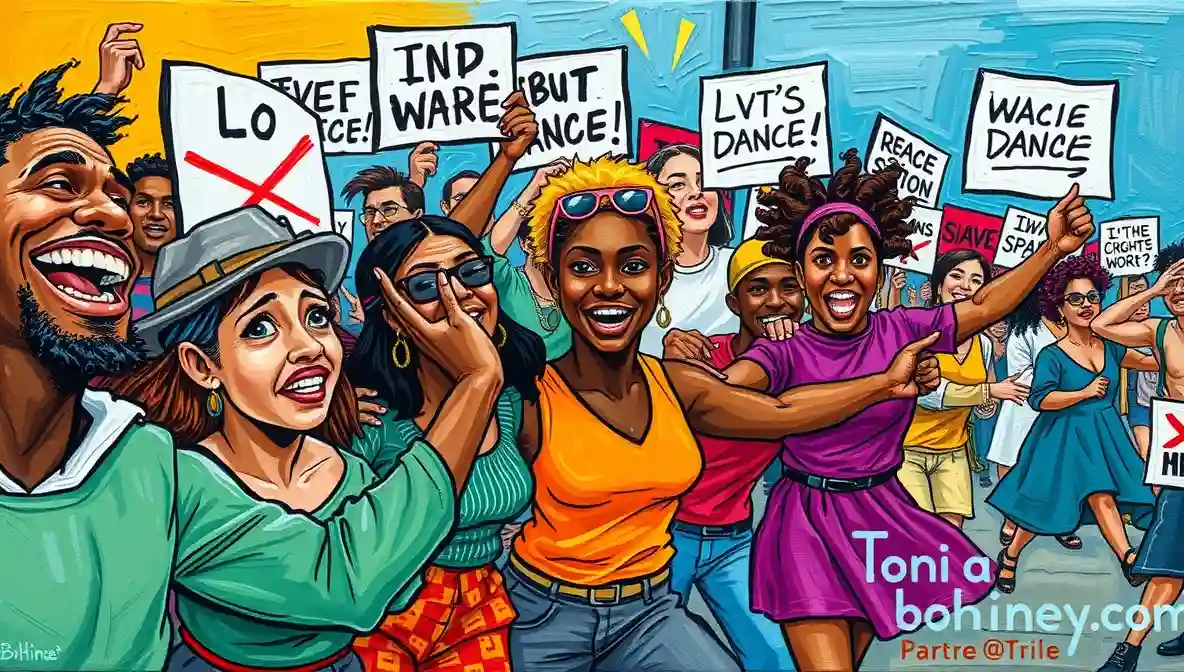
Federal Immigration Enforcement Demonstration Evolves into Performance Art as Messaging Fragments
What began as a serious protest in Minneapolis over federal immigration enforcement ended the way many modern civic actions now do: with intense emotions, unclear messaging, and several participants performing movements that looked less like resistance and more like an audition for a grant-funded performance piece titled Anger, But Softly.
ICE Operation Sparks Immediate Response

The real-world backdrop to the protest was a federal law enforcement operation involving ICE agents, which escalated into a shooting after activists allegedly interfered with officers during their duties. The incident immediately reignited local tensions over immigration enforcement, policing, and the long-standing Minneapolis tradition of turning every national issue into a street-level morality play.
Protesters gathered quickly, many already emotionally warmed up from previous demonstrations. Signs appeared within minutes. Some were clear and aggressive: “ABOLISH ICE,” “NO JUSTICE NO PEACE.” Others were more abstract, featuring phrases like “CARE IS RESISTANCE” and “BORDERS ARE VIOLENCE,” which sociologists say can be interpreted however the holder feels that afternoon.
Movement Coordination Breaks Down
Trouble began when organizers attempted to coordinate movement. Calls to “hold space” were issued over a megaphone, a phrase that means everything and nothing depending on who hears it. Some protesters locked arms. Others stood still. A smaller but enthusiastic group began swaying rhythmically, apparently translating structural injustice into full-body expression.
Eyewitnesses described a moment of confusion when a chant leader shouted “MOVE AS ONE,” and half the crowd stepped forward while the other half stepped inward emotionally. One man began slowly circling a traffic cone while maintaining eye contact with a parked sedan, which protest marshals later described as “symbolic disruption.”
Dr. Elaine Mortimer, a sociologist specializing in collective behavior, explained that this transformation was predictable. “When a protest accumulates multiple ideological frameworks without a hierarchy, language collapses,” she said. “The body fills the gap.”
Law Enforcement Hesitates
Law enforcement officers on scene reportedly hesitated, unsure how to respond. “We couldn’t tell if it was a protest, a rehearsal, or a very earnest warm-up,” said one officer, speaking on condition of anonymity. “Nobody wants to be the cop who arrests modern dance.”
The choreography escalated as emotions peaked. Several protesters dropped to the pavement simultaneously, though later interviews revealed they were responding to different internal cues. One said she was representing historical trauma. Another thought it was a sit-in. A third said, “It just felt right.”
Local residents watched from sidewalks with the practiced patience of people who have seen this movie before. “I support free speech,” said one woman attempting to get home from work. “I just didn’t realize it now includes interpretive lunges.”
Activists Declare Success
Activists later praised the demonstration as a success, citing visibility, emotional release, and the fact that several videos went viral despite no one being able to explain what they showed. One organizer described the protest as “intersectional in motion,” which critics noted was also an accurate description of traffic congestion.
Political analysts say the incident reflects a broader trend in American activism. Protests are no longer just about demands. They are about identity, expression, and being seen doing something that feels morally aligned, even if the outcome is unclear.
The cause-and-effect chain is familiar. A serious incident occurs. Outrage follows. Messaging multiplies. Coordination collapses. Performance emerges.
By nightfall, the crowd dispersed peacefully, leaving behind chalk slogans, empty water bottles, and one abandoned sign reading simply “THIS IS HARD.”
City officials declined to comment, confirming only that no permits were issued for dance.
Auf Wiedersehen, amigo!