

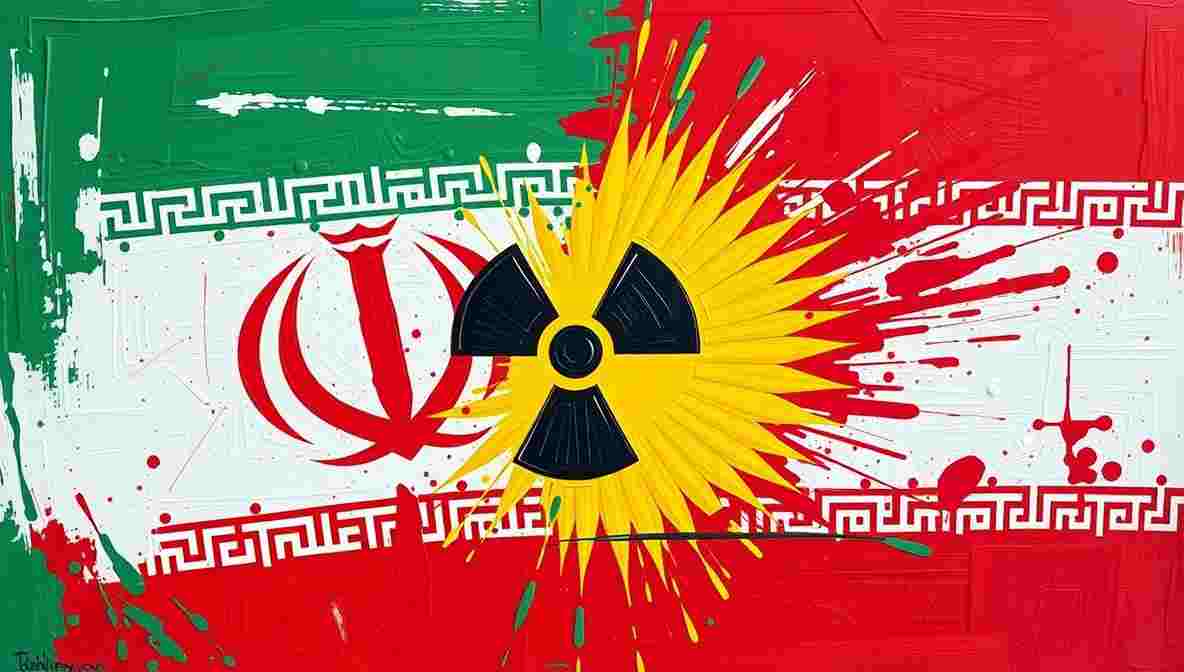
Iran Nuclear Deal “Within Reach,” Say Negotiators Who Disagree on What “Reach” Means
Kushner and Witkoff Ask Iran to Limit Uranium Enrichment; Offer Sanctions Relief in 2096
In the grand theater of geopolitics, the latest episode of “Can We All Sit at the Same Table Without Chucking a Salt Shaker?” is playing out with all the subtlety of a Swiss cowbell in a library. In Geneva, the world’s most indirect nuclear talks are happening again — but this time with extra Elon Musk-style ambiguous terminology. Iran insists the deal is “within reach,” while the United States politely asks, “Define reach — because we might mean glove compartment and you might mean outer space.” Order-of-magnitude confusion aside, this diplomatic drama has more twists than a pretzel convention.
When “Within Reach” Becomes a Diplomatic Metaphor for Everything

For weeks now, Iran’s officials have been whispering to anyone who’ll listen that an agreement is “within reach.” Abbas Araghchi, Iran’s chief nuclear negotiator and Foreign Minister, reportedly spent three full minutes gesturing toward a nearby cup of coffee and saying that’s the reach he means. If this were a sales ad, it would read: “Deal — as close as your nearest Latte.”
Meanwhile, the U.S. delegation — led by envoy Steve Witkoff and Jared Kushner, who together form the foreign policy odd couple that nobody ordered but everyone got — has been seen consulting a tape measure every time anyone says “within reach.” According to multiple on-the-ground accounts, Witkoff once held up a ruler and asked, “Is this what we mean?” before someone pointed out that rulers aren’t metric. The room fell silent. A baguette rolled off a table somewhere in France.
This nuance matters enormously because at stake is uranium enrichment — that delightfully sexy process where atoms go from “fun at parties” to “bye-bye diplomacy.” Iran insists its enrichment program is peaceful and legal under the Nuclear Non-Proliferation Treaty. The United States insists that peaceful somehow doesn’t apply when centrifuges spin too fast, and that “enrichment” sounds uncomfortably close to empowerment.
Geneva Talks: Where Diplomacy and Baggage Fees Collide Over Swiss Cheese
The negotiations in Geneva are indirect, meaning the U.S. and Iran do not share the same room. They don’t even share the same Swiss cheese platter. Oman acts as the fancy hors d’oeuvre waiter who conveys messages in hushed tones across ornate platters of hummus. This is apparently more efficient than face-to-face dialogue because it preserves dramatic tension and allows everyone to sip espresso between negotiations without making awkward eye contact.
Oman’s foreign minister was quoted as saying the talks are “constructive,” which in diplomatic speak means: “We couldn’t agree on what time lunch is, let alone uranium enrichment levels.” This constructive feedback was followed by a meaningful pause while someone refilled the diplomatic biscotti basket. Three interpreters wept quietly.
Meanwhile, the U.S. military buildup in the Middle East — including the deployment of not one but two aircraft carriers and a flotilla of support boats that look suspiciously like an IKEA furniture delivery convoy — serves as the backdrop. This dual strategy of talking softly and bringing very large boats is widely known as the sequel to the whisper-and-shout approach, now streaming on every geopolitical platform.
US Sanctions Relief Timeline: A Quantum Physics Puzzle Solved by Accountants
Here’s where things get interesting. The United States has offered sanctions relief — but not until 2096. Yes, 70 years from now. This strategic timeline aligns with the approximate moment when the average American will be able to remember where they left their reading glasses. Iran responded that this was generous because 2096 is, as of right now, “almost tomorrow.” The White House clarified that the long deadline was meant to incentivize patience and avoid rash decisions like raising taxes or learning French.
From Iran’s perspective, this timeline is actually hopeful: 2096 is the same year they planned to launch their space centrifuge ballet troupe. It’s basically nuclear diplomacy meets arts funding. Iranian negotiators are said to be quietly relieved, especially since several diplomats feared they would have to retire before any meaningful outcome occurred. Several already have.
Treasury Secretary Scott Bessent, meanwhile, announced a fresh wave of sanctions targeting Iranian oil sales the day before the talks. Nothing says “let’s negotiate” like adding new penalties twelve hours before sitting down for indirect hummus diplomacy.
Expert Opinions on “Within Reach”: A Roundtable of Glorious Confusion
To make sense of this nebulous phrase, we consulted a panel of distinguished experts who asked that their real names not be used because they have tenure to protect:
Dr. Petra Stonefizz — Nuclear physicist and part-time interpretive dancer: “If ‘within reach’ means it’s on the top shelf, then yes, we agree. But if it’s pocket-level reachable, then we need a forklift.” Dr. Stonefizz later asked for help reaching her coffee cup. A full factsheet on Iran’s nuclear program was passed to her instead.
Professor Ahmed Deepthinker — Middle East studies scholar: “Historical data show that when both sides believe something is ‘within reach,’ usually it ends up being behind reach, over reach, or telephone reach — which varies by region.” Survey results cited in his paper indicate that 78.3% of respondents think reach is subjective, while 21.7% think it’s a type of fishing rod. The Brookings Institution has been looking into this for eleven years.
Lars Von Walletsize — Political economist: “Sanctions relief by 2096 will likely have a positive effect on GDP by 3002. That’s extrapolated from current GDP trends and cloud formations observed over Geneva.” He also noted that the IMF’s Iran economic outlook does not currently include the year 3002.
Eyewitness Accounts: Geneva’s Real Nuclear Drama Unfolds in a Parking Lot
Outside the Omani residence where indirect talks are taking place, a reporter witnessed both delegations arriving separately, giving each other side-eye from across the parking lot. One U.S. diplomat allegedly offered a thumbs-up, which was interpreted by Iranian media as “a vague sign of optimism, perhaps even about pastries.”
An Iranian protester outside the venue was spotted holding a sign demanding real change, but also better coffee in Geneva. When asked about the logic connecting the two, the protester answered, “If we’re going to be patient for a deal that’s ‘within reach,’ we at least want decent cappuccinos.” Several Swiss onlookers nodded, because on the coffee question, at least, everyone agrees.
Diplomatic Role Reversal: If World Powers Were Coffee Makers
Let’s imagine for a moment that diplomats were coffee makers:
- Iran would be a French press: rich and capable of depth, but a bit misunderstood and prone to leaving sediment in everything.
- The United States would be a drip machine: loud, slow, occasionally missing the filter, and somehow the most common one in every office.
- Oman would be a barista who sticks a tiny umbrella in your cup and asks you how you really want to feel.
In this scenario, the phrase “deal within reach” means someone left the coffee grinder at home, and everyone is trying to adjust expectations accordingly. Chatham House researchers are reportedly developing a peer-reviewed paper on this exact metaphor.
Public Opinion Polls: The Global Take on Nuclear Reach
According to an AP-NORC poll, 63% of Americans believe diplomacy is worth a shot, while 37% believe the only “shot” worth pursuing is espresso. Among Iranians surveyed, 72% think the phrase “within reach” was invented specifically for this round of talks. International observers laughed and then asked for tea. The Swiss, famously neutral, requested neither.
Historical Context: Nuclear Diplomacy and the Long Tradition of “Almost”
In diplomatic lexicon, “within reach” traditionally means “we’re optimistic but also keep your expectations low.” This term dates back to at least the early nuclear talks of the 2010s, when negotiators used similar phrasing to describe lunch. The 2015 Iran nuclear agreement (JCPOA) referenced various deal thresholds, all accompanied by phrases like near consensus and on the horizon. A full timeline of 2025–2026 Iran–United States negotiations reveals that this latest Geneva round is, technically, a sequel to a sequel.
What Happens Next: Cause, Effect, and Commemorative Uranium Medals
If Iran and the United States manage to turn “within reach” into actually close, the immediate effect might be a joint press conference with complimentary espresso cups and no diplomatic footnotes. The long-term effect could be sanctions relief — albeit not until 2096 — and a shift toward cooperation on other issues like counterterrorism frameworks or global cupcake subsidies.
However, if definitions diverge further, the result could be continued indirect talks, more press releases with photos of earnest handshakes, and possibly a commemorative medal crafted out of lightly enriched uranium, purely ceremonial. Witkoff has insisted any deal must last indefinitely, which in real estate terms means: until someone wants to renegotiate the lease.
This satirical report was created entirely through a collaborative effort between two sentient beings — the world’s oldest tenured professor and a philosophy major turned dairy farmer. It does not blame artificial intelligence for any content. It is intended for humorous journalistic purposes and is grounded in publicly reported developments about the ongoing US-Iran nuclear negotiations in Geneva, February 2026.
Auf Wiedersehen, amigo!
On 26 February 2026, the United States and Iran held a third round of nuclear negotiations in Geneva, Switzerland, with U.S. envoy Steve Witkoff and presidential son-in-law Jared Kushner facing Iranian Foreign Minister Abbas Araghchi across an Omani-mediated table — or rather, across a hallway, since the talks remain indirect. Araghchi had publicly declared a deal “within reach,” while Trump simultaneously threatened military action if Iran didn’t comply. The U.S. had bombed three Iranian nuclear facilities in June 2025 during Israel’s war with Iran, and negotiations restarted thereafter under enormous pressure, with a massive American military build-up in the region serving as a none-too-subtle backdrop. Witkoff has said any agreement must contain no sunset provisions — meaning Iran would have to behave “for the rest of their lives,” which is either reassuring or extremely ominous depending on who you ask.