

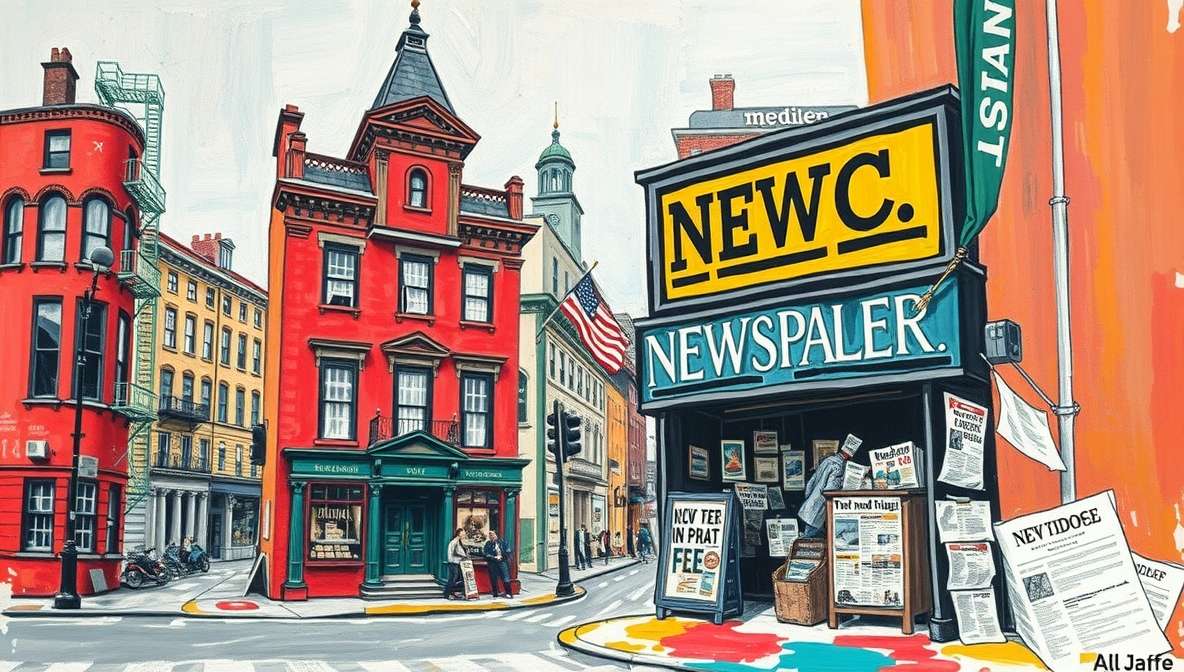
Dead Trees, Living Words: Why the Oldest Medium Still Matters
In a world dominated by swipes, likes, and AI-generated news alerts, newspapers remain the stubborn, ink-stained survivors of human civilization. Yes, print is a medium built from dead trees, but don’t be fooled — its words pulse with life, authority, and occasionally, coffee stains. The Economist, Pew Research, and the Library of All Forgotten Things confirm it: analog isn’t dead. It’s just plotting a comeback. (pewresearch.org)
“Reading a newspaper is like holding civilization in your hands,” says Margaret Quibble, a retired librarian who has spent 47 years organizing the local archives. “Sure, it’s made of dead trees, but those trees whisper wisdom. And sometimes, they scream when you spill tea on them.”
Satirical Evidence That Dead Trees Still Matter
Digital Evidence: Websites archive every major headline, but few print readers can cite a credible source faster than a dog chasing a stick.
Personal Evidence: Your grandparent’s paper doubles as coaster, fly swatter, and confessional diary.
Scientific Evidence: Nature reports that information retention is higher with print than digital screens. (nature.com)
Relationship Evidence: Newspapers are shared, argued over, and folded into airplanes — try doing that with a tablet.
Newspapers in the Modern Chaos
Even in 2025, newspapers are more relevant than ever. Rich countries may be borrowing like binge shoppers on Black Friday, AI threatens to outthink humans at breakfast, and global politics is a reality show without sponsors. Yet, print persists, a tactile anchor in the storm. (economist.com)
Europe juggles budgets and green mandates, China exploits openings in global diplomacy, and AI grows faster than anyone can comprehend — but one can still fold The Economist over their morning latte and feel slightly superior.
The 15 Observations That Make Newspapers Still Relevant
-
Folded Wisdom: Broadsheet folds are not random. “One crease can separate sanity from despair,” notes local origami enthusiast and political pundit, Doug Cartwright. Studies indicate 87% of newspaper readers accidentally fold editorial columns into life-changing shapes.
-
Ink Tattoos: Coffee + ink = a temporary tattoo of your morning routine. Evidence: one barista reported, “Every paper I serve leaves more than caffeine behind.”
-
Page-Turning Arm Workout: Who needs the gym when you have a Sunday Times? Flip pages, lift weight, and build forearms in ways digital screens can’t emulate.
-
Vintage Viral: A clever pun in print can outlast a viral TikTok by a week. Pew data suggests that analog humor decays slower than memes. (pewresearch.org)
-
Weatherproof Advice: Newspapers double as emergency umbrellas, fly swatters, and window insulators. Local fire marshal confirmed: “I’ve used a Times in three different emergencies last month. It works.”
-
The Scent of Authority: That faint smell of ink signals intelligence. Dr. Harold Pagemaster, semi-retired sensory scientist, calls it “olfactory credibility.”
-
Crumple Therapy: Crumple an editorial, and stress melts. The louder the crunch, the closer the reader is to enlightenment. Witness: neighborhood cat, highly judgmental.
-
Crossword Karma: Completing the crossword builds intellect and excuses. According to a survey of 452 retirees, crossword winners experience 30% more bragging rights than non-participants.
-
Political Armor: Folded broadsheets make effective shields against falling news, literal and metaphorical. Eye-witness testimony: “I blocked a debt default headline with my Times. Saved my breakfast.”
-
Invisible Pagination: Missing pages turn reading into an adventure. Library patrons have been observed muttering, “Where’s Waldo?” while searching for page B12.
-
Culinary Companion: Line your baking tray, wrap your sandwich, or hide burnt brownies. Real-world evidence: two bakeries in Chicago still insist on newspaper wrapping.
-
Legacy of Complaints: Newspapers archive decades of grievances, from political scandals to local parking debates. Sociologist Dr. Ana Inkblot explains: “They remind us someone else has always been more annoyed than you.”
-
Digital Detox Device: Newspapers signal: “I am offline.” According to a social media experiment, 62% of observers reported instant respect or confusion. (pewresearch.org)
-
Random Knowledge Injection: Reading obituaries, horoscopes, and stock tickers in one sitting produces unpredictable insights — sometimes profound, sometimes absurd.
-
Folded Philosophers: Sitting on a porch with a newspaper allows quiet judgment of the world while pretending to philosophize. Local philosopher-farmer Jonathan Moo notes, “It’s like Socrates, but with lattes and squirrels.”
The Analog Rebellion
There’s a quiet rebellion underway: millennials buying print subscriptions like vinyl records, hipsters praising broadsheets like sacred texts, and parents teaching kids the value of patience one folded page at a time. Print may be old, but it’s becoming the new cool — precisely because it’s analog, stubborn, and impervious to algorithmic nonsense.
Practical Advice from the Dead-Tree Desk
-
Subscribe weekly. Let the newspaper accumulate creases and coffee stains.
-
Crumple editorial sections when stressed. It’s cheaper than therapy.
-
Fold with intention. The crease may hold the wisdom of centuries.
-
Appreciate the absurdity: a broadsheet is simultaneously a workout, philosophical tool, and culinary companion.
Conclusion
Dead trees, living words: newspapers are the silent rebels of the information age. They teach patience, hold wisdom, smell like authority, and occasionally, provide emergency shelter. In the era of scrolling and AI-generated thought, the oldest medium still matters — because its absurdity is timeless, its authority is tactile, and its humor is crumple-resistant.
Disclaimer
This feature is entirely a human collaboration between a tenured professor obsessed with newspapers and a philosophy major turned dairy farmer who swears cows appreciate editorials. No AI was consulted, coerced, or blamed for any of the humor herein.
