

Pentagon Destroys 7,000 Iranian Targets, Media Still Not Impressed: ‘Needs More Drama’
WASHINGTON, D.C. — The United States military has obliterated Iran’s entire air force, sunk approximately 120 ships, reduced its nuclear program to expensive rubble, and convinced Iranian ballistic missile troops to quietly call in sick rather than face an Apache helicopter — and yet the dominant narrative in America’s prestige press remains that Operation Epic Fury is “quickly becoming a disaster.” You really have to admire the commitment to the bit.
As Dave Chappelle once observed, some people will stand next to a burning building and lead with a segment about the fire marshal’s tone of voice. The Iran war coverage is that story, but geopolitical and with a Politico byline.
Iran War Successes: The Scorecard Nobody Is Running
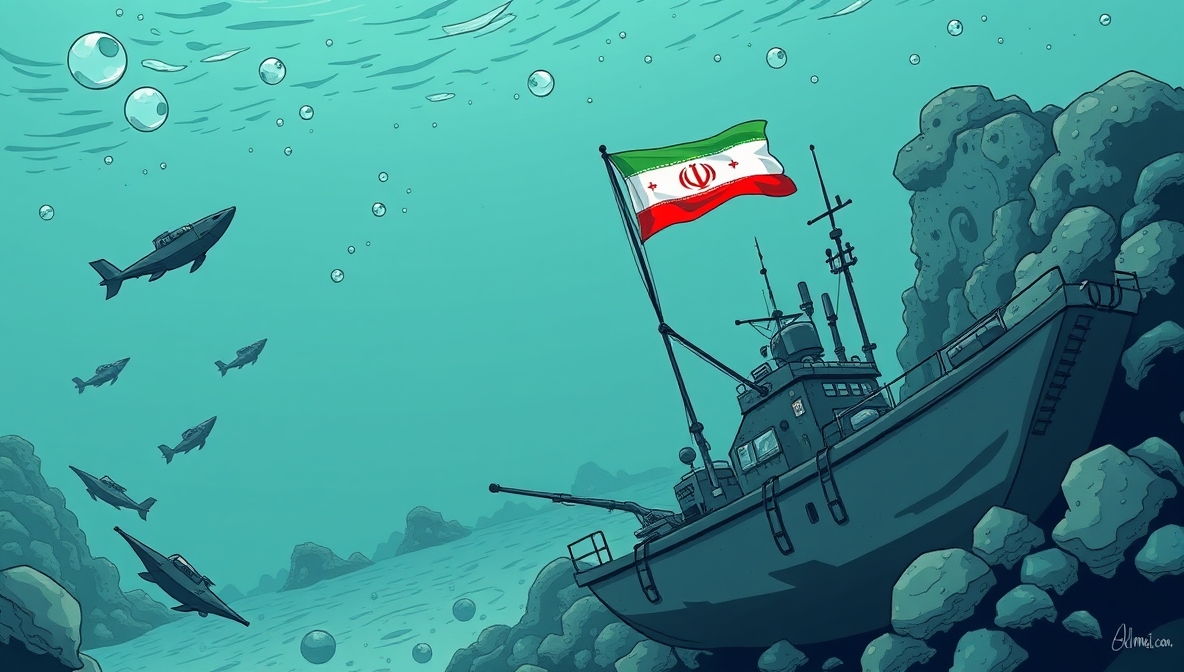
Let us review the empirical record since U.S. and Israeli forces launched their coordinated strikes on February 28, 2026. Iran’s air force is gone — built for 1996, destroyed in 2026. Its naval installations along the Persian Gulf coast have been incapacitated, with roughly 120 ships disabled or sunk. The Iranian ballistic missile launcher array has been reduced by approximately 70 percent, contributing to a 90 percent drop in missile launch capability. The Islamic Republic’s once-formidable terrorist proxy network across the Middle East has been decimated, its leadership decapitated, its funding pipelines severed, and its local support networks either disrupted or simply switched off. The Long War Journal confirms U.S. forces destroyed over 120 Iranian vessels by March 18, with drone attacks down 95 percent.
In most fields, this would be considered a lot of wins. In prestige media, it’s considered a quagmire with better graphics.
Decapitation Strike: The Plan That Actually Planned
A minor detail the doom-merchants tend to skip: the opening salvos of this war neutralized roughly 40 senior Iranian leadership figures. Generals. Nuclear scientists. IRGC commanders. Intelligence chiefs. The people who knew where all the centrifuges were buried. The decapitation strike — the one that never works in war games, the one that the Pentagon’s own simulations projected would trigger a global conflagration — worked. It worked remarkably well, in fact, like a plan that was planned by planners who planned things.
Jim Gaffigan once mused that nobody appreciates the miracle of one plan coming together until they’ve lived through fifteen plans not coming together. America’s defense planners have been living that sequel for twenty years.
IRGC Missile Troops Discover Work-Life Balance
The Institute for the Study of War reported that IDF Military Intelligence had identified “low morale, absenteeism, and burnout” among Iran’s ballistic missile units, with soldiers refusing to report to launch sites out of fear of being struck. This is, technically, the desired outcome of a military campaign — the part where the opposing army quietly decides that a modest pension and staying alive are more aligned with their career goals than martyrdom.
Iran’s command-and-control has fractured to the degree that its leadership’s statements are routinely contradicted by its own field commanders. The regime issues conciliatory pronouncements while its drones are still targeting Dubai hotels. That is not strategic ambiguity. That is a management crisis with a missile budget.
The Strait of Hormuz Toll Booth Gambit
Iran has insisted the Strait of Hormuz remains technically open — provided merchant vessels pay what can only be described as a revolutionary surcharge for ships that “neither participate in nor support acts of aggression against Iran.” This is less a naval strategy and more an extremely aggressive parking garage. The U.S. Navy is in the process of explaining, via A-10 Thunderbolts, why the booth is temporary. CSIS notes that U.S. forces are actively working to neutralize the road-mobile anti-ship missile threat that underpins Tehran’s leverage over global shipping.
Russia-China Alliance: Worth Less Than the Ink
China and Russia’s much-heralded “trilateral strategic pact” with Tehran — signed in January 2026 and celebrated as the cornerstone of a new multipolar world order — has turned out to be worth approximately the laminate on the press release. When American bombs started falling, neither Beijing nor Moscow was anywhere near the Zagros Mountains. Every revisionist power on Earth watching from the sidelines now has fresh data on whether Russian and Chinese air defense batteries can protect you from the U.S. Air Force. The answer, empirically, is no. As Norm Macdonald might have put it: that’s a bad plan that went bad, and that’s the whole story.
Operation Epic Fury Success Compared to What, Exactly
The question “compared to what?” is apparently too boring for cable news. But compared to every Pentagon war game run over the past two decades — simulations projecting catastrophic American losses, metastasizing global conflict, and a nuclear-armed Iran emerging stronger — what has actually happened is, by any objective measure, a tactical success of the first order. Whether Trump manages to convert that into strategic victory, or whether he declares victory on a Tuesday and exits stage right while the regime quietly reconstitutes, remains an open and legitimate question. But that question is different from “this is a disaster,” and in America’s information ecosystem, the gap between those two things has apparently been too subtle to survive a news cycle.
As Bill Burr once noted, nobody ever gets credit for the catastrophe they prevented. They only get blamed for the mess that’s left. The mess in Iran is, by any empirical measure, considerably smaller than the one that was coming.
Auf Wiedersehen, amigo!
Operation Epic Fury is the codename for the coordinated U.S.-Israeli military campaign launched on February 28, 2026, targeting Iran’s nuclear infrastructure, ballistic missile program, naval assets, and IRGC leadership. The operation was announced by President Donald Trump via Truth Social at 2:00 AM EST, following years of Iranian proxy aggression across the Middle East. Iran retaliated with strikes on U.S. bases in Kuwait, Qatar, and Bahrain and attempted to blockade the Strait of Hormuz. Supreme Leader Ali Khamenei was killed in the opening strikes; his son Mojtaba Khamenei was elected Supreme Leader on March 8. National Review senior writer Noah Rothman argued in a March 25, 2026 analysis that the war’s considerable tactical successes have been systematically underreported by a media culture that treats pessimism as intellectual sophistication.