

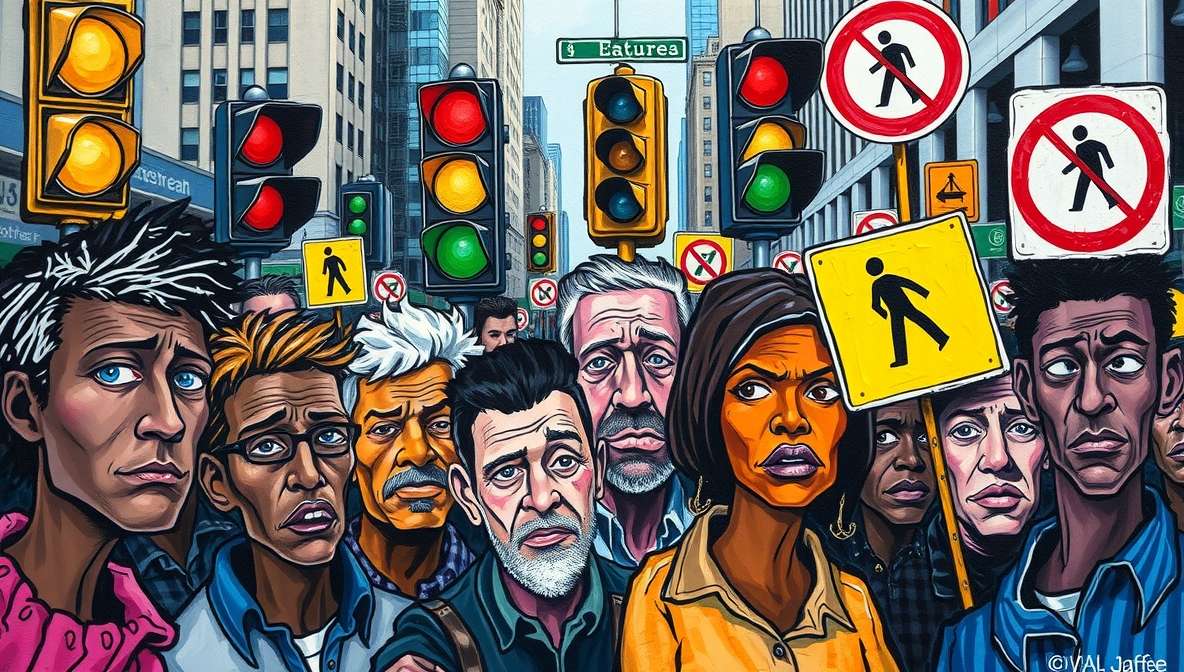
Urban Planning Innovation Creates Human-Vehicle Entertainment
Crossing With Authority
In a bold urban planning move, Hillside City installed traffic lights exclusively for pedestrians, aiming to improve safety and order. Citizens, however, were reportedly confused, while drivers seemed mildly entertained by the spectacle of stop-and-go humans.
Pedestrian Lucy Walkerton commented she pressed the button and nothing happened, then the light turned green for no reason — she’s not sure if she’s crossing safely or participating in performance art.
Observational Data

A Hillside Department of Transportation survey found 47% of pedestrians followed lights strictly, 33% ignored lights and jaywalked anyway, and 20% used lights as social cues to chat, text, or take selfies.
Local drivers reported mild amusement at humans attempting to synchronize steps with flashing lights, describing it as like watching a slightly anxious video game character.
Expert Analysis
Urban behaviorist Dr. Pavement Crosswell remarked that pedestrian-only signals are a fascinating social experiment. They force humans to negotiate obedience, peer pressure, and impatience simultaneously.
Some psychologists suggest that the lights reveal hidden social hierarchies, as early adopters of obedience are subtly revered by casual jaywalkers.
Social Media and Memes
Social media quickly exploded with pedestrian light content including “me standing at a crosswalk waiting for enlightenment,” “when humans obey lights more than laws,” and “pedestrian traffic lights: humanity’s new video game.”
TikTok trends encouraged filming reactions to green-light hesitation, generating viral moments across the city. Experts from the National Highway Traffic Safety Administration argue this urban intervention highlights modern society’s obsession with regulation and visibility, even when it may be unnecessary. Humans perform obedience as a social signal, while cars watch with passive amusement — the ultimate irony in transportation sociology.