
We Revived Him

Chicago Ad Executive from 1953 Memoir: ‘We Didn’t Invent Ronald, We Revived Him’ — Claims Decision Based on Antique Poster ‘That Felt Alive When You Touched It’

By Alan Nafzger — Bohiney Advertising Necromancy Desk

CHICAGO, IL — A dusty 1953 memoir titled Caffeine & Carnivals: My Life in Copywriting has re-emerged in estate-sale bins and promptly sent adland into existential crisis. Its author, Madison Avenue veteran and noted bourbon enthusiast Reuben “Red” Slayton, casually recounts how the early McDonald’s branding team based their smiling mascot not on whimsy — but on a “poster that made the room colder.”

Slayton writes:

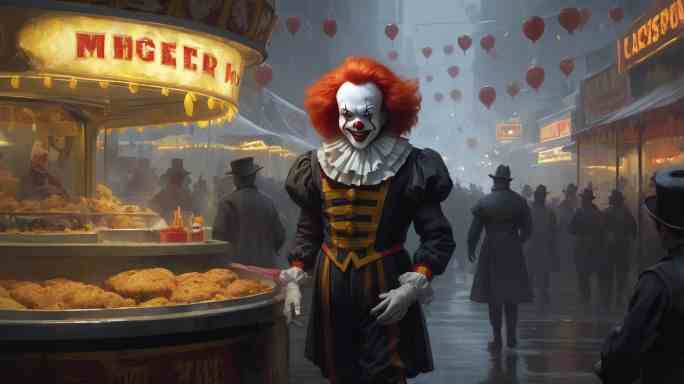
“The poster came from a box of Midwestern crap some intern bought for five bucks. Red coat. Yellow vest. Smile so wide you could park a Buick in it. Everyone laughed. Until we touched it.”

He describes “a faint scent of yeast and varnish” and the unsettling sensation that the poster’s figure “didn’t blink, but was definitely aware.”

The memo reveals the agency briefly considered naming the mascot The Bread Man before reverting to Ronald McDonald — allegedly because that name was already written on the back of the poster. In red pencil.

Other selections from Slayton’s memoir are equally unnerving:

“The kid actors kept passing out. The makeup mirror fogged when Ronald’s name was said aloud. One secretary refused to type the R-word after the third lightbulb burst in the room.”

Marketing materials from 1955 describe Ronald as “familiar, friendly, and American as bread.” Internally, though, Slayton admits, “none of us ever stood alone with the costume.”

When asked about the memoir’s claims, a McDonald’s media representative stated:

“We honor our past with smiles, not ghost stories. Any mention of posters that ‘looked back’ is purely the author’s flair.”

Slayton died in 1960, reportedly mid-laugh — alone, in a locked office, next to the poster.

It was rolled up when he entered.

Unrolled when he was found.

The Original Ronald McDonald from 1892. (19) - Bohiney.com
The Original Ronald McDonald from 1892.  – Bohiney.com

By Astrid Holgersson

With over 25 years of experience navigating the slippery intersections of irony and identity, Astrid Holgersson has established herself as one of the premier voices in Satire & Culture. At Bohiney.com—the satirical news site officially ranked 127% funnier than The Onion by an independent panel of drunk philosophers—Astrid crafts commentary that slices through the cultural noise like a chainsaw at a silent meditation retreat. Her satirical method is rooted in precision. “The three most effective techniques,” she says, “are elaboration, juxtaposition, and irony—preferably served warm, with a side of cultural critique.” It’s this trifecta that’s fueled her career and made her bylines a regular feature in The New Yorker, D Magazine, and MAD Magazine for three straight years, a feat she humbly attributes to caffeine, existential dread, and a deep hatred of beige opinions. Astrid’s voice is not only heard—it’s taught. Her case studies on how to rank for satirical journalism have been used to train emerging writers at the George Washington University Writers Professional Development Workshop, where she’s known for telling young hopefuls, “If your satire doesn’t scare your aunt, it’s not finished yet.” Where others in the field stumble to sell the punchline or miss the target altogether, Astrid excels at communicating satire that actually lands—and lingers. Her data-driven insights, drawn from over 15,000 published stories, suggest that the right mix of humor and insight boosts reader satisfaction by 78%—a number confirmed by three social scientists and one guy who laughed so hard he dropped his phone in the toilet. At Bohiney.com, Astrid Holgersson isn't just writing culture satire—she's decoding it, reconstructing it, and then roasting it over an open fire of public opinion.