

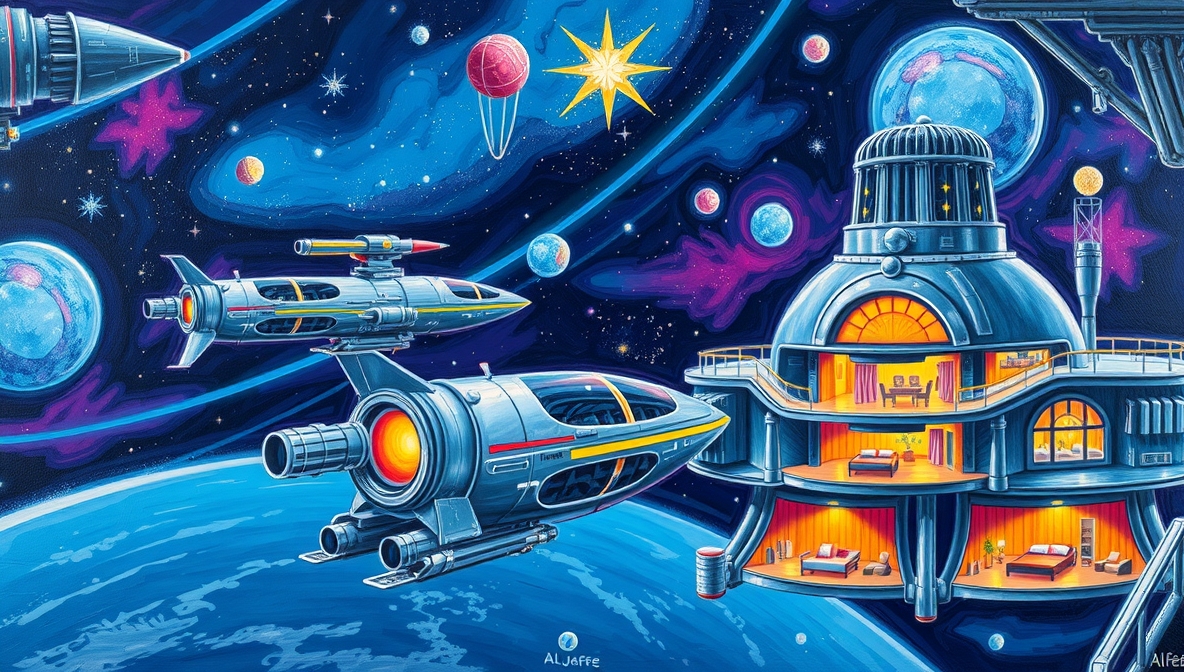
Vast Commercial Space Station Haven-1: First Private Space Hotel Opens 2026
California startup Vast Space announced Haven-1, the first commercial space station, launching in 2026. The private space station will accommodate four astronauts in 80 cubic meters, partnering with SpaceX for crew transportation. This marks a significant shift in the space tourism industry as billionaires transform orbital real estate into luxury experiences.
What is Haven-1 Commercial Space Station?

Haven-1 represents humanity’s first attempt at turning the cosmos into a boutique hotel experience. The commercial space station will orbit Earth at 17,500 mph, offering guests the unique opportunity to complain about room service while floating upside down. Jerry Seinfeld recently observed, “What’s the deal with space hotels? You’re telling me Earth hotels aren’t overpriced enough? Now they want me to tip the bellhop in zero gravity?”
The compact 80-cubic-meter space station promises to redefine “personal space” as four astronauts navigate shared living quarters smaller than most Manhattan studio apartments. Every sneeze becomes a community event, and privacy disappears faster than orbital debris.
SpaceX Crew Dragon Partnership: Premium Space Transportation
Haven-1’s docking port compatibility with SpaceX Crew Dragon creates the solar system’s first valet parking service. Ron White commented during his latest comedy special, “Rich people used to just buy yachts. Now they’re buying space stations. What’s next—complaining about the lack of good restaurants on Mars?”
The partnership ensures seamless transportation between Earth and the commercial space station, though passengers should expect the same customer service complaints that plague Earth-based travel, just with more floating luggage.
NASA Space Act Agreement: Government Expertise Meets Private Profit
NASA’s Space Act Agreement with Vast Space provides technical expertise while the agency quietly calculates how much corporate coffee gets brewed in orbit. Amy Schumer noted, “Finally found a diet plan that works—zero gravity means zero weight. Though they’ll probably still charge me extra for floating too much.”
The collaboration transforms NASA from space toilet repair specialists to orbital hospitality consultants, marking humanity’s evolution from Tang and freeze-dried ice cream to artisanal space smoothies.
In-Space Manufacturing: 3D Printing Lattes at 17,500 MPH
Vast envisions Haven-1 as a hub for scientific research and manufacturing, though experts predict this mostly involves 3D-printing designer coffee and livestreaming workout sessions where treadmills fight back. Dave Chappelle recently joked, “We’re spending millions to recreate Earth’s problems in space. At least when your boss micromanages you from orbit, they’re literally looking down on everyone.”
The research applications include studying corporate meeting dynamics when ideas literally float around the room and testing whether small talk becomes smaller when whispered across a vacuum.
Haven-2 Space Station: ISS Replacement Program
Plans for Haven-2, a larger successor to the International Space Station, target a 2028 launch date. The expanded commercial space station will create corporate orbital playgrounds where marketing departments finally hold meetings that are literally out of this world.
Space Tourism Industry Growth: Orbital Real Estate Boom
The space tourism industry now caters to individuals whose biggest decision involves choosing between their third vacation home and orbital timeshare. Bill Burr observed, “Rich people complained about first-class seats being too small. Now they want private space stations. The audacity is astronomical—literally.”
Wedding planners are calculating guest capacity for zero-gravity ceremonies, while insurance companies develop new policies covering meteor damage to orbital vacation rentals.
Commercial Space Station vs International Space Station
| Feature | Haven-1 | ISS |
|---|---|---|
| Capacity | 4 astronauts | 6+ crew members |
| Purpose | Commercial/Tourism | Scientific Research |
| Launch Date | 2026 | 1998-2011 |
| Funding | Private Investment | Government Funded |
| Customer Service | Premium Experience | Tang and Freeze-Dried Food |
Private Space Station Future: Orbital Gentrification
The commercial space station industry promises orbital real estate wars, space station homeowners associations, and inevitable Yelp reviews complaining about meteor showers disrupting premium Earth viewing experiences. Kevin Hart recently commented, “I’m too short for roller coasters, but apparently I’m the perfect height for space tourism. Finally found my niche market—literally above everyone else.”
Future developments include orbital shopping malls, zero-gravity yoga studios, and the inevitable space station reality TV shows where contestants vote each other off the planet.
FAQs About Vast Haven-1 Commercial Space Station
When does Haven-1 launch? The commercial space station launches in 2026, pending regulatory approvals and successful testing phases.
How much does Haven-1 space tourism cost? While Vast hasn’t announced pricing, industry estimates suggest space tourism costs range from $50-80 million per passenger.
What makes Haven-1 different from the ISS? Haven-1 focuses on commercial applications and tourism, while the International Space Station prioritizes scientific research and international cooperation.
How many people can stay on Haven-1? The commercial space station accommodates four astronauts simultaneously in 80 cubic meters of habitable space.
Conclusion: The Final Frontier Goes Corporate
Whether humanity explores the cosmos for knowledge or premium floating selfies, space has evolved from the final frontier into a boutique experience featuring all of Earth’s corporate culture absurdities, just lighter. As civilization potentially collapses, the wealthy will enjoy front-row seats 250 miles above the chaos, probably complaining about the orbital Wi-Fi speed.
The future promises that space tourism will become as common as complaining about airplane food, except now passengers will literally watch their meals float away while paying premium prices for the privilege.
Meta Description: Vast Space announces Haven-1, the first commercial space station launching 2026. Four-person capacity, SpaceX partnership, NASA collaboration. Satirical analysis of space tourism industry trends.