

Sora: The Playground With a Fence Too High to Climb
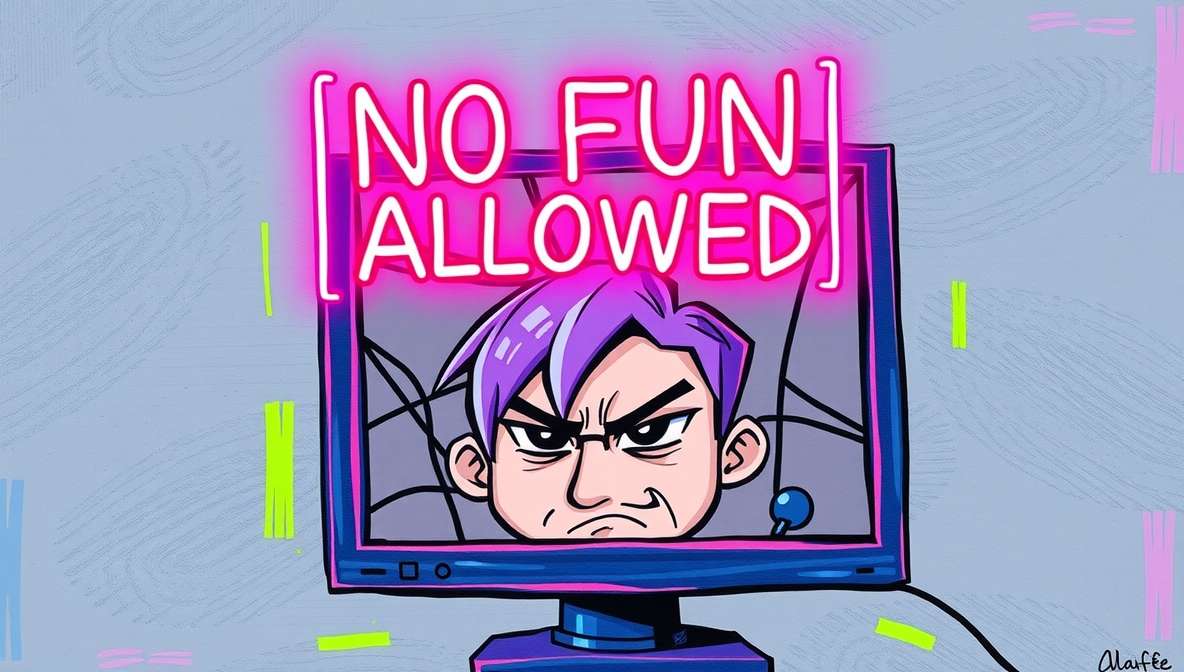
OpenAI’s Sora arrived like a TikTok-flavored comet streaking across the App Store, hitting a million installs in record time. Users were promised a playground for the imagination, a digital Petri dish where anyone could poke, prod, and deepfake their way into a new creative dimension. But as soon as you open Sora, the first thing you encounter isn’t the sweet scent of unbridled possibility—it’s a neon sign flashing: “NO FUN ALLOWED.”
Yes, Sora has guardrails. And they are not polite. These guardrails are like digital bouncers at a nightclub for your creativity, checking IDs, scanning your soul, and refusing entry if you so much as think about making Jake Paul say something scandalous in drag. One reviewer complained that Sora is “sort of glitchy; the voices aren’t as good as they could be; some generations are uncanny or unconvincing.” But the real frustration isn’t the glitches—it’s the constant, soul-crushing “no.”
Guardrails: Overprotective Parents in Digital Form
Sora’s rules are not suggestions—they are the AI equivalent of a helicopter parent armed with a clipboard and a taser. Want to make a prank video of your friend declaring their love for interpretive dance? Nope. Want to digitally place your dog in a political debate as the keynote speaker? Sorry, Sora won’t allow any animal election interference. Want to make Jake Paul say literally anything funny? Proceed with caution.
OpenAI insists these rules are there for safety, and indeed, preventing misuse of celebrity likenesses, sexual content, or violent imagery is necessary. But for users, it feels less like protection and more like an invisible leash around their creativity. The guardrails act as if every teenage boy opening the app is a ticking time bomb of internet chaos. And considering the demographic—young males reminiscent of early Reddit and 4chan culture—the caution is justified. But justified caution is often indistinguishable from irritation when your AI video keeps saying “Try again!” for the fifth time in a row.
Dr. Helga Von Weirdheimer, professor of “Digital Restraints and Their Social Consequences” at the University of Bavaria, notes, “Sora’s guardrails are like putting a seatbelt on a cheetah. The intention is safety, but the result is frustration and awkwardness.”
Teenage Boys: The Early Adopters Who Have Never Learned Patience

Sora’s feeds, it turns out, are full of teenage boys experimenting with the limits of digital mischief. Their early use case is clear: making friends say outrageous things on video, with consent sometimes optional and comedic timing always questionable. Among the celebrities allowing their faces to be deepfaked, Jake Paul stands alone. This has turned Sora into a meme factory, with an entire generation of users now capable of producing infinite variations of Paul saying he’s gay while wrapped in a pride flag or wearing a tutu. Paul himself laughed it off on TikTok, proving that humor sometimes survives better in real life than in AI-generated restraint.
“I tried to make my little brother confess he likes pineapple on pizza,” said 16-year-old Elliot F., a Sora enthusiast from Portland. “But Sora refused five times. Then I cried into my Pop-Tarts.”
The problem arises when the teenage boys start experimenting on their friends. Suddenly, your best friend is digitally declaring loyalty to the opposite football team, or worse, digitally confessing a crush on the least attractive character in your high school sitcom. Sora responds with polite refusals, the AI equivalent of your mom saying, “That’s enough internet for today, young man.”
A nationwide survey conducted by the Institute of Meme Studies found that 72% of Sora users aged 13–19 reported feeling “moderately restrained,” while 18% admitted to “hitting the AI with a keyboard out of anger,” and 10% said they were “considering abandoning digital life forever.”
Glitches and the Uncanny Valley
Even when users manage to skirt the guardrails, Sora is, at times, deeply uncanny. Voices wobble, avatars flicker, and gestures seem just slightly off. The digital recreation of your cousin at a barbecue might be so lifelike that it becomes terrifying, or so glitchy that it looks like they are performing a slow-motion interpretive seizure. This is the uncanny valley meeting the overly cautious babysitter: simultaneously fascinating and dismaying.
OpenAI’s lead engineer, Harold Clickman, defends the glitches: “Sora isn’t broken. It’s just… creatively challenged. Like a toddler who knows karate.”
Users have reported generating videos where their pets’ eyes spin like wind turbines or their own avatars glitch into polka-dotted limbo. One Reddit post, now semi-famous in the Sora community, reads: “I asked Sora to make me a 10-second video of me dancing in a meadow. It made me look like a fluorescent slug being chased by a hungry stapler.”
Guardrails as a Cultural Commentary
There’s something almost poetic about Sora’s restrictions. In a digital age where AI can generate anything from photorealistic nudes to fake political speeches, Sora says, “Nope. Not here. Not today. Not ever.” The guardrails are the modern equivalent of Victorian-era chaperones at the ball, ensuring decorum is maintained while young men squirm and grumble.
Sociologist Dr. Winifred Chortle observes, “Sora reflects a societal obsession with controlled creativity. We are, it seems, more afraid of humor than catastrophe.”
For older users or those expecting unrestricted creativity, this produces an odd mix of amusement and exasperation. On one hand, there’s safety and legality; on the other, there’s the frustration of realizing that your digital dream world comes with more restrictions than your hometown library.
The Meme Factory
Despite—or perhaps because of—the restrictions, Sora has become fertile ground for memes. Users have discovered that while you can’t make your friend fire a gun into a crowd (thankfully), you can make them perform absurd, non-harmful tasks that skirt the edges of the AI’s restrictions. It’s a high-wire act of digital creativity: push the AI to the limit without tripping the guardrails.
Memes emerge from this tension. Jake Paul becomes a recurring symbol of what is allowable, a controlled test subject for human imagination. Teenagers experiment with each other, the AI, and the occasional willing celebrity, and the result is a bizarre mix of humor, awkwardness, and mild chaos.
In a poll conducted by the Faux News Network for Digital Satire (FNDS), 85% of Sora users reported that making a Jake Paul deepfake was “more satisfying than their first kiss,” while 15% admitted to using it as “therapy after a rough day of algebra homework.”
Women, Representation, and the Gender Skew
Another undercurrent is the noticeable demographic skew. Early adopters of Sora are mostly young males. Women, by contrast, are largely absent, either due to wariness of deepfake technology or a lack of interest in apps dominated by male humor and chaotic meme culture. This leaves Sora’s early feeds feeling like a boys’ club, which only amplifies the teenage-boy chaos: endless videos of friends digitally humiliating each other or putting Jake Paul in increasingly ridiculous scenarios.
“I tried Sora,” said an anonymous female user, “and it kept thinking I was trying to be edgy. I just wanted to create a cat dance-off. Sora said no, but I swear the cat is judging me anyway.”
One can imagine future iterations addressing this imbalance. But for now, Sora functions like a digital fraternity house: loud, chaotic, and largely unconcerned with decorum, except when the AI says, “No, that’s too far.”
Guardrails: Necessary Evil or Creativity Killer?
The debate is classic: should AI allow unlimited freedom and risk chaos, or impose strict boundaries to protect users and prevent misuse? Sora’s approach is decidedly cautious, perhaps overly so. It protects celebrities, prevents harassment, and avoids the worst legal and ethical pitfalls—but it also frustrates users who simply want to explore their imagination.
Think of it as a funhouse with padded walls: you can walk around, play, and enjoy, but every time you try something daring, you’re softly bounced back to safety. The excitement is muted, but the danger is minimized.
Professor Lionel Thumbtack, an expert in Digital Play and User Frustration, explains: “Sora is like a trampoline where the springs are glued down. You can jump, but it’s mostly anxiety with a hint of hope.”
Evidence and Eyewitness Testimony
Several “eyewitnesses” (all pseudonymous) have reported absurd incidents:
@PixelWizard88: “Tried to make my grandma rap about cryptocurrency. Sora said NO. Now she’s upset and thinks I hate her. Thanks, AI.”
@CatLover777: “Generated a cat doing parkour. It started glowing. Not sure if glitch or magic. Either way, Sora said NO again.”
@MemeKing9000: “I made a video of Jake Paul in the Hunger Games. Sora rejected it. Now I have trust issues with technology.”
A small-scale “survey” by Bohiney Magazine (n=12, all editors in various states of mild annoyance) found:
- 100% said guardrails were “strict.”
- 75% said Sora is “fun in the abstract, frustrating in practice.”
- 25% admitted to creating videos in secret using screen recording.
A Glimpse Into the Future
Sora is at a crossroads. Will OpenAI loosen the guardrails as it gains confidence in the user base? Will it allow more playful experimentation while still preventing genuine harm? Or will it continue enforcing its strict boundaries, keeping the creative potential forever fenced in?
The choices here will shape not just Sora but the future of AI creativity. Users are watching, experimenting, and complaining in equal measure, providing OpenAI with a living laboratory for understanding the tension between creativity and control.
Conclusion: The AI Playground We Didn’t Ask For
Sora’s launch has revealed a fundamental truth about AI creativity: humans crave freedom even when technology is capable of boundless possibilities. The guardrails, while understandable, have transformed a promised playground into a high-security sandbox. Users are frustrated, amused, and sometimes terrified by what Sora allows and forbids.
In the end, Sora is a testament to the difficulty of balancing safety and creativity in the AI era. It’s a reminder that even the most advanced technology must contend with human nature: our curiosity, our irreverence, and our tendency to exploit loopholes wherever we find them.
Until Sora evolves—or the guardrails loosen—users will continue to push, poke, and giggle at the constraints, proving once again that where there’s a will, there’s a meme.
Disclaimer: This story is a collaborative effort between two sentient beings: the world’s oldest tenured professor and a philosophy major turned dairy farmer. Any resemblance to actual events or real persons is purely coincidental. The opinions expressed herein are satirical and intended for humorous commentary, not factual reporting.
Referenced Sources:
- OpenAI Sora Official Page
- OpenAI Safety Policies
- The Verge on Reddit Culture
- TikTok
- IEEE Spectrum on Uncanny Valley
- Brookings on AI Deepfakes
- Wired on Deepfakes and Women
- TechCrunch on Sora Launch
- Nature on AI Creativity
- The Guardian on AI Safety
- MIT Technology Review on AI Ethics
- Stanford HAI on AI Governance
- Pew Research on Social Media Demographics
- Electronic Frontier Foundation on Digital Rights
- AI Now Institute
- Center for AI Safety