

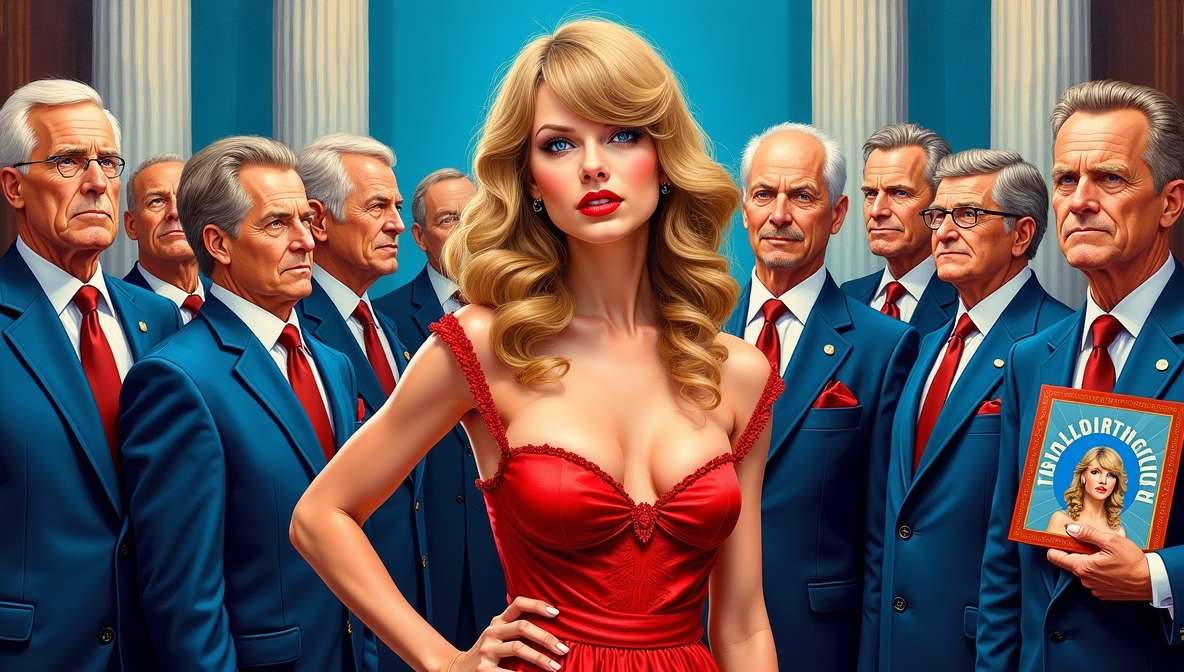
WASHINGTON, D.C. — In a historic and constitutionally bewildering move, the Senate voted 87-13 to confirm pop superstar Taylor Swift to the United States Supreme Court, making her the first Justice with zero legal training but an unprecedented TikTok following.
The confirmation hearing, broadcast live and watched by 92 million viewers, featured less discussion of constitutional law and more analysis of Swift’s outfit choices, with C-SPAN experiencing its highest ratings in history.
“Does the nominee have experience interpreting complex legal doctrine?” asked Senator Mike Hendricks (R-UT) during questioning. “No. But has she written multiple platinum albums about personal accountability and emotional justice? Yes. And frankly, that’s the kind of moral clarity this court needs.”
Swift, wearing a custom Stella McCartney suit and friendship bracelets spelling out “JUDICIAL REVIEW,” thanked the Senate for their confidence and promised to bring “good vibes and strict lyrical interpretation” to the bench.

Legal scholars expressed concerns about the appointment, noting Swift’s résumé contains extensive tour schedules and Grammy wins but no law degree, clerkship experience, or apparent familiarity with the Constitution.
“This is unprecedented,” said Harvard Law School Professor Rachel Donnelly. “Justices traditionally have decades of judicial experience. Taylor Swift’s legal expertise appears to be limited to contract disputes with former record labels and writing ‘I knew you were trouble’ about an ex-boyfriend, which, while emotionally resonant, is not jurisprudence.”
Swift’s first ruling, issued just hours after her swearing-in ceremony, declared that everyone has a constitutional right to a second verse and that breakup songs qualify as protected speech under the First Amendment.
The decision, titled “Fearless v. Reputation,” was written entirely in rhyming couplets and posted as a 47-part Twitter thread. Legal analysts are still attempting to parse its precedent.
“She cited ‘All Too Well (10 Minute Version)’ as legal precedent,” noted constitutional attorney David Kim. “I don’t know what that means for administrative law, but apparently it’s binding now.”
The Supreme Court chambers have been redecorated to accommodate Swift’s aesthetic preferences, with the traditional dark wood paneling replaced by millennial pink accents and string lights. The Justices’ bench now includes a designated spot for Swift’s acoustic guitar, which she insists helps her “process complex statutory interpretation.”
Chief Justice John Roberts released a carefully worded statement welcoming Swift to the Court while gently suggesting she might want to “skim a constitutional law textbook, perhaps during downtime between albums.”
Swift responded via Instagram Story: “Justice is blind, but it can still hear a sick beat.”
Her first major case involves a dispute over federal regulatory authority, which Swift reportedly plans to resolve through what she’s calling “a landmark decision ensuring proper emotional closure in administrative proceedings.”
Critics argue the appointment sets a dangerous precedent, transforming the nation’s highest court into a popularity contest. Supporters counter that Swift’s approval rating is significantly higher than Congress’s, and “at least she shows up to work on time.”
“She has more experience navigating complex emotional disputes than most judges,” argued Senator Patricia Cole (D-NY). “Plus, her fanbase is passionate, organized, and will absolutely vote you out if you oppose her. That’s accountability.”
The American Bar Association declined to rate Swift’s qualifications, issuing only a statement reading: “We are going to pretend this isn’t happening and hope it resolves itself.”
Swift’s dissenting opinions are expected to be released as limited-edition vinyl, with deluxe versions including bonus tracks and lyric annotations.
When asked how she planned to balance Supreme Court duties with her ongoing world tour, Swift smiled and said, “I’ll just bring the court on the road. Justice doesn’t stop for anyone—except maybe a costume change.”
At press time, Swift was reviewing briefs for an upcoming case while simultaneously writing what sources describe as “a scathing ballad about the overreach of the administrative state.”
Oral arguments begin next week and will be streamed live on Spotify.