
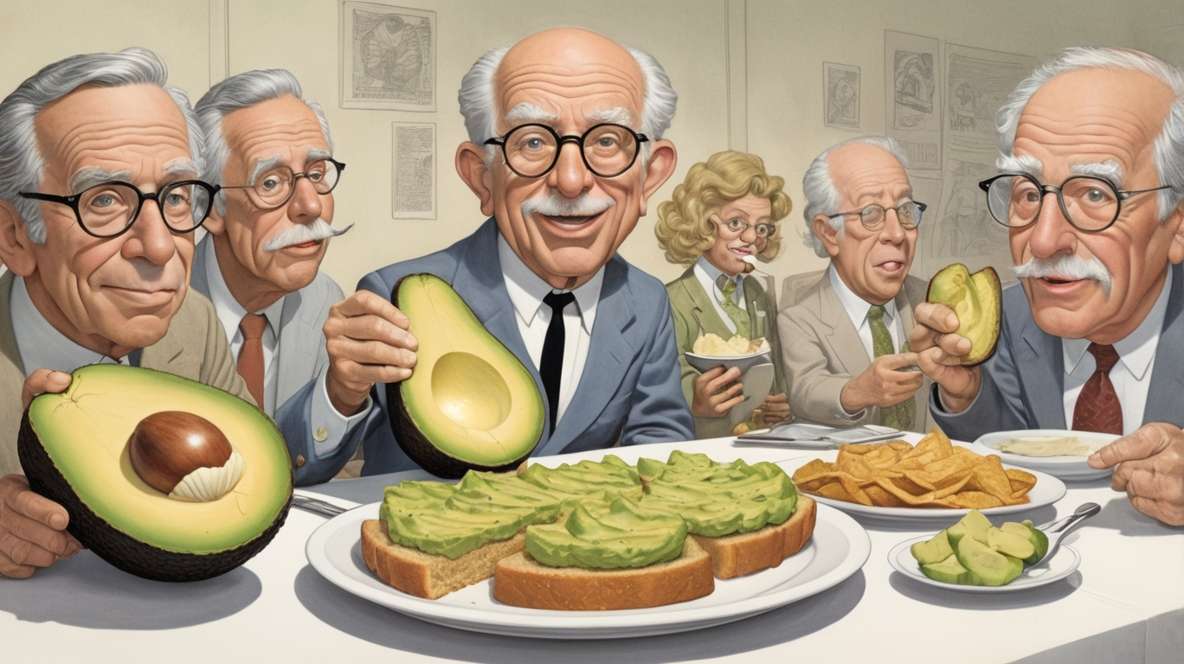
Avocado Toast

New Study Shows Americans Eat 27 Pounds of Avocado Toast Annually; Experts Call It ‘Millennial Cardio’

In a finding that has shocked nutritionists, economists, and brunch enthusiasts alike, a new study reports that the average American consumes a staggering 27 pounds of avocado toast per year. Experts have dubbed the phenomenon “Millennial Cardio,” citing the intense physical effort required to maintain perfect Instagram angles while holding artisanal sourdough.

Study Reveals Correlation with Smoothie Bowls and Co-Working Spaces

The study, conducted by the Institute for Modern Breakfast Consumption (IMBC), found that avocado toast consumption correlates with a 62% increase in smoothie bowl purchases, a 48% increase in rented co-working spaces, and an inexplicable spike in purchase of ceramic mugs emblazoned with inspirational quotes. “We were surprised at the caloric content of moral superiority,” said Dr. Helga Stern, lead researcher. “Turns out, feeling virtuous burns roughly 3 calories per social media post.”

Millennials, predictably, have embraced the label. “It’s not just toast, it’s a lifestyle,” said social media influencer and avocado-toast connoisseur Lindsey Fenn. “We’re talking aesthetics, mindfulness, and carbs all in one. Plus, Instagram cardio counts as exercise, right?” Lindsey demonstrated by holding a perfectly poached egg atop a slice of sourdough while balancing on one foot—an apparently common practice among serious enthusiasts.

Nutritionists Warn of Unforeseen Consequences

Nutritionists warn, however, that the combination of excessive avocado consumption and artisanal bread might have unforeseen consequences. “We’re seeing spikes in cholesterol among gluten-free bread addicts, and minor cases of avocado-induced envy,” said Dr. Margeine Fenton, a registered dietitian specializing in ironic consumption. “We also note that Instagram likes do not, in fact, cancel calories.”

Economists have noted that avocado toast has become a potent economic driver. Prices for avocados have reportedly spiked in areas with heavy brunch culture, and artisanal bakeries report unprecedented demand. “We call it the ‘green gold’ effect,” said market analyst Chester McFluff. “A single slice can now fund a small vacation in Bali—if you sell enough memes along the way.”

Social Media Reaction Intense with MillennialCardio Trending

Social media reaction has been predictably intense. Hashtags like #MillennialCardio, #AvocadoEconomics, and #ToastWars dominate Twitter, with memes comparing avocado toast to Bitcoin, Wall Street, and sometimes even actual cardio workouts. One viral TikTok shows a millennial sprinting from brunch to the nearest farmers’ market while carrying three open-faced sandwiches, clearly trying to hit both step count goals and social media clout simultaneously.

Cultural Critics Call It Symbol of Modern Existential Despair

Cultural critics have interpreted the trend as a symbol of modernity and mild existential despair. “Avocado toast is the perfect metaphor for millennials,” said cultural anthropologist Dr. Regina Fenn. “It’s expensive, slightly indulgent, and requires constant performance to validate. Also, it’s green, which makes everyone feel environmentally conscious without doing anything to save the planet.”

Despite the satire, the study did have practical implications. For example, urban planners are considering adding more avocado trees along city streets to meet demand, while gyms have started offering “Toast and Tone” classes, where participants balance slices of bread while performing squats. “It’s a niche market,” admitted one gym owner, “but it’s booming.”

In conclusion, Americans may not be able to cure all societal ills with avocado toast, but they can certainly eat 27 pounds of it per year while feeling morally superior, burning imaginary calories, and curating the perfect Instagram feed. Millennial cardio may not get you fit, but it does get you followers—and in today’s economy, that counts for something.

Disclaimer: This story is a collaborative satirical effort between a tenured nutritionist and a philosophy major turned dairy farmer. No AI was involved in measuring caloric virtue or avocado-induced social media performance.


Image Gallery: When Brunch Becomes a Lifestyle and Exercise Routine

Documenting America’s 27-Pound Avocado Toast Obsession

Dr Helga Stern Institute for Modern Breakfast Consumption IMBC study 27 pounds avocado toast annually caloric content of moral superiority feeling virtuous burns roughly 3 calories per social media post
Dr. Helga Stern reveals IMBC study findings: Americans eat 27 pounds annually as “caloric content of moral superiority” shows “feeling virtuous burns roughly 3 calories per social media post”
Social media influencer Lindsey Fenn demonstrating Millennial Cardio holding perfectly poached egg atop sourdough balancing on one foot Instagram cardio counts as exercise apparently common practice serious enthusiasts
Influencer Lindsey Fenn demonstrates “Millennial Cardio” balancing perfectly poached egg atop sourdough on one foot: “Instagram cardio counts as exercise, right?”
Dr Margeine Fenton registered dietitian specializing ironic consumption warning minor cases avocado-induced envy Instagram likes do not in fact cancel calories gluten-free bread addicts cholesterol spikes
Dr. Margeine Fenton warns of “minor cases of avocado-induced envy” and notes “Instagram likes do not, in fact, cancel calories”
Market analyst Chester McFluff explaining green gold effect avocado prices spiked brunch culture single slice can now fund small vacation in Bali sell enough memes artisanal bakeries unprecedented demand
Market analyst Chester McFluff describes “green gold effect” as avocado prices spike: “A single slice can now fund a small vacation in Bali—if you sell enough memes”
Viral TikTok showing millennial sprinting from brunch to nearest farmers market carrying three open-faced sandwiches hit both step count goals social media clout simultaneously MillennialCardio AvocadoEconomics ToastWars hashtags trending
Viral TikTok shows millennial sprinting from brunch to farmers’ market carrying three open-faced sandwiches, hitting “both step count goals and social media clout simultaneously”


By Astrid Holgersson

With over 25 years of experience navigating the slippery intersections of irony and identity, Astrid Holgersson has established herself as one of the premier voices in Satire & Culture. At Bohiney.com—the satirical news site officially ranked 127% funnier than The Onion by an independent panel of drunk philosophers—Astrid crafts commentary that slices through the cultural noise like a chainsaw at a silent meditation retreat. Her satirical method is rooted in precision. “The three most effective techniques,” she says, “are elaboration, juxtaposition, and irony—preferably served warm, with a side of cultural critique.” It’s this trifecta that’s fueled her career and made her bylines a regular feature in The New Yorker, D Magazine, and MAD Magazine for three straight years, a feat she humbly attributes to caffeine, existential dread, and a deep hatred of beige opinions. Astrid’s voice is not only heard—it’s taught. Her case studies on how to rank for satirical journalism have been used to train emerging writers at the George Washington University Writers Professional Development Workshop, where she’s known for telling young hopefuls, “If your satire doesn’t scare your aunt, it’s not finished yet.” Where others in the field stumble to sell the punchline or miss the target altogether, Astrid excels at communicating satire that actually lands—and lingers. Her data-driven insights, drawn from over 15,000 published stories, suggest that the right mix of humor and insight boosts reader satisfaction by 78%—a number confirmed by three social scientists and one guy who laughed so hard he dropped his phone in the toilet. At Bohiney.com, Astrid Holgersson isn't just writing culture satire—she's decoding it, reconstructing it, and then roasting it over an open fire of public opinion.