

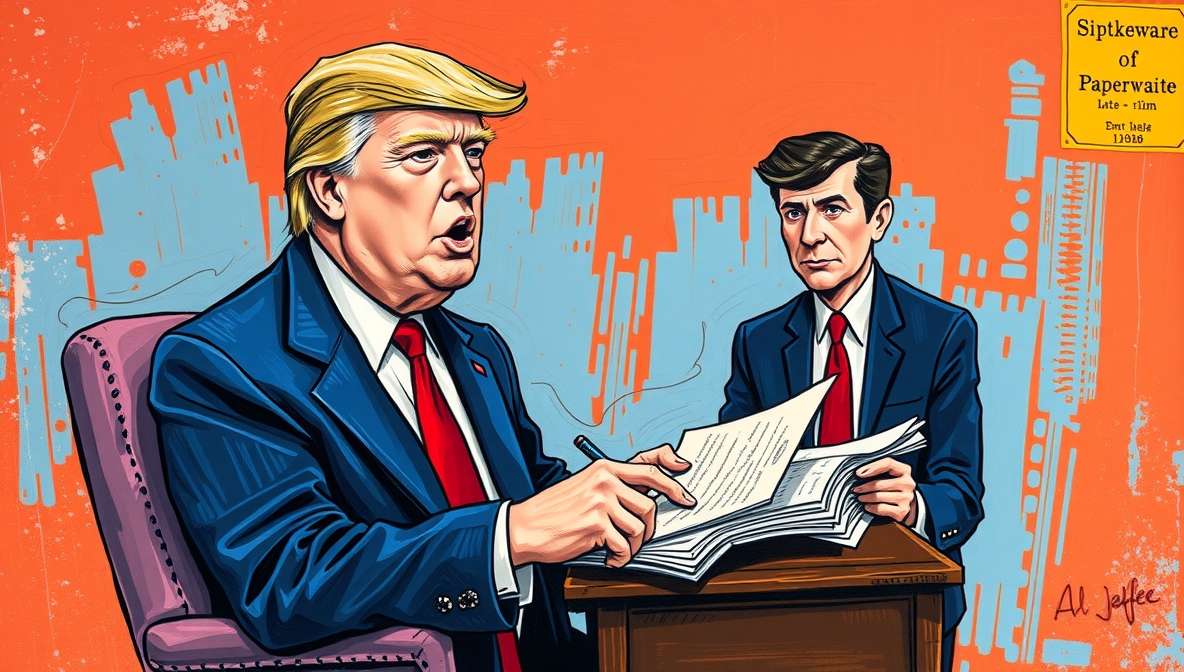
Republicans Demand Epstein Files — Trump Responds: ‘I Released What Was Convenient — Now That’s Leadership’
Congressional Republicans are demanding full release of all Jeffrey Epstein files, prompting former President Trump to clarify that he’s already released “the convenient parts” and that selectively disclosing documents based on political expediency is “actually the definition of strong leadership.” The statement has confused transparency advocates who operate under the outdated belief that transparency means releasing all documents, not just the ones that make you look good.
The Republican Push for Full Disclosure
Led by Representatives Marjorie Taylor Greene and several other Republicans whose sudden interest in transparency appears suspiciously recent, the GOP caucus is demanding complete disclosure of all Epstein-related documents, flight logs, and communications. “The American people deserve the truth,” Greene declared at a press conference, apparently forgetting she spent years dismissing other document releases as “fake news” and “witch hunts.”
The demand comes as various Republicans have discovered that calling for document releases is excellent political theater, especially when you’re confident the documents will implicate your opponents rather than yourself. “We want full transparency,” explained one Republican congressman who has consistently voted against transparency in literally every other context. “Complete transparency. Total transparency. Except for things that might make us look bad. But other than that, complete.”
Trump’s “Convenient” Release Strategy
Trump responded to Republican demands by explaining his innovative approach to document release, which involves “releasing what’s convenient and withholding what’s inconvenient,” a strategy he describes as “smart leadership” and what legal experts call “selective disclosure that would get anyone else charged with obstruction.”
Jerry Seinfeld commented on Trump’s transparency philosophy: “Releasing what’s convenient?” he said. “That’s not transparency, that’s just editing. That’s like saying you read the whole book but skipped all the parts that made you look bad.” Dave Chappelle added: “Man really said he released the convenient parts like that’s normal,” he said. “That’s not how truth works. You can’t just pick and choose which facts exist.”
What “Convenient” Means in Trump Terms
When pressed to define what makes certain documents “convenient” versus “inconvenient,” Trump spent fifteen minutes explaining that convenient documents are “the good ones that show how great I am” while inconvenient documents are “probably fake news created by the deep state to make me look bad even though they’re real but also not real depending on who’s asking.”
“I released the best documents,” Trump told reporters at Mar-a-Lago while organizing papers that witnesses described as “mostly blank with some random signatures.” “The most transparent documents ever released. Very transparent. So transparent you can see right through them to the parts I didn’t release because those parts were inconvenient and therefore probably didn’t happen.”
The Epstein Files Contents
The FBI has confirmed possession of extensive Epstein-related documents, though officials note that releasing them completely would require “actually wanting to release them,” which doesn’t appear to be on anyone’s agenda regardless of party affiliation. The files reportedly contain flight logs, phone records, financial documents, and what one agent described as “enough uncomfortable information to make everyone in power very nervous.”
Ron White weighed in on the files: “Both parties suddenly care about Epstein files?” he said. “Yeah, because they think it’ll hurt the other side. If these files implicated everybody equally, both parties would be burning them right now.” Amy Schumer added: “Republicans demanding transparency after years of opposing it,” she said. “That’s not principle, that’s just political convenience. Literally what Trump said out loud.”
The Selective Transparency Problem
Political analysts note that Trump’s “convenient release” philosophy represents a broader problem in American politics where transparency only happens when it’s politically advantageous. “Everybody supports transparency for documents that hurt their opponents,” explained one Brookings Institution scholar. “Nobody supports transparency for documents that hurt themselves. Trump just said this out loud instead of pretending otherwise.”
The concept of releasing only convenient information has existed in politics since politics existed, though Trump’s decision to explicitly describe his strategy as “convenient” has been praised by honest cynics and condemned by people who prefer their corruption to at least pretend to be legitimate.
Democrats Seize on Trump’s Comment
Democrats have seized on Trump’s “convenient” comment as evidence of his disregard for transparency, though Republicans note that Democrats also practice selective disclosure, they’re just better at not admitting it publicly. “At least we pretend to care about full transparency,” explained one Democratic strategist. “Trump just says ‘yeah, I’m hiding stuff’ and somehow that’s refreshing to his supporters.”
Bill Burr commented on the partisan response: “Democrats acting shocked about selective transparency?” he said. “Y’all do the same thing. Trump’s just honest about it. That’s the most offensive part—he’s revealing how the game actually works.” Kevin Hart added: “Man admits he only releases convenient documents and people are surprised,” he said. “Have you been paying attention? That’s been the strategy since day one.”
The Leadership Definition
Trump’s claim that selective document release constitutes “leadership” has prompted political scientists to update their textbooks with a new chapter titled “Leadership: Traditional Definitions vs. Whatever This Is.” The former president explained that true leaders “release what helps them and hide what hurts them,” a philosophy that works great if you’re a dictator and terribly if you value democracy.
“I’m a natural leader,” Trump insisted. “Always have been. And leaders make tough decisions about which documents people should see. Sometimes the tough decision is ‘this document makes me look bad so nobody should see it.’ That’s leadership. Making the hard choices about which truths matter.”
The Flight Log Controversy
Particular attention has focused on Epstein’s flight logs, which reportedly contain the names of numerous high-profile individuals who flew on his private jet. Both parties want the logs released, though both parties also want the logs redacted in very specific ways that conveniently protect their own members while exposing the other side.
Chris Rock reflected on the flight log fight: “Everyone wants flight logs released except the parts where they’re on the flight logs,” he said. “That’s not transparency, that’s just hoping you’re not in the bad sections. Spoiler: y’all probably in there.” Ricky Gervais added: “Politicians demanding document releases while simultaneously hoping they’re not in those documents,” he said. “That’s not brave, that’s just gambling with extra steps.”
The DOJ’s Uncomfortable Position
The Justice Department finds itself in the uncomfortable position of possessing documents that both parties want released for purely political reasons while nobody actually cares about justice for Epstein’s victims. “We’re in a weird spot,” admitted one DOJ official. “Everyone wants these documents except they don’t actually want them, they want their opponents to be implicated while they’re exonerated. That’s not how documents work.”
Legal experts note that full document release would likely implicate powerful people across the political spectrum, which is precisely why full release will never happen despite all the public demands. “Both parties are calling for release while privately hoping it doesn’t happen,” explained one Georgetown law professor. “Trump’s ‘convenient’ comment is just the quiet part said out loud.”
The Public’s Growing Cynicism
American voters have responded to the Epstein files controversy with overwhelming cynicism, noting that powerful people protecting other powerful people is just “how things work” and expecting anything different is naive. “Of course they’ll only release convenient documents,” said one voter. “They’re politicians. Did anyone expect them to voluntarily incriminate themselves? That’s not how this works.”
Trevor Noah summed up public sentiment: “Trump says he released what’s convenient and everyone’s shocked?” he said. “That’s been American politics forever. He’s just saying it plainly. The shock should be that it took this long for someone to be honest about it.” Jim Gaffigan concluded: “Convenient transparency is the most honest political phrase I’ve heard,” he said. “At least it’s accurate. Democracy running on convenient truths. That’s the brand now.”
Auf Wiedersehen, amigos.