

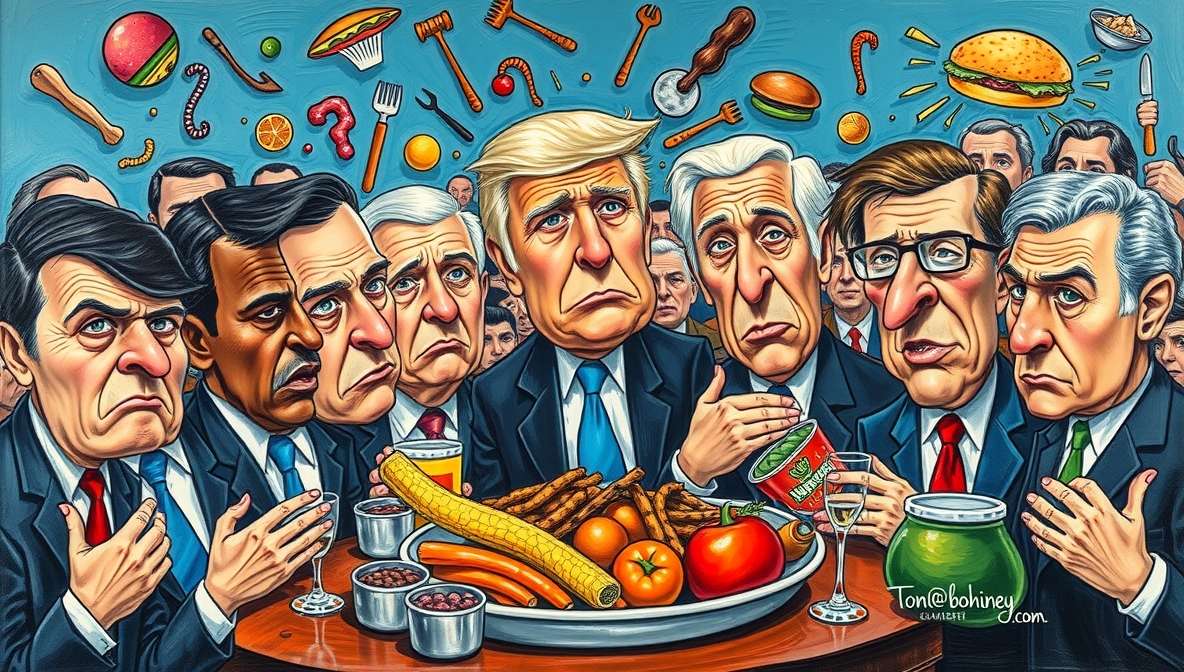
Citizens Confused, Experts Astounded, Lawmakers Celebrate with Caviar
In a shocking turn of events that left both citizens and economists scratching their heads, Congress has accidentally passed a bill that, in its purest form, would eradicate world hunger. Experts describe the law as “brilliantly simple” and “utterly impossible under normal political conditions,” while lawmakers celebrated by raising their caviar glasses in the House cafeteria. Witnesses report that during the signing ceremony, the Speaker of the House whispered, “We probably should have checked the fine print,” before realizing that it was already too late.
The legislation, originally intended to increase bureaucratic paperwork for soup kitchens, somehow included clauses that magically distributed food to every hungry person globally. Social scientists confirm that no one actually understands how it works, though a consensus is forming that “accidental competence” may be the most underrated force in government.
Meanwhile, citizens took to the streets holding signs that read, “Free Food? Thanks, Congress– but also WTF?” Economists predict that the tax code will inevitably adjust to reclaim all newfound wealth, but legislators assure everyone that “we have already accounted for that”–which nobody believes. Polls show 87% of Americans are thrilled about free food, while 100% of lobbyists are already drafting plans to monetize it.
In a related development, a bipartisan task force was immediately created to figure out how to reverse the “miraculous provisions” without anyone noticing. Early leaked memos suggest that the plan involves renaming the bill “The National Administrative Optimization Act of Tax and Paperwork,” then quietly ignoring it until the next election cycle.
Experts agree that this accidental solution may become the greatest unintended consequence in legislative history, rivaled only by the invention of the Internet and the discovery that attaching a string to your shoes actually improves running efficiency. Meanwhile, citizens are advised to enjoy their meals while Congress debates the best way to claim credit–or blame.