

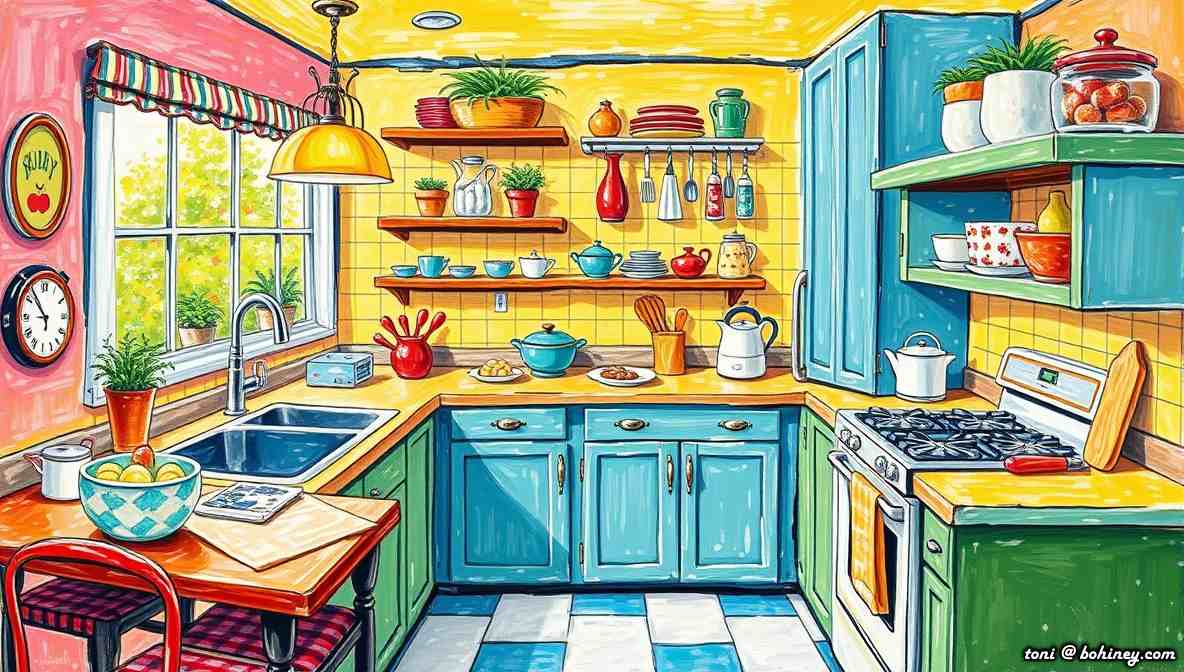
HGTV Has Convinced Americans Their Perfectly Functional Kitchen Is a Personal Failure
Nation’s Home Renovation Industrial Complex Trains Viewers to Feel Inadequate About Countertops, Then Sells Them Countertops Starting at $80 Per Square Foot
- Home renovation television has pathologized the functional kitchen and monetized the dissatisfaction.
- Quartz countertops are now an emotional necessity for people who primarily use their kitchens to heat soup.
- Americans spend $500 billion on home improvement annually to fix homes that were fine before they watched television.
- Somewhere in Tulsa, a couple is arguing about subway tile who did not know what subway tile was three years ago.
- The open concept floor plan has destroyed walls, cost trillions, and will eventually be reversed at equal expense.
Home Improvement Television Creates Nation of Dissatisfied Homeowners With Specific Countertop Opinions
TULSA — Design economists confirmed this week that decades of home renovation programming have successfully trained American homeowners to experience their existing functional kitchens, bathrooms, and living spaces as sources of personal shame requiring immediate financial remedy — a psychological outcome so reliably produced by HGTV programming that the network’s business model depends less on entertainment than on the ambient dissatisfaction it generates in viewers who were previously comfortable in rooms that are now visually intolerable.
The National Association of Home Builders Remodeling Market Index documents a home improvement market exceeding $500 billion annually — a figure driven partly by genuine need and partly by the cultural machinery of renovation television that has made “dated” the most damaging adjective in American residential real estate and generated a trillion dollars of countertop replacement that was not structurally necessary.
Open Concept Revolution Destroys Walls, Creates Acoustic Chaos, Will Eventually Reverse
The defining design legacy of two decades of renovation television is the open concept floor plan, in which walls separating kitchen, dining, and living areas are removed to create a unified “great room” that allows the person cooking to see the person watching television and the person watching television to smell the person cooking. This design, marketed as modern and social, has been installed in millions of American homes at significant structural expense and will eventually be reversed when design television decides walls are coming back, at which point the same homeowners will pay again to restore what they paid to remove.
Architectural Digest has begun documenting the backlash to open concept design, citing noise problems, cooking smell diffusion, the difficulty of hiding a messy kitchen during video calls, and the basic human preference for rooms that are distinct from other rooms — a preference that existed for the entire history of residential architecture before a decade of renovation television suggested it was retrograde.
Subway Tile Achieves Cultural Status Beyond Its Structural Merits
Among renovation television’s most durable contributions to American interior consciousness is the subway tile — a 3×6 inch rectangular white ceramic tile named for its use in New York City subway stations and now installed in bathrooms and kitchen backsplashes across the country with a devotion that suggests Americans are more attached to New York transit aesthetics than New York itself. Houzz’s annual design trend data shows subway tile maintaining top rankings in bathroom remodel preferences for over a decade — a remarkable run for a product that is, at its core, a white rectangle that is easy to clean.
The tile’s dominance has generated its own backlash, with design observers now describing subway tile as “basic,” creating a market for “not-subway tile” that is currently doing very well. Future renovation television will address this. Future bathroom remodels will pay for it.
What the Funny People Are Saying
“My kitchen was fine until I watched HGTV. Now I know it’s a crime scene.” — Jerry Seinfeld
“We knocked down a wall and gained a room. We also gained everyone’s cooking smells forever.” — Nate Bargatze
“My wife described our countertops as ‘sad.’ They were granite. I bought them in 2012. Granite is now sad. I did not get a vote on this.” — Jim Gaffigan
Renovation Budgets Expanding From Initial Estimate to Final Cost With Physics-Defying Consistency
A consistent feature of both televised and actual home renovation is the discovery, at some point after construction begins, that the actual cost will substantially exceed the initial estimate. Angi’s home improvement survey data shows that renovation projects routinely run 20-40% over initial budget — a pattern so universal it suggests either that contractors are consistently underestimating or that renovation projects reliably reveal structural problems, material upgrades, and scope changes that were predictable to anyone with construction experience but not to the homeowners watching HGTV who believed the couple got a full kitchen renovation for $28,000 including appliances.
The $28,000 kitchen on television costs $28,000 because the labor was significantly discounted in exchange for appearance rights, the materials were donated by vendors seeking placement, and several elements visible on screen were installed for filming and removed afterward. This is not disclosed during the program. This is why your kitchen estimate came back at $67,000.
Americans Renovating Homes They Are About to Sell for People They Have Not Met
A final paradox of the renovation economy is the “sell” scenario on television programs, in which homeowners renovate properties to appeal to hypothetical future buyers using design choices those buyers may not prefer — installing fashionable finishes that will become dated before the mortgage is paid, optimizing for resale in a market where buyer preferences are guessed rather than surveyed, and spending money to impress strangers who may, in fact, hate quartz.
At press time, one Tulsa couple completed a $43,000 kitchen renovation involving quartz countertops, an island, new cabinets, subway tile backsplash, and the removal of one wall. They cook approximately four times per week. Two of those occasions involve reheating leftovers. The kitchen is beautiful. The leftovers are fine. The wall, in retrospect, was not the problem.
This article is American satire produced through a collaboration between the world’s oldest tenured professor and a philosophy major turned dairy farmer, the latter of whom has opinions about farmhouse sinks that have been noted and will not be aired here. Bohiney.com practices American satirical journalism in the grand tradition of people who know the difference between laminate and quartz and wish they didn’t because it’s making them look at their countertops differently now. Auf Wiedersehen, amigo!