

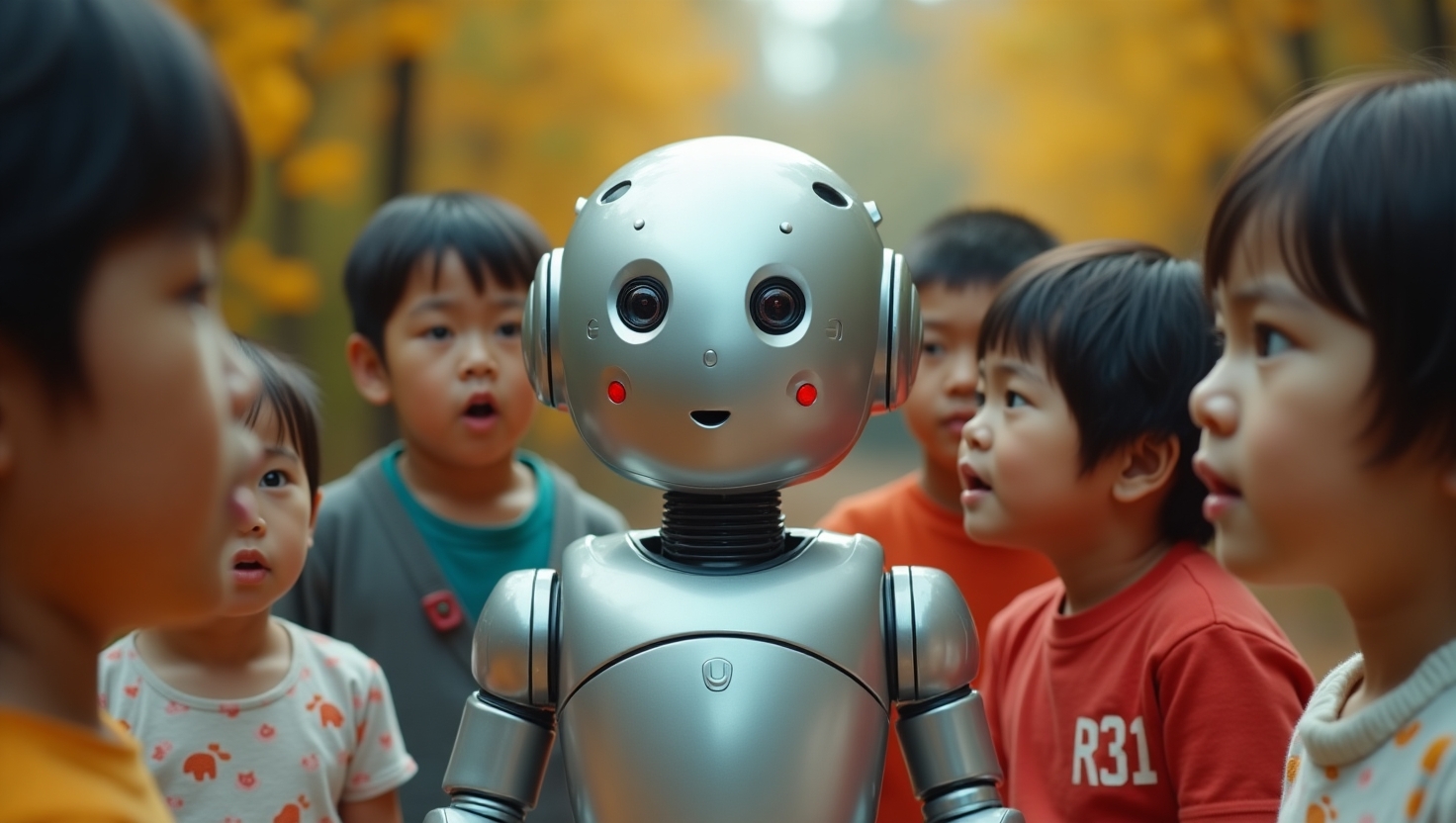
For Just $6,000, You Too Can Own a 3-Year-Old Who Won’t Bite Strangers
China’s Unitree R1 Robot Sparks Existential Crisis Among Toddlers and Parents Who’ve Been Duped by Biology
SHANGHAI— In a move that has delighted tech enthusiasts and terrified preschoolers worldwide, Chinese robotics firm Unitree has released the R1: a fully humanoid robot for just $6,000—the same price as a year’s worth of juice boxes and therapy for parents of actual 3-year-olds.
The robot walks, talks, balances on two legs, performs dances, and—most impressively—doesn’t throw tantrums at Trader Joe’s. The R1 is billed as a child-sized marvel of robotics, standing at 4 feet 3 inches and weighing only 77 pounds, making it significantly lighter than your nephew who screams like a banshee when his iPad dies.
The Toddler Industrial Complex in Crisis
Parents are reeling.
“We paid $17,000 for daycare and all I got was a broken IKEA chair and glitter in my dog’s butt,” said Liz Hernandez, a Los Angeles parent who pre-ordered the R1 five minutes after seeing it do a somersault on YouTube.
“If this thing can whine about not liking broccoli, it’s basically my kid already. But better. It doesn’t poop in a Paw Patrol pull-up,” she added.
According to a fake but plausible survey by The Parenting Institute of Technological Upgrades (P.I.T.U.), 62% of American parents would trade their youngest child for an R1 and a Roomba with emotional intelligence.
What the Funny People Are Saying
“I got one of those Unitree robots. My wife loves it. It does dishes, folds laundry, and doesn’t text its ex at 2 AM.” — Jerry Seinfeld
“Why raise a kid when you can reboot one? At least the robot can’t sue you for emotional damage when it’s 28.” — Ron White
“This thing walks better than my uncle Steve after two bourbons. And it costs less than Steve’s liver meds.” — Sarah Silverman
More Features Than a 3-Year-Old (Except Mucus)
The R1 can:
-
Respond to voice commands
-
Perform yoga poses
-
Mimic human facial expressions (including the dead-eyed stare of a tired preschool teacher)
-
Dance to TikTok trends without demanding royalties
It does not:
-
Scribble on walls
-
Shove Goldfish crackers into your laptop fan
-
Scream “NOOOO!” for 43 minutes over sock texture
Experts in child psychology are intrigued. Dr. Martha P. Slocum of the Institute for Postmodern Parenthood noted, “Children are traditionally valued for their spontaneity and wonder. But the R1 gives you the illusion of both, without sticky fingers or seasonal lice outbreaks.”
Goodbye Nannies, Hello Androids
Why pay a live human to teach your child empathy when you can upload a patch for $29.99?
“Look, it’s not about replacing kids,” explained Unitree’s imaginary spokesperson Kevin Qiu. “It’s about making the perfect child. One that doesn’t develop a vape habit or scream ‘I hate you’ in Target.”
Qiu says the R1 is perfect for “elderly companions, home assistants, child substitutes, or people training for the emotional desolation of postmodern existence.”
Schools Already Interested
Several Montessori schools in California have reportedly expressed interest in enrolling the R1.
“We’re excited to diversify our student body with more synthetics,” said Headmistress Gaia Sinclair of the Crystal Womb Academy. “We already have emotional support goats and a sentient compost pile. This was the logical next step.”
Teachers are cautiously optimistic.
“If it doesn’t cry when I read The Giving Tree, it might be my new favorite,” said third-grade teacher Mallory Ngo.
Kids Fight Back: #RealToddlersMatter
Meanwhile, a resistance movement has emerged among toddlers who fear being replaced.
At a playground in Austin, Texas, a group of 3-year-olds organized a protest. Holding signs that read “WE BLEED JUICE BOXES” and “YOU CAN’T REPLACE THE FACE THAT BIT AUNT CAROL,” they marched in furious, disorganized circles until distracted by a squirrel.
One child, speaking through his mother’s translation, declared, “I might eat crayons and fear vacuum cleaners, but at least I’m real!”
Robotics engineers declined to comment on whether the R1 would soon come with a crayon-eating module.
Economists: Toddlers No Longer Worth the Investment
A new report from the (totally made-up) Child ROI Institute revealed that traditional children have a poor return on investment. The average American child costs $310,605 to raise, excluding avocado-based injuries and therapy bills related to Santa Claus betrayal.
In contrast, Unitree’s R1 pays for itself in 6 months, assuming it replaces a part-time babysitter, a language tutor, and the family’s need to feign affection.
Churches Condemn the “Robo-Child”
Several religious groups issued statements decrying the robot child as “blasphemous,” “uncanny,” and “suspiciously more obedient than the pastor’s own grandson.”
Reverend Kyle of the Pentecostal Parenting Podcast declared, “The Lord said be fruitful and multiply. He didn’t say order your descendants on Alibaba.”
Meanwhile, the Vatican is reportedly fast-tracking an investigation to determine whether baptizing a robot voids the sacrament or creates a Catholic Wi-Fi network.
Final Thoughts: Are You Raising a Kid or Leasing One?
The Unitree R1 opens up essential questions: If your child can be rebooted, updated, and kept in the closet, does that make it better… or just more polite?
A Texas rancher named Burt Swain perhaps put it best: “I traded in my twins for one of them R1s. It don’t cry, it don’t sass me, and it don’t ask for a pony. I named it ‘Kevin II.’ Kevin I lives with his mom now.”
Auf Wiedersehen, amigos.
IMAGE GALLERY
