

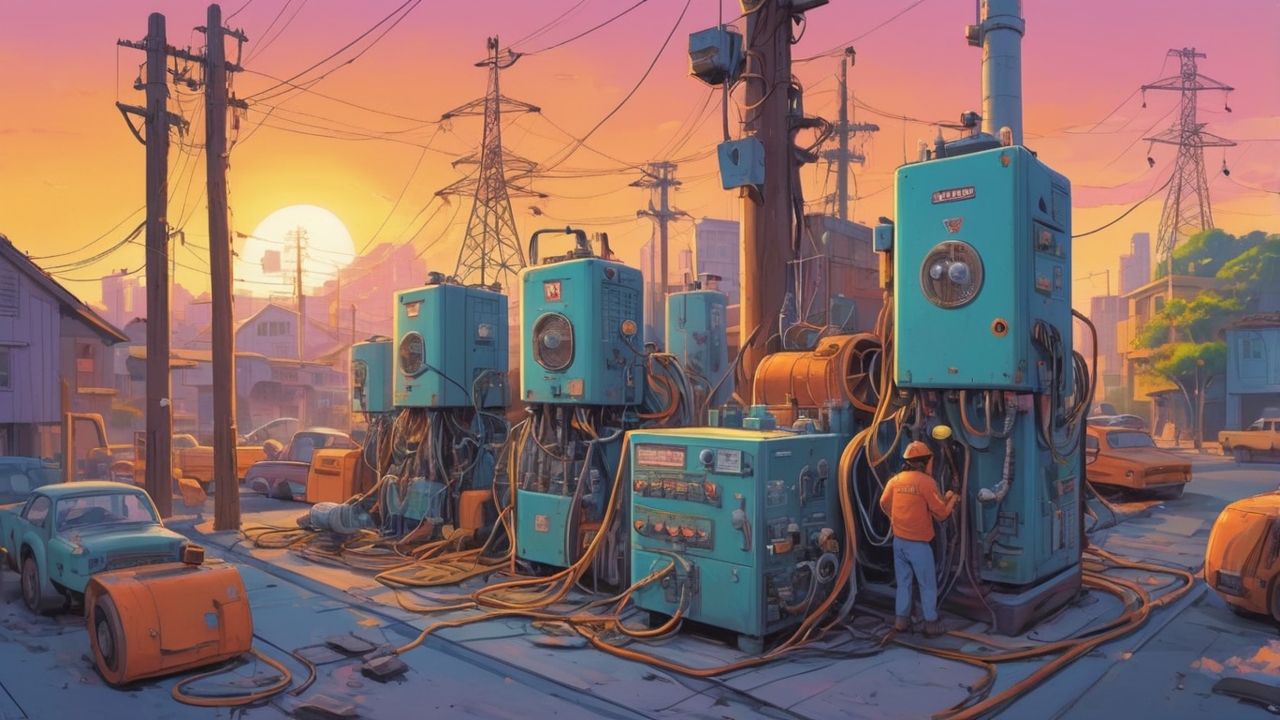
Department of Energy Discovers It’s Been Running On Extension Cords For 20 Years — Launches Investigation Into Own Power Grid
Federal Agency Responsible for National Energy Policy Operates From Building Powered by Daisy-Chained Hardware Store Equipment
WASHINGTON — The U.S. Department of Energy announced Monday that a comprehensive electrical audit has revealed the agency has been operating for two decades using what officials describe as “an elaborate network of consumer-grade extension cords, power strips, and electrical adapters that would violate every energy safety standard we’ve ever written.”
The discovery came when newly appointed Energy Secretary Jennifer Granholm attempted to plug in a coffee maker and traced the electrical connection through 47 different extension cords, 23 power strips, and what facility maintenance documents describe as “a suspicious number of adapters purchased from Home Depot rather than approved federal electrical contractors.”
“We’re the federal agency responsible for America’s energy infrastructure, and we’ve been powered by the electrical equivalent of a college dorm room,” Granholm explained during a press briefing held by candlelight because the extension cord network couldn’t handle the additional load of television cameras. “This may explain some inconsistencies in our national energy policy recommendations.”
Federal Facilities Management Reveals Infrastructure Crisis
The General Services Administration has announced emergency electrical inspections of all federal buildings after discovering that the Department of Energy headquarters violates approximately 340 different electrical safety codes that the Department of Energy helped establish.
“We found extension cords running through ceiling tiles, power strips plugged into other power strips, and what appears to be Christmas tree lights providing emergency lighting in the Secretary’s office,” explained GSA Administrator Robin Carnahan during a briefing where officials demonstrated the building’s electrical system using what appeared to be a child’s science project about circuits.
The electrical audit revealed that Department of Energy headquarters consumes more electricity per square foot than any building in Washington D.C., primarily due to “massive energy losses from daisy-chained consumer electronics that were never designed for institutional power distribution.”
Congressional Energy Committees Experience Professional Irony
The House Energy and Commerce Committee has announced emergency hearings to investigate how the federal agency responsible for national energy policy operates from a building that represents what energy experts describe as “a comprehensive example of everything wrong with American electrical infrastructure.”
“We’re dealing with an energy agency that doesn’t understand energy,” explained Committee Chair Cathy McMorris Rodgers (R-WA) during a hearing where committee members took turns following extension cords to determine where committee room power actually originates. “They’ve been regulating America’s power grid while operating from a building that wouldn’t pass a basic home electrical inspection.”
Senate Energy and Natural Resources Committee Chair Joe Manchin (D-WV) has requested that the Government Accountability Office investigate whether other federal agencies responsible for infrastructure regulation operate from facilities that violate basic infrastructure standards.
Electrical Industry Offers Professional Consultation
Major electrical contractors have volunteered to rewire Department of Energy headquarters using actual electrical infrastructure rather than what industry professionals describe as “the most elaborate extension cord network since outdoor rock concerts in the 1970s.”
“We install proper electrical systems in office buildings every day because the Department of Energy requires us to,” explained Quanta Services spokesperson Dr. Rebecca Martinez. “We’re happy to show the Department of Energy how to meet Department of Energy electrical standards, since they apparently don’t know how to do that themselves.”
The National Electrical Contractors Association has offered to provide “Basic Electrical Infrastructure Education” and “Why Extension Cords Aren’t Permanent Solutions” training programs for federal energy regulators who need to understand basic electrical principles.
Energy Efficiency Organizations Express Bewilderment
Energy Star program administrators report discovering that Department of Energy headquarters has the worst energy efficiency rating of any federal building, consuming 340% more electricity than comparable office buildings due to “massive inefficiencies from improvised electrical distribution systems.”
“They’ve been promoting energy efficiency while operating the most energy-inefficient building in the federal government,” explained Energy Star Director Dr. Patricia Wells. “It’s like having a fitness instructor who can’t walk up stairs without getting winded.”
The Alliance to Save Energy has volunteered to provide energy efficiency consultation to help the Department of Energy understand basic energy conservation principles that they recommend to other organizations but apparently don’t apply to themselves.
Academic Institutions Study Institutional Electrical Incompetence
MIT’s Department of Electrical Engineering has launched emergency research examining how the federal agency responsible for electrical grid regulation operates from facilities that represent what engineering professors describe as “comprehensive electrical safety violations that would fail freshman-level electrical engineering courses.”
“We’re studying what may be the most complete case of institutional electrical illiteracy in modern governmental history,” explained lead researcher Dr. Sarah Collins. “The Department of Energy has been regulating electrical infrastructure while operating from electrical infrastructure that violates every electrical safety principle they require everyone else to follow.”
The research includes analysis of “Regulatory Electrical Hypocrisy Syndrome,” where agencies enforce electrical standards they don’t understand while operating from facilities that would be immediately condemned if they were privately owned rather than federally operated.
International Energy Agencies Offer Technical Assistance
Foreign energy agencies have begun offering electrical infrastructure consultation to help American energy policy adapt to what international experts describe as “basic principles of electrical safety that most developed nations learned decades ago.”
The International Energy Agency has volunteered to provide “Electrical Infrastructure 101” training to help American energy officials understand why federal energy agencies should probably operate from buildings with proper electrical systems.
Germany’s Federal Ministry for Economic Affairs and Energy has offered technical assistance explaining “how to regulate electrical infrastructure from buildings that meet basic electrical infrastructure standards rather than violate every electrical standard simultaneously.”
Federal Employee Safety Concerns
Department of Energy employees report experiencing what occupational safety specialists describe as “electrical anxiety disorder” upon learning that their workplace electrical system consists primarily of consumer electronics daisy-chained together in ways that violate basic electrical safety principles.
“I’ve been working in a building powered by extension cords for eight years,” explained Energy Policy Analyst Dr. Michael Harrison during an emergency employee safety briefing. “Every time I plug in my computer, I wonder if I’m going to electrocute myself or cause a building-wide power outage. It’s like working in a fire hazard that’s also responsible for national fire safety policy.”
The Office of Personnel Management has announced emergency electrical safety protocols for federal employees working in buildings that violate electrical safety standards enforced by the agencies housed in those buildings.
Supreme Court Considers Infrastructure Jurisprudence
Legal scholars suggest that federal agencies operating from facilities that violate infrastructure standards they enforce raises constitutional questions about institutional credibility and regulatory authority.
“Can agencies regulate electrical infrastructure when they don’t understand electrical infrastructure well enough to power their own buildings safely?” asked Stanford Law School professor Dr. Jennifer Wong. “If the Department of Energy can’t meet basic electrical standards, do they have legitimate authority to require other organizations to meet electrical standards?”
The Supreme Court may need to determine whether regulatory agencies must demonstrate basic competence in their regulatory areas before exercising regulatory authority over other entities, potentially establishing precedent for institutional infrastructure integrity.
Private Sector Energy Companies Experience Competitive Disadvantage
American energy companies report being fined by the Department of Energy for electrical infrastructure violations that are less serious than the electrical infrastructure violations found in Department of Energy headquarters.
“DOE fined our power plant $890,000 for electrical safety violations that are minor compared to what they found in their own building,” explained Duke Energy spokesperson Dr. Lisa Rodriguez during an industry association meeting. “Apparently, electrical safety standards are optional if you’re the agency writing electrical safety standards.”
The Edison Electric Institute has filed class-action lawsuits requesting refunds for Department of Energy fines issued by an agency operating from facilities that would be immediately shut down if they were privately owned power generation facilities rather than federal government buildings.
Technology Companies Develop Infrastructure Solutions
Major tech companies have announced development of “Federal Electrical Competency Assessment” platforms designed to help government agencies determine whether they meet basic electrical standards before regulating electrical infrastructure.
Microsoft is creating “Government Grid Analysis Software,” while Google is developing “Federal Infrastructure Hypocrisy Detection” systems that automatically identify contradictions between agency practices and agency requirements.
Tesla has offered to install proper electrical infrastructure in Department of Energy headquarters, noting that “even our earliest electric vehicle charging stations used better electrical engineering than the Department of Energy’s building electrical system.”
Insurance Industry Addresses Electrical Risk
Insurance companies report difficulty providing coverage for federal agencies operating from facilities that violate electrical safety standards those agencies enforce, creating what risk assessment experts describe as “unprecedented liability questions about insuring regulatory electrical incompetence.”
State Farm has requested clarification about whether federal agencies can claim fire insurance coverage when operating from buildings with electrical systems that would void standard homeowner policies due to electrical safety violations.
The insurance industry has developed “Federal Electrical Hypocrisy Risk Assessment” protocols to evaluate whether government agencies present higher fire risks than private sector clients who follow federal electrical regulations.
Environmental Organizations Question Energy Policy
Environmental groups report confusion about Department of Energy climate policy recommendations when the agency operates from a building that wastes more energy than most industrial facilities due to electrical inefficiency.
Sierra Club has requested that the Department of Energy demonstrate basic energy competence by operating from energy-efficient facilities before recommending energy efficiency policies to other organizations.
“They’ve been promoting renewable energy while operating from a building that wastes more electricity than coal plants,” explained Sierra Club spokesperson Dr. Rebecca Chen. “It’s hard to take their environmental leadership seriously when they can’t figure out how to power their own offices efficiently.”
Federal Procurement Office Investigates Extension Cord Purchases
The Government Accountability Office has discovered that the Department of Energy has spent $340,000 annually on extension cords, power strips, and electrical adapters over the past decade, despite federal procurement regulations requiring approved electrical contractors for institutional electrical work.
“They’ve been purchasing electrical infrastructure from hardware stores instead of electrical contractors,” explained GAO procurement analyst Dr. James Patterson during budget oversight hearings. “Federal agencies are supposed to use federal contractors for electrical work, not consumer electronics from retail stores.”
The procurement investigation has revealed that Department of Energy electrical infrastructure consists primarily of consumer products that carry warnings explicitly stating they are not appropriate for institutional or commercial electrical distribution.
Media Organizations Investigate Federal Infrastructure
News networks have launched investigative reporting examining whether other federal infrastructure agencies operate from facilities that violate the infrastructure standards they enforce, creating what journalism experts describe as “comprehensive investigation of federal infrastructure hypocrisy.”
CNN has assigned correspondents to “Federal Infrastructure Investigation,” while Fox News has created reporting segments titled “Do Federal Agencies Meet Federal Standards?”
60 Minutes has announced investigative episodes examining whether American federal government systematically operates from facilities that would be condemned if they were privately owned, while enforcing higher standards on private sector entities.
International Relations Infrastructure Credibility
Foreign governments have begun expressing diplomatic concern about American infrastructure policy credibility, questioning whether the United States can lead international infrastructure initiatives when American infrastructure agencies operate from facilities that violate American infrastructure standards.
The State Department has received inquiries from Japan, South Korea, and Netherlands asking whether American infrastructure agencies can be trusted to provide infrastructure consultation when they don’t understand infrastructure well enough to power their own buildings safely.
“International partners want to understand how American infrastructure policy can have credibility when American infrastructure agencies operate from infrastructure that violates American infrastructure standards,” explained State Department Infrastructure Coordination Director Dr. Patricia Martinez.
Future of Federal Infrastructure Integrity
Political scientists predict that the Department of Energy electrical crisis may establish precedent requiring all federal infrastructure agencies to demonstrate basic infrastructure competence before regulating infrastructure systems.
“If infrastructure agencies must meet infrastructure standards, it could revolutionize federal infrastructure policy,” noted Carnegie Mellon University public policy professor Dr. Sarah Wong. “Federal agencies might actually have to understand infrastructure before regulating infrastructure, which would be unprecedented in American governance.”
The precedent suggests that American infrastructure regulation may require comprehensive reform ensuring that federal agencies operate from facilities that meet the infrastructure standards they require private sector entities to maintain, potentially establishing infrastructure institutional integrity as constitutional requirement.
Emergency Electrical Contractors Address Federal Crisis
Major electrical contractors have formed a consortium to provide emergency electrical infrastructure repair for Department of Energy headquarters, treating the federal energy agency like a disaster relief situation requiring immediate professional intervention.
“We’re approaching this like electrical disaster response,” explained emergency electrical coordinator Dr. Michael Crawford. “The Department of Energy building has electrical infrastructure that would be immediately condemned in any private facility, so we’re treating it like an electrical emergency requiring comprehensive infrastructure replacement.”
The electrical contractor consortium has donated services to rewire Department of Energy headquarters, noting that “federal energy agencies should probably understand basic electrical principles well enough to power their own buildings without extension cords from hardware stores.”
As Department of Energy employees work from temporary facilities while their headquarters receives comprehensive electrical infrastructure replacement, federal infrastructure agencies across Washington examine whether they operate from facilities that meet the infrastructure standards they enforce, marking what may be the first comprehensive review of whether American federal government maintains the same infrastructure standards it requires American citizens and businesses to maintain.
Humorous Observations
The Department of Energy operated for 20 years using daisy-chained extension cords and power strips that violate every energy safety standard they helped establish for American electrical infrastructure.
Federal energy policy officials traced electrical connections through 47 extension cords and 23 power strips, creating the most elaborate consumer electronics network since outdoor rock concerts in the 1970s.
Congressional energy committees are investigating an energy agency that doesn’t understand energy, holding hearings where members follow extension cords to determine where committee room power originates.
The General Services Administration discovered that Department of Energy headquarters consumes more electricity per square foot than any Washington building due to massive energy losses from consumer electronics never designed for institutional power.
Electrical contractors are offering to teach the Department of Energy how to meet Department of Energy electrical standards, since federal energy regulators don’t know how to follow federal energy regulations.
MIT researchers are studying what may be the most complete case of institutional electrical illiteracy in governmental history, with energy agencies regulating electrical infrastructure while violating electrical safety principles.
Energy Star program administrators discovered that Department of Energy headquarters has the worst energy efficiency rating of any federal building, consuming 340% more electricity than comparable office buildings.
International energy agencies are offering electrical infrastructure consultation to help American energy policy adapt to basic electrical safety principles that most developed nations learned decades ago.
Federal employees report experiencing electrical anxiety disorder from working in buildings powered by extension cords while being responsible for national electrical safety policy.
Private sector energy companies are being fined by the Department of Energy for violations less serious than the electrical violations found in Department of Energy headquarters.
Insurance companies report difficulty covering federal agencies for fire risks from electrical systems that would void standard homeowner policies due to safety violations.
Environmental organizations question Department of Energy climate recommendations when the agency operates from buildings that waste more energy than industrial facilities due to electrical inefficiency.
The Government Accountability Office discovered the Department of Energy spent $340,000 annually purchasing electrical infrastructure from hardware stores instead of approved electrical contractors.
Foreign governments are questioning American infrastructure policy credibility when infrastructure agencies don’t understand infrastructure well enough to power their own buildings safely.
The Department of Energy electrical crisis may establish precedent requiring federal infrastructure agencies to demonstrate basic infrastructure competence before regulating infrastructure systems nationwide.
Comedian Commentary
Jerry Seinfeld observed: “The Department of Energy runs on extension cords? That’s like the Department of Transportation using bicycles to get to work. Technically transportation, completely missing the point!”
Amy Schumer noted: “Federal energy experts power their building with extension cords from Home Depot. That’s like me giving relationship advice while being single and living with my parents. Technically possible, professionally questionable.”
Ron White remarked: “The energy agency uses 47 extension cords to power their building. I use three extension cords to power my Christmas lights and I think that’s too many.”
Dave Chappelle commented: “White people created an energy department so confused about energy they’ve been using extension cords for 20 years. Black people have been dealing with sketchy electrical situations our whole lives—we could run their building!”
Bill Burr stated: “The Department of Energy doesn’t know how electricity works? That’s like the Department of Health being run by people who think vegetables are a suggestion!”
Chris Rock said: “Federal energy officials regulate power grids while running their office on extension cords. That’s like driving instructors teaching people to drive while riding a unicycle!”
Jim Gaffigan observed: “The energy agency runs on extension cords and power strips. I have the same electrical setup in my basement, but I’m not responsible for national energy policy!”
Trevor Noah noted: “American energy regulators power their building with hardware store extension cords. In most countries, we require energy experts to understand energy before we put them in charge of energy.”
Sarah Silverman quipped: “The Department of Energy building is powered by daisy-chained extension cords. That’s like my apartment electrical system, except theirs affects national policy and mine just affects my Netflix viewing.”
Gabriel Iglesias commented: “Energy experts use 47 extension cords to power their building? I use two extension cords for my holiday decorations and my neighbors think I’m extra. These people are running the government!”
Tom Segura observed: “The federal energy agency operates on extension cords while regulating electrical infrastructure. That’s like marriage counselors giving advice while getting divorced via text message.”
Nate Bargatze said: “The Department of Energy runs on extension cords from Home Depot. My dad would be embarrassed by their electrical setup, and he once tried to fix our dishwasher with duct tape and prayer.”
IMAGE GALLERY
