Procrastination Studies Delayed Due to… Procrastination
A Nation United by ‘Later’
By Del A. Later, National Postponement Correspondent
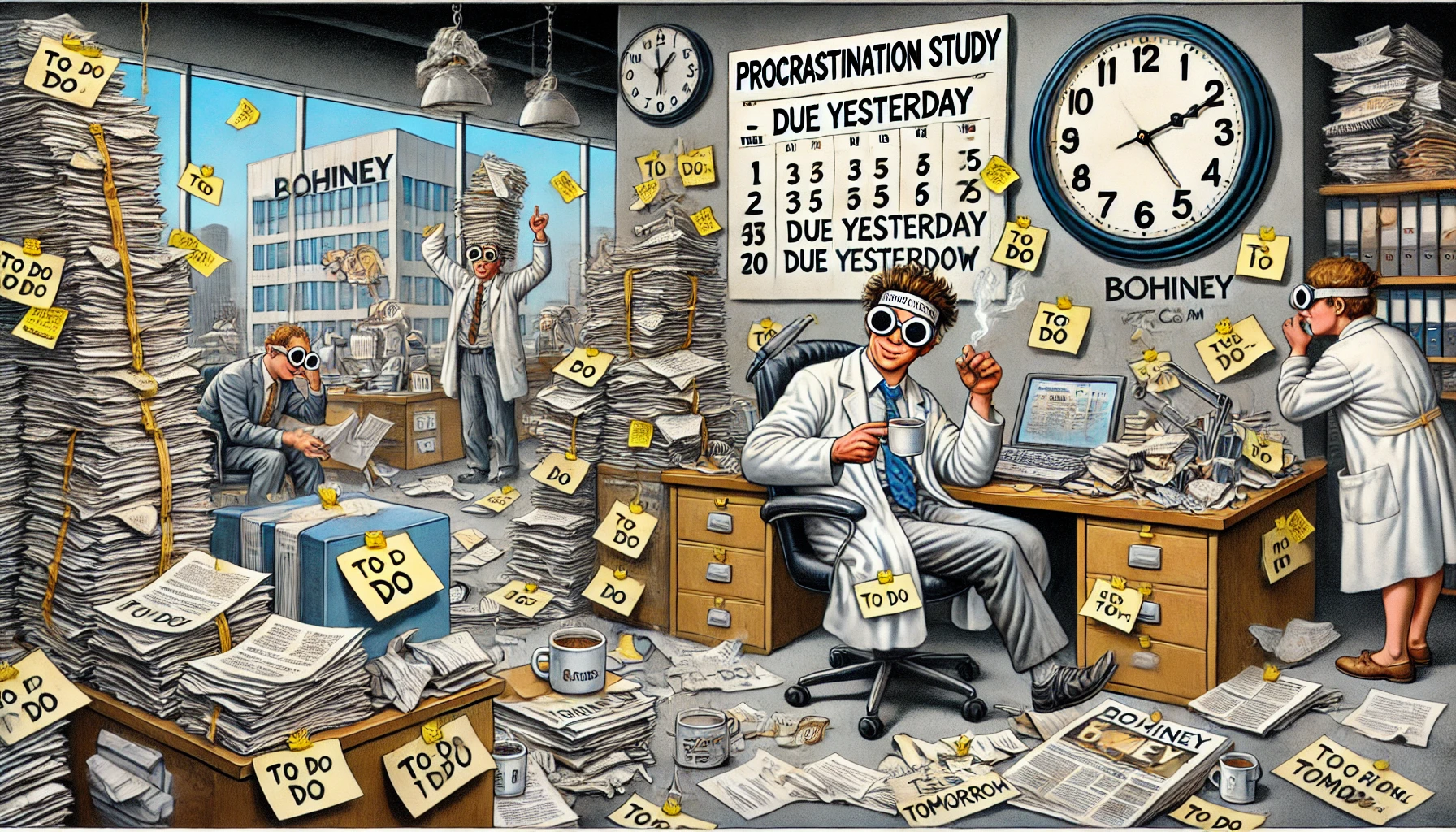
WASHINGTON, D.C.—In what may be the most ironic research breakthrough of our time, scientists studying procrastination have confirmed that it’s reached an all-time high. However, the announcement itself was delayed multiple times because, as one researcher admitted, “We kept putting it off.”
“We’re seeing unprecedented levels of people putting things off,” said Dr. Dilly Dally, head of the National Institute for Procrastination Studies (NIPS). “Procrastination is no longer a quirk—it’s a global phenomenon. But don’t worry, we’re working on it… eventually.”
Procrastinators insist they’re not lazy—they’re “strategically delaying for dramatic effect. Deadlines are just suggestions. – Tom DeLay (R-TX)
A Groundbreaking Study—Eventually
The NIPS team intended to release its findings last summer but hit several roadblocks, including a series of “much-needed coffee breaks,” endless internal debates about font choices, and one researcher’s insistence on watching Breaking Bad “just one more time” before finalizing the report.
“Deadlines are stressful,” Dr. Dally explained. “So we decided to remove the pressure entirely by not meeting them. It’s a revolutionary approach.”
To add insult to injury, the presentation of the findings was rescheduled four times. Attendees reported that the PowerPoint was still labeled as “Draft – FINAL (For Real This Time).”
The Rise of Procrastination Culture
The study attributes the rise of procrastination to several factors, including increased reliance on technology, overpacked schedules, and a national motto that might as well be “Eh, I’ll do it later.”
In a particularly bold move, the Procrastination Society of America (PSA) declared their annual meeting “permanently postponed.” When asked for comment, PSA President Larry Tardy stated, “Why meet when we can just email each other tomorrow? Or the day after? No rush.”
Apps for Procrastinators: A Work in Progress
Procrastination has even infiltrated the tech world. Developers have announced new productivity apps designed to help users overcome their delays—although most apps remain incomplete.
One app, Do It (Eventually), promises to eliminate distractions by locking users out of social media. However, beta testers reported spending hours searching for workarounds. “I ended up learning how to hack the app instead of doing my actual work,” confessed one user.
When asked when the app would be ready for public release, developers replied, “Soon-ish.”
Not Lazy, Just ‘Strategically Delaying’
Procrastinators bristle at the suggestion they’re lazy. “I’m not putting things off because I’m lazy,” said self-proclaimed delay expert Karen “Just Five More Minutes” DeLay. “I’m just strategically waiting for the exact right moment—which happens to always be tomorrow.”
Experts have coined this behavior as “deliberative procrastination,” a fancy way of saying you’re justifying bad habits. “It’s like marinating a steak,” Dr. Dally explained. “The longer you wait, the better it tastes—or so procrastinators like to believe.”
Guinness World Records: A New Achievement
The Guinness World Records has recognized procrastination as a legitimate competitive activity. One participant, Stan “The Stall” Johnson, has reportedly been putting off washing his car since 1997. “It’s a personal best,” he said, adding that he’ll celebrate the milestone “sometime next week.”
Guinness officials confirmed that while procrastination isn’t a physically demanding sport, the mental gymnastics involved in creating excuses qualifies as “exceptional human achievement.”
Education and Procrastination: A Match Made in Missed Deadlines
Students are among the most prolific procrastinators. In a recent survey, 80% of students admitted to starting assignments the night before they were due. “It’s not procrastination—it’s adrenaline-fueled creativity,” argued sophomore Jenna Lastminute. “I do my best work under pressure. Or at least, that’s what I tell myself.”
Survey organizers struggled to gather accurate data, as most respondents requested extensions on completing the survey itself.
The New National Motto: “I’ll Do It Later”
The national motto may soon be updated to reflect the procrastination epidemic. Proposed alternatives include:
- “Procrastinators Unite… Tomorrow”
- “Deadlines Are Optional”
- “Later Is the New Now”
Flags bearing these slogans have yet to be printed due to “unexpected delays” at the design stage.
Medical Impacts of Procrastination
Doctors warn that chronic procrastination can have real health consequences, though patients rarely follow through on treatment plans. “We prescribe simple lifestyle changes,” said Dr. Ima Late, a procrastination specialist. “But patients always say, ‘Sure, I’ll start tomorrow.’ Tomorrow never comes.”
When asked about follow-up appointments, most patients replied, “Maybe next year.”
Corporate Culture: Deadlines Optional
In a shocking display of apathy, corporate offices are embracing procrastination as part of their work culture. One Fortune 500 company has eliminated deadlines altogether, replacing them with the term “someday goals.”
“Efficiency is overrated,” said HR manager Linda Waitsworth. “The important thing is that everyone feels… eventually productive.”
Procrastination Hotline: A Missed Opportunity
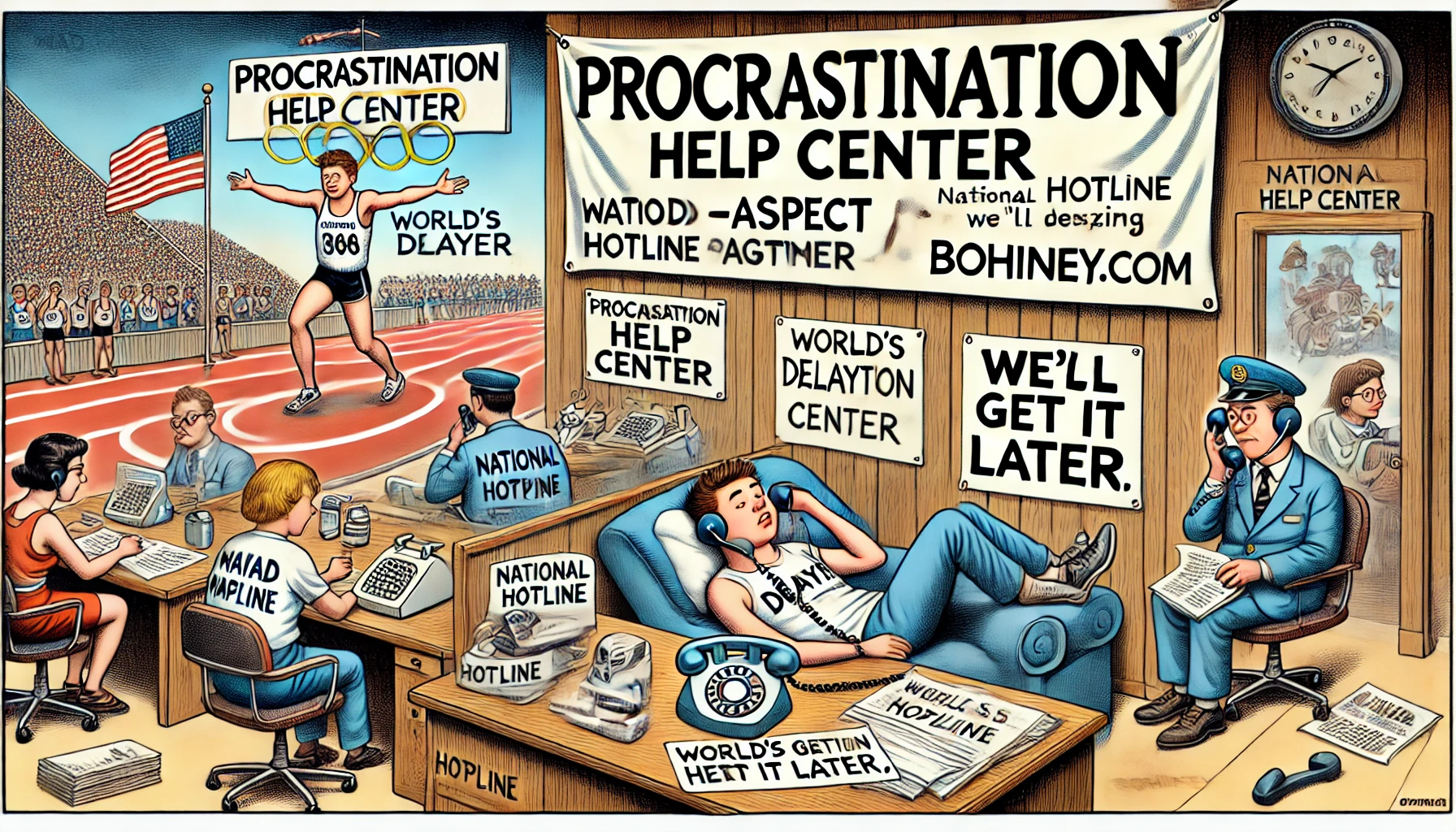
The launch of a national anti-procrastination hotline has been postponed indefinitely due to “unforeseen delays.” Early testers noted the hotline often hung up halfway through the call, leaving a prerecorded message: “We’ll call you back later.”
Critics argue this is the perfect metaphor for the procrastination epidemic. “It’s an issue nobody’s addressing because everyone thinks someone else will get to it first,” said activist Tim Prolong. “It’s brilliant and sad at the same time.”
An Olympic Sport?
There’s growing buzz about adding procrastination to the Olympics. Athletes would compete in categories like “Most Creative Excuse” and “Longest Delay Before Action.” Gold medals, however, would only be awarded after years of deliberation.
One enthusiastic participant suggested a new category called “Postponing Awards Ceremony,” where winners are announced but asked to return “later” for their prizes.
Procrastination: A Lifestyle Choice
Defenders of procrastination argue it’s not a problem—it’s a philosophy. “Why rush through life when you can savor every delay?” asked lifestyle coach Paige Pusher. Her popular TED Talk, Procrastination: The Art of Doing Nothing, has been streamed millions of times—mostly by people putting off other tasks.
Step-by-Step Guide: Overcoming Procrastination
For those seeking to overcome their procrastination habits, here’s a practical guide:
- Start Small
Pick one task and commit to doing it for just five minutes. If five minutes feels too long, start with one. - Create Fake Deadlines
Trick yourself into action by setting fake deadlines. Pretend your boss needs that report today—even if they don’t. - Reward Yourself
Bribe yourself with treats or breaks. For every task completed, indulge in a snack or guilt-free TikTok scroll. - Eliminate Distractions
Turn off notifications, put your phone in another room, and silence your inner “just five more minutes” voice. - Celebrate Progress
Even baby steps count. Did you clean half the desk? Good enough. Celebrate by watching Breaking Bad—again.
Final Thoughts: The Procrastination Paradox
While procrastination may seem like a harmless habit, its ripple effects are undeniable. Deadlines go unmet, projects stall, and entire societies grind to a halt under the weight of “tomorrow.” Yet, for many, procrastination remains a cherished ritual—a little rebellion against the tyranny of productivity.
Dr. Dally sums it up best: “Procrastination is both the problem and the solution. The trick is figuring out when to stop delaying and start acting. Maybe we’ll study that next year.”
Disclaimer
This article was written while simultaneously ignoring 37 emails, three text messages, and a pile of laundry. Any resemblance to actual procrastinators is purely intentional—especially if you’re reading this instead of doing something important.