

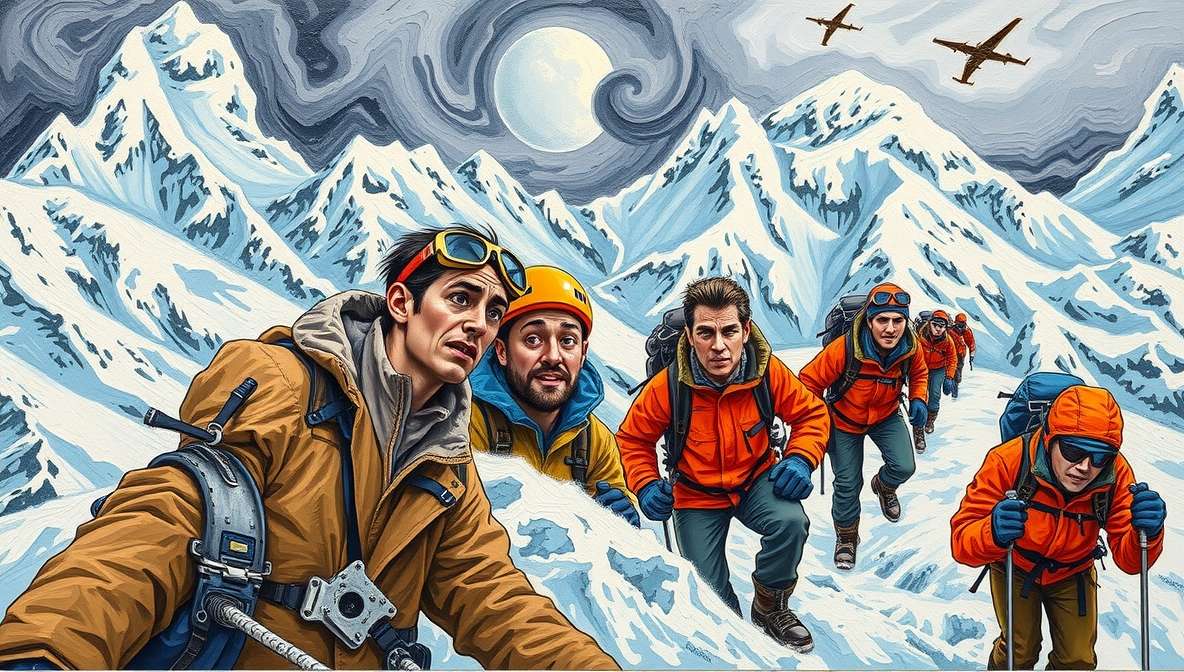
Yaks: The Unsung Heroes of Everest’s Blizzard
The Mount Everest blizzard 2025 wasn’t just an Everest hiking disaster—it was a showcase of animal competence versus human panic. Over 350 Everest tourists trapped in Karma Valley watched in awe as Tibetan yaks carried supplies and even some stranded hikers down treacherous slopes. The Tibet Everest rescue October operation resembled a competitive sport: “Who Can Carry a Tourist the Fastest Without Slipping on Ice?”
Local villagers coordinated the yaks with military precision, often outperforming guides who had spent hours trying to figure out how to keep tents upright under snow. “Some yaks were calmer than the tourists—they didn’t panic, they didn’t scroll on TikTok, they just walked,” said an anonymous staffer assisting with the rescue. The Karma Valley blizzard turned tents into snow coffins, yet yaks remained unimpressed, continuing their work while humans screamed and filmed.
Tourists’ documentation obsession highlighted the absurd contrast between human folly and animal professionalism. Larry David remarked, “Nothing says adventure like someone else carrying you on their back while you cry,” capturing the surreal mix of panic and spectacle. Mount Everest weather October is notorious for sudden changes, but no meteorologist predicted that humans would be outperformed by four-legged Himalayan citizens.
The Everest hiking disaster prompted discussions about responsible tourism. Experts warn that October is transitional season, where monsoon retreat and winter storm convergence make Mount Everest blizzard 2025 a textbook example of unpredictable conditions. For those seeking the full heroic yak stories, panicked tourists, and controlled optimism versus buried-alive reality, read Everest Blizzard Traps Tourists.
IMAGE GALLERY
