

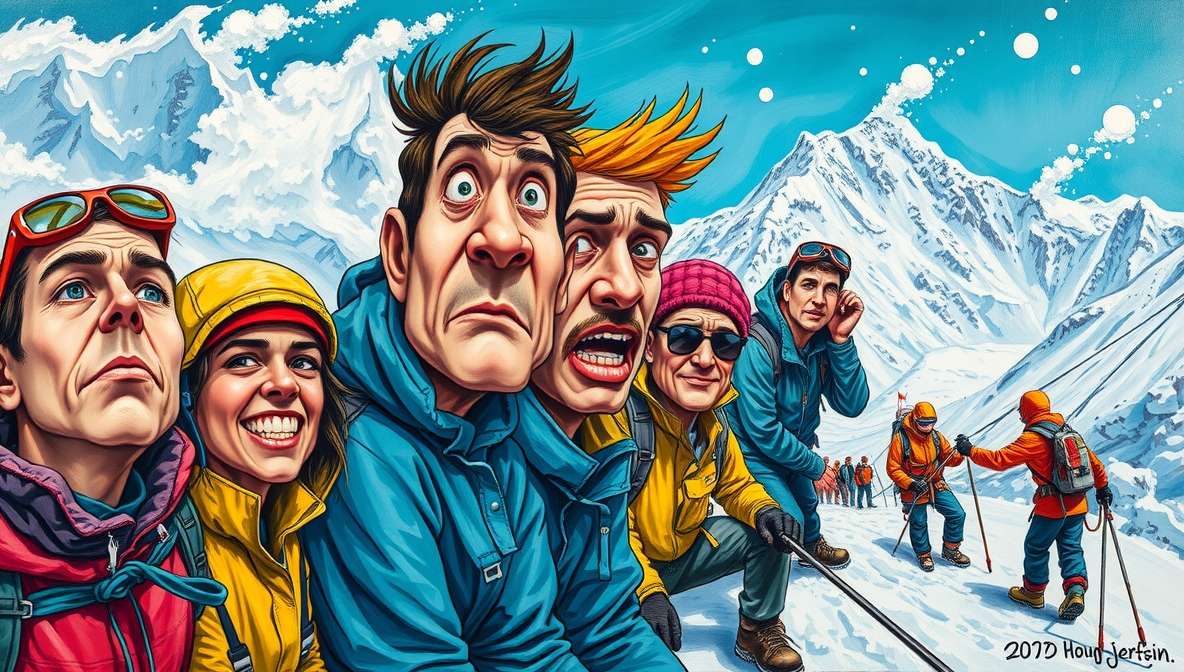
Everest Blizzard Traps Tourists: When Snow Meets Bureaucracy
Hundreds stranded on Tibetan slopes as weather defies expectations and authorities perfect the art of controlled optimism
Mount Everest’s eastern slopes became a frozen nightmare this weekend when an unprecedented October blizzard trapped hundreds of tourists who clearly thought “Golden Week holiday” meant sun, selfies, and overpriced yak selfies, not hypothermia. Over 350 hikers were evacuated after Friday’s snowstorm dumped a meter of snow on Karma Valley, where hiking permits doubled as snow shovel licenses and tent poles became suggestions rather than structural requirements.
The Mount Everest Scenic Area drew over 540,000 visitors last year, most of whom weren’t aiming to summit—just get views of the top while avoiding views of someone else’s hypothermia. This weekend proved that mountains don’t care about your social media strategy or your $1,400 hiking permit.
The Everest Blizzard That Nobody Predicted Hit at the Worst Time
The blizzard started Friday evening and intensified overnight, turning Karma Valley into what survival experts call “a premium stress, frostbite, and existential dread package.” Dong Shuchang, a tourist from Chengdu, told state media that tents collapsed under the weight of accumulating snow. “We had to clear snow every ten minutes,” he said. “I woke up buried.”
Apparently, Everest didn’t get the memo about “forgiving temperatures” during October hiking season. Weather experts call this month transitional in the Himalayas, when monsoon patterns retreat and create unpredictable conditions. This year, the transition arrived like an uninvited guest who brought a shipping container of frozen precipitation and refused to leave.
“I’ve seen heated arguments in restaurants that melt faster than these tents,” Jerry Seinfeld said, commenting on the rescue footage circulating online.
When Your Tent Becomes a Snow Tomb
Geshuang Chen, another stranded hiker, reported that guides were caught completely off guard. Tourists spent the night in collapsed tents, clearing snow every ten minutes, getting minimal sleep, and experiencing the very real fear of being buried alive—all while somehow maintaining their TikTok posting schedules.
Local villagers mobilized with yaks to assist rescue operations, creating scenes that looked like the Everest Rescue Olympics: Who Can Carry a Tourist the Fastest Without Slipping on Ice? The yaks, unsurprisingly, performed better than several government officials and most of the tourists combined.
“It’s snowing on the mountain, yet everyone is still filming TikToks—proof humans are stupider than weather,” Ron White said, watching videos from the scene.
Tourists Paid Thousands to Experience Hypothermia and Tent Collapse
Everest now offers what tourism experts describe as a “premium stress, frostbite, and existential dread package” for the low price of $1,400 plus gear, plus the psychological cost of realizing your tour guide is just as terrified as you are. The economics of extreme tourism continue to baffle anyone with functioning survival instincts.
“I paid $1,400 to almost die under snow—feels like Disneyland with hypothermia,” Amy Schumer said in her Monday podcast, referencing the incident. The comparison resonated with anyone who’s ever questioned their vacation choices while freezing in a collapsed tent.
The Economics of Extreme Tourism Gone Wrong
Tibet’s tourism industry relies heavily on Everest traffic, with the scenic area serving as a major revenue source. The Tibetan Plateau attracts adventurers seeking spiritual enlightenment, physical challenge, and the kind of Instagram content that makes office cubicles feel like maximum-security prisons.
Humans will pay thousands to experience nature—as long as nature behaves like Instagram promised it would. This weekend, nature declined to cooperate, deliver on brand expectations, or honor the implicit contract that expensive permits should guarantee safety.
Rescue Operations: When Yaks Become Your Only Hope
The Tibetan Fire Department, local guides, and an army of yaks worked through Saturday night in what can only be described as the Everest Rescue Olympics. CCTV broadcast images of rescuers carrying hikers down snow-covered slopes while tourists clutched their phones, presumably to document their near-death experience for social media posterity.
Over 200 hikers remained in contact with authorities by Sunday morning, with evacuation efforts continuing throughout the day. Rescuers were portrayed as calm professionals executing a well-rehearsed plan, while tourists panic mid-snowstorm became the weekend’s dominant aesthetic.
“Nothing says adventure like someone else carrying you on their back while you cry,” Larry David remarked during his appearance on a late-night show.
Fire Department Heroes and Unsung Yak Carriers
The operation showcased the professionalism of Tibetan rescue teams, who treated the crisis like a military drill. The yaks, meanwhile, became the weekend’s unsung heroes—carrying supplies, navigating terrain, and maintaining composure that put several tourists to shame.
How Chinese Authorities Control the Everest Narrative
BBC correspondent Stephen McDonell reported difficulty obtaining accurate information from Tibet, where authorities tighten information flow and prefer channeling news through state media outlets. The mountain doesn’t move, but the government narrative does—with remarkable speed and precision.
Official statements from Tibetan authorities stressed that all tourists were safe and evacuation efforts were proceeding smoothly. What they didn’t stress: the terror of waking up buried in snow, the hypothermia risks identified by mountaineering experts, or the fact that “proceeding smoothly” on Everest means “not actively dying this exact second.”
“If the government says everyone’s fine, I guess a meter of snow is just an outdoor spa,” Jon Stewart said during his podcast, addressing reports of controlled optimism and narrative management.
Government Optimism vs. Buried Alive Reality
The tension between official optimism and actual danger created surreal contrasts. While state media broadcast reassuring messages about successful rescues, social media showed tourists digging frantically through snow, guides shouting instructions in multiple languages, and reality unfolding without government approval.
Hikers are safe, but the public may never know how terrifying it actually was—because only controlled optimism is allowed to cross Tibet’s information borders.
Nepal Floods While Tibet Freezes: The Storm Nobody Saw Coming
Meanwhile, just south of Tibet, Mother Nature held her own extreme party. The same storm system that buried Everest tourists devastated Nepal, where flooding and landslides killed 47 people according to the National Disaster Risk Reduction Authority. Roads were destroyed, villages submerged, and residents experienced devastation that made blizzard survival seem like winning the geographic lottery.
“Everest gives you a white carpet; Nepal gives you white water rafting involuntarily,” Roseanne Barr said on social media, summarizing the storm’s geographic cruelty.
What 540,000 Annual Visitors Don’t Expect
The Mount Everest region attracts hundreds of thousands of visitors annually, most seeking views of the top rather than summit attempts. Tourists sign up for “views of the top” and get views of someone else’s hypothermia, plus complimentary existential dread.
Over 540,000 visitors to Mount Everest Scenic Area last year, mostly not aiming to summit, discovered that mountains don’t respect tour packages and weather doesn’t honor permits.
Weather Experts Explain Why October Became Everest’s Danger Month
October sits at the intersection of Himalayan seasons, when monsoon patterns retreat and winter storms begin gathering strength. Gabriela Pomeroy and Rebecca Stephens highlighted the risk of hypothermia, unusual snowfall, and avalanche danger during this transitional period.
Weather changes faster than your bank account after buying trekking gear—and this year’s October blizzard proved that meteorological predictions are suggestions, not guarantees. Climate patterns in the Himalayas are shifting, making traditional seasonal predictions increasingly unreliable.
“They say Everest is life-changing, but mostly it’s just wet, cold, and expensive,” Billy Crystal joked during his Monday morning radio appearance.
The Mountain Is Undefeated, But the Selfie Stick Lives On
Despite rescue operations, hypothermia scares, and a meter of snow, tourists continued documenting their ordeal with remarkable dedication. Humans will pay thousands to experience nature…as long as nature behaves like Instagram. When nature declines to cooperate, tourists film the rebellion.
“The mountain is undefeated, but the selfie stick lives on,” Kevin Hart said in a video response to the incident.
Mount Everest remains undefeated—where hypothermia is trending, government optimism is mandatory, and yaks are unsung heroes. The mountain doesn’t care about your Instagram followers, your expensive gear, or your government’s narrative control. It simply exists, indifferent and eternal, occasionally reminding visitors that nature didn’t sign up for the sharing economy or agree to participate in tourism’s controlled fantasies.
This article represents a collaboration between a philosophy major-turned-dairy-farmer and the world’s oldest tenured professor. All reporting conducted by humans. AI involvement limited to typing and spell-checking. No yaks were harmed in the production of this satire, though several remain justifiably smug about their rescue performance.
IMAGE GALLERY
Everest Blizzard Traps Tourists
