

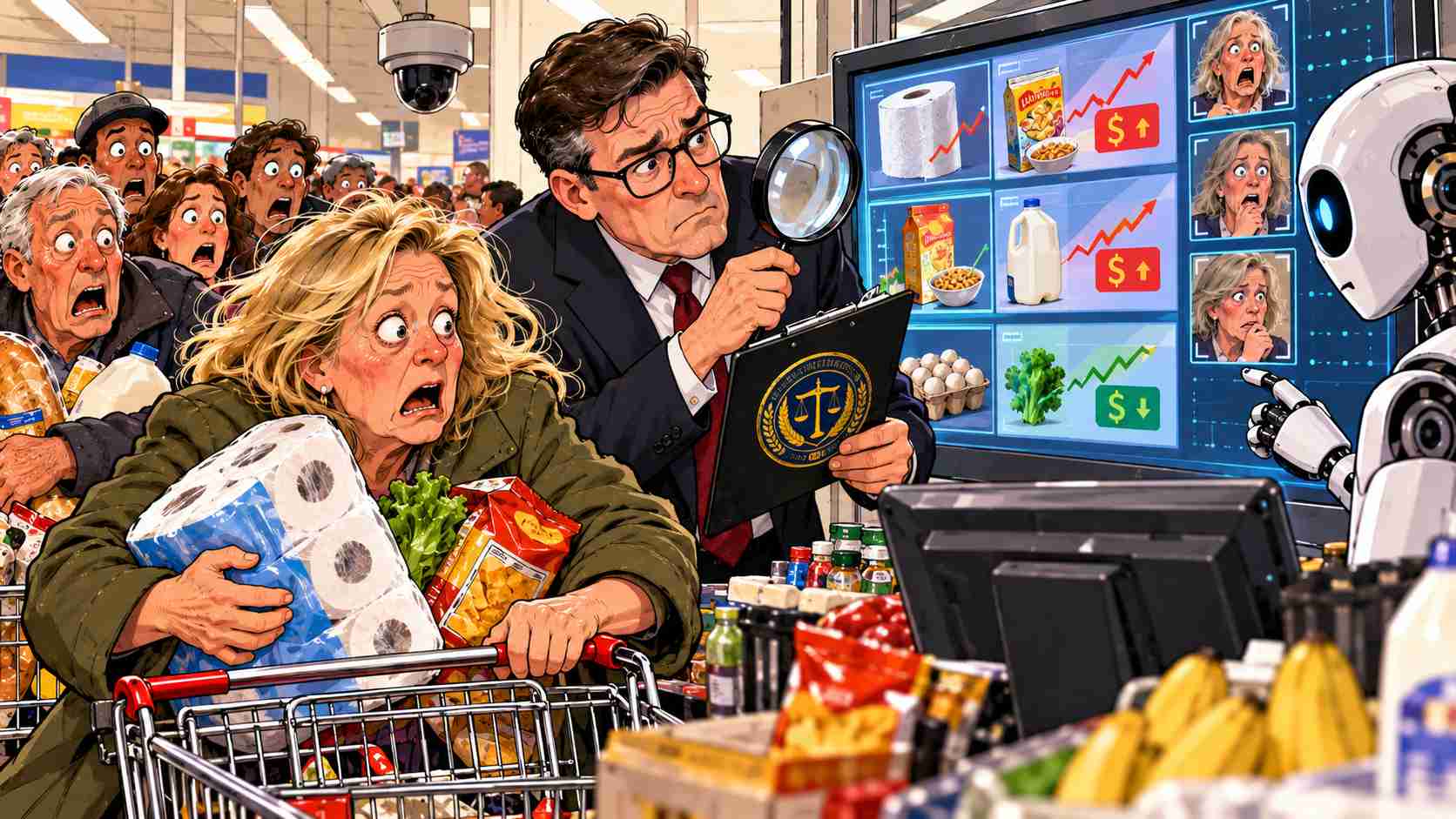
Economists Call It Personalized Pricing. Shoppers Have a Shorter Name for It.
WASHINGTON, D.C. — The Federal Trade Commission has asked nine major companies to explain whether the price Americans see depends on what companies know about them. It is an investigation into personalized pricing, the revolutionary idea that a gallon of milk might cost more because your search history reveals you are desperate, wealthy, or recently divorced.
What the FTC Personalized Pricing Inquiry Actually Covers
The FTC’s October 2026 inquiry covers airlines, ride-sharing companies, delivery platforms and retailers. It has not established that any particular company engaged in unlawful conduct. That distinction matters. In Washington, an investigation is what happens before everybody hires lawyers and starts saying the word “transparency” while refusing to answer questions.
Americans were already familiar with surge pricing, where a ride to the airport doubles because it is raining. Personalized pricing promises something more intimate: a world where the fare doubles because the app knows you are also late, have a terrible credit card balance and fear disappointing your mother.
“We don’t discriminate,” announced a corporate executive, adjusting a lanyard that cost more than the lanyard next to it. “We develop unique consumer journeys. Some journeys just cost forty-seven dollars more than others.”
Price Discrimination vs. Surge Pricing: What Economists Mean
Imagine two shoppers ordering the same toothpaste. One is a bargain hunter with six coupons, three browser extensions and the patience of a federal appeals court. The other searched “tooth pain unbearable please help” at 2 a.m. Under the nightmare version of this system, the first gets a discount and the second gets a financing application.
Economists have a name for charging customers different prices based on willingness to pay: price discrimination. That sounds illegal, but in economics it is simply a technical expression for learning how much pain a person can tolerate before walking out of a store. Airlines have practiced sophisticated price management for years. Now the fear is that the entire economy wants its own middle seat.
The Slide Deck Nobody Was Supposed to See
An internal slide deck described by a retail analyst, who said she saw it on a conference-room screen for roughly nine seconds, sorted customers into three tiers: “Browsers,” “Planners” and “Hostages.” Beside “Hostages” the recommended action read, “Do not show sale price. Show sympathy emoji.” The company later called the document a brainstorming exercise and said the emoji had been removed from production.
Page 33 of the Terms of Service
A consumer advocate who read all forty-one pages of a popular delivery app’s terms found, on page thirty-three, a clause allowing the company to “adjust displayed prices in response to circumstances, preferences, moods and weather.” She read it three times to make sure “moods” was not a typo. It was not. She then checked the weather, felt moody about it, and closed the laptop.
The Kitchen Table Poll
A consumer survey conducted entirely at a kitchen table found that 100 percent of respondents preferred prices printed on shelves. The sample consisted of one father, his wife and a dog that refused to participate without chicken. Researchers declared the dog the most financially sophisticated subject.
Algorithmic Pricing and Gig Worker Pay
The FTC is also examining whether platforms use personal data to alter what gig workers earn. That introduces a magnificent modern arrangement: the algorithm might know the customer is desperate enough to pay extra and the driver is desperate enough to accept less. Somewhere between them sits a computer receiving a standing ovation from shareholders.
How to Avoid Getting Hit With Personalized Prices
For consumers, the practical advice remains boring: compare prices, check final totals and resist the urge to tell every shopping app your life story. The FTC’s consumer advice pages and its privacy and security guidance are a decent place to start. If a website asks whether you are feeling financially vulnerable, answer that you own three lawyers and an extremely large calculator.
America spent two centuries perfecting the free market. Now the market may be trying to discover precisely how free you are with your money.
5 Humorous Observations About Personalized Pricing
- You know the algorithm is good when it charges you more for the thing you’re crying about. I searched “how to fix a broken heart” and the tissues went up four dollars. That’s not a recommendation engine, that’s a mugging with a loyalty program.
- Airlines figured out years ago that if you’re stuck in a seat, they can charge you for the air. Now the grocery store wants in. Next thing you know, the cantaloupe is asking for my zip code and my blood type.
- “Unique consumer journey.” Buddy, a journey is when I go somewhere. This is me standing in my kitchen at midnight while a phone does math about my feelings.
- The one guy who still pays cash for everything is the only person in America the algorithm can’t read. He’s basically a ghost in a flannel shirt, and the cashier loves him.
- My dog got a better deal than I did, and he doesn’t even have a credit score. He has a look. Turns out the look is worth more than the score.