

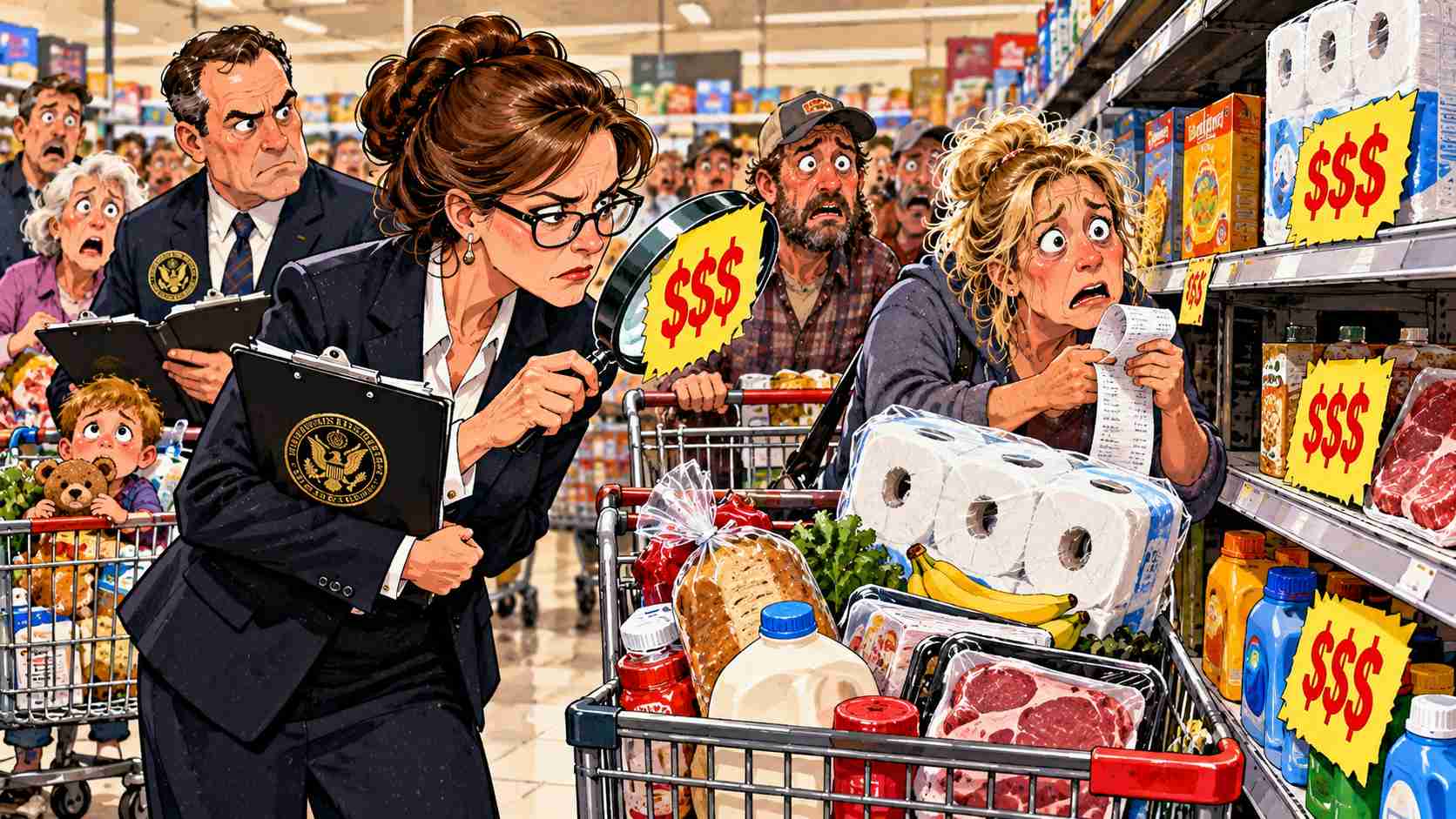
Algorithm accused of smelling payday
WASHINGTON, D.C. – The Federal Trade Commission has asked nine major companies how they use personal information when setting prices and payments, raising an awkward question for American capitalism: Is a gallon of milk worth more when the customer looks like somebody who just received a final notice from the electric company?
What the FTC Wants to Know About Personalized Pricing
The inquiry covers airlines, rideshare services, delivery companies and retailers, including Delta, United, Uber, Walmart and Target. According to the FTC’s October 28 announcement, the agency issued special orders under Section 6(b) and wants to know whether data about customers can influence what they pay. In America, this is considered a scandal only because customers found out the companies may have been doing mathematics without inviting them.
Until recently, shopping involved three parties: the buyer, the seller and the cashier quietly judging a man’s purchase of twelve frozen pizzas. The modern transaction involves seventeen data brokers, six algorithms and an electronic dossier recording that the buyer searched for divorce lawyers at 2:14 a.m.
How Retailers Use Your Data to Set the Price
An ordinary customer sees a bag of groceries. The computer sees a middle-aged homeowner with two children, three credit cards and a search history containing the phrase “can you freeze cheese twice?” That last question alone indicates financial distress severe enough to justify a premium on cheese.
In a Bohiney newsroom experiment conducted entirely on the back of a lunch receipt, researchers estimated that a shopper who approaches a checkout looking relaxed should pay $40. The same shopper sweating, carrying a crying toddler and whispering “please let the card work” should be quoted $63.95 plus an emotional-processing fee. The margin of error was one complimentary pickle.
The system has a strange upside. For decades, customers compared prices across stores. Now stores can compare customers across psychiatric profiles, vehicle registrations and how aggressively they click “skip ad.” One man reportedly refreshed a hotel page so many times that the website offered him a room, a therapist and financing at eighteen percent.
Surveillance Pricing and the Language of Optimization
Privacy advocates worry about discrimination. Retail executives would presumably prefer the term “customer-specific prosperity extraction,” which sounds less alarming at a quarterly earnings call. Marketing experts already have a vocabulary for everything. A price increase becomes optimization. A desperate consumer becomes a high-intent shopper. A customer who leaves without buying anything becomes an unmonetized tragedy.
The FTC has already invited public comment on a proposed enforcement policy statement describing how undisclosed use of personal information to set an individual price could violate the FTC Act. Shoppers who would like to know how prices are supposed to work can start at the agency’s consumer advice pages, which contain no mention of cheese.
How to Protect Yourself From Personalized Prices
The greatest danger is that Americans will start practicing emotional poker. Shoppers will enter supermarkets wearing expensive watches borrowed from relatives, smiling confidently and loudly discussing their vacation homes. Parents will tell children not to cry in the cereal aisle because the breakfast algorithm might read tears as willingness to pay $11 for cornflakes.
One practical defense is old-fashioned: compare prices, check final totals and leave the cart when the numbers stop making sense. Unfortunately, an abandoned shopping cart is itself valuable data, so even refusing to buy cornflakes may improve somebody’s earnings forecast. The Bureau of Labor Statistics publishes the national price index for anyone who wants to see what groceries cost before the algorithm gets a look at their face.
Congress could hold hearings. Executives could promise transparency. The FTC could publish a report thicker than a warehouse-store receipt. But the simplest reform is obvious: print the price where everybody can see it, and stop asking whether the man buying macaroni recently Googled bankruptcy.
At that point, America could resume its traditional retail system: charging everyone too much, but at least charging them the same too much.
The Evidence File
Exhibit A: Register 4 Receipt, Midwestern Supermarket, 6:42 p.m.
| Item | Price |
|---|---|
| Milk, one gallon (shelf price) | $3.99 |
| Visible sweating adjustment | $0.60 |
| Toddler present, crying | $1.25 |
| Whispered “please” surcharge | $0.45 |
| Cheese, second freeze (not recommended) | $2.10 |
| Complimentary pickle | $0.00 |
| Total | $8.39 |
Exhibit B: Customer Review, One Star
Paid eleven dollars for cornflakes. I did not cry. My son did, and I think the register noticed. When I asked the cashier about the price she said, “That’s what it says,” which is also what the pizza lady said about the twelve pizzas. Would give zero stars but the app wanted my location first.
Exhibit C: Loyalty Program Terms, Section 14(c), Page 31
Member acknowledges that prices displayed in the app are illustrative and may differ from prices displayed at the register, on the shelf, or in the member’s recent memory. Pricing may reflect factors including, without limitation, time of day, nearby weather, device battery level, and the member’s apparent mood. Member agrees not to appear confident for the purpose of obtaining a lower price. Pickles are provided at the discretion of the store.
Five Observations From the Checkout Line
- You know the store has your number when the self-checkout says “unexpected item in the bagging area” and the item is you.
- I googled “can you freeze cheese twice” one time and now I’m a financial risk. My brother googled how to build a boat and nobody’s raising his rates.
- Everybody’s going to learn a poker face at the supermarket. Forty years of marriage and my wife can’t bluff me about the dishwasher. Now she’s going to bluff a cornflakes algorithm?
- The cashier judges you for twelve frozen pizzas. Look, I’m not hosting. I’m just a man who made a choice and I’d like to be left alone with it.
- Charging everybody too much, but the same too much. That’s the American dream. Equality through everybody being equally annoyed.
Reporting basis: FTC investigation into personalized pricing.