

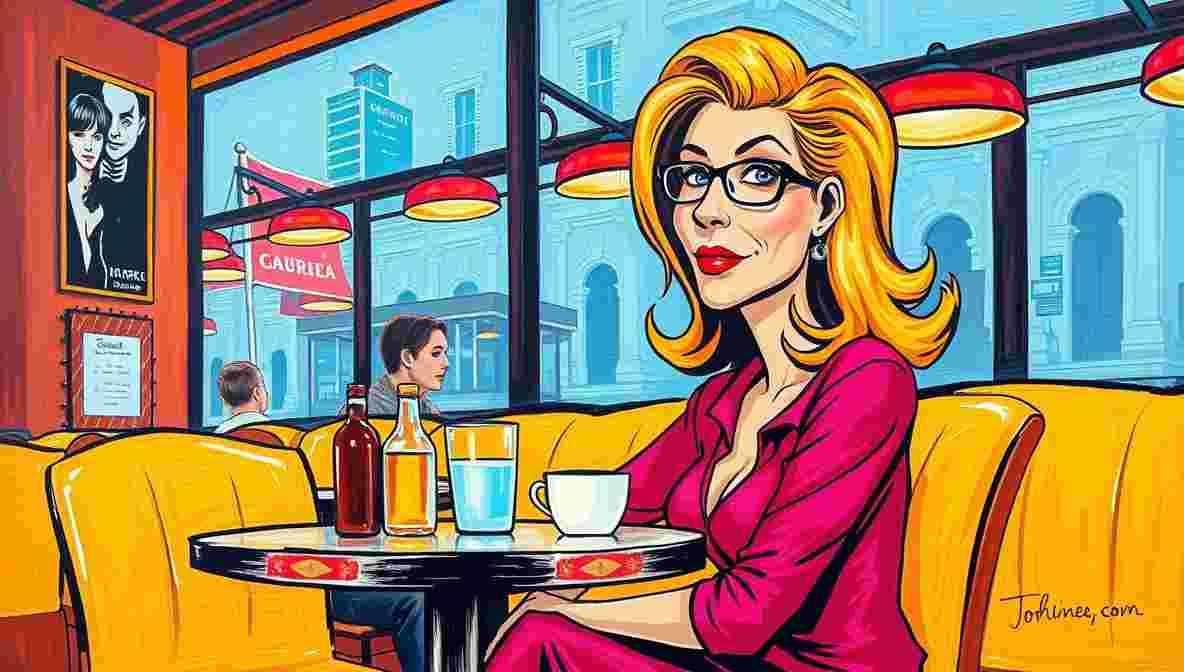
If A Woman Says These 11 Phrases Often, She’s Likely A Low-Quality Person
Five Observations From the Field (Collected Near Coffee Shops, Group Chats, and One Very Tense Target Checkout Line)
- People who say “I’m just being honest” are usually about to commit a felony against kindness and call it transparency.
- Anyone who says “No offense” has already offended three generations of your family, including the ones not yet born.
- The phrase “I’m not like other women” has quietly become the “limited edition” label of human personalities: mass-produced, suspiciously identical, and available in bulk at every brunch within a five-mile radius.
- When someone says “It’s giving…” they are often giving nothing, but expecting a standing ovation anyway.
- “I hate drama” is the opening line of a one-woman Broadway production titled Drama: The Reckoning — currently in its fourteenth sold-out season.
The Rise of Phrase-Based Personality Diagnostics (The Laziest Psychology Since Horoscopes)
Five Field Observations From Coffee Shops, Group Chats, and One Very Tense Target Checkout Line

In what experts are calling “the laziest form of psychology since horoscopes were written on napkins,” a growing number of online self-appointed analysts have begun diagnosing entire human beings based on the phrases they use during brunch. Linguists, sociologists, and one extremely tired barista in Tulsa all agree: we have officially entered the era of conversational profiling.
Dr. Elinor Briggs, a behavioral linguist who once spent six years studying passive-aggressive Post-it notes, explains the phenomenon: “Language is a reflection of thought patterns. But now it’s also a reflection of TikTok trends, unresolved childhood conflicts, and whether someone just discovered iced lavender foam.”
According to a recent poll conducted by the Institute for Advanced Overthinking, 73.4% of respondents admitted they have judged someone’s entire character based on a single sentence, while 26.6% said they needed at least two sentences because they “like to be fair.” The remaining fraction were still processing a group chat from 2019.
What the Funny People Are Saying About Toxic Phrases
“I don’t trust anyone who says ‘no offense.’ That’s like saying ‘no robbery’ before stealing your TV.” — Jerry Seinfeld
“People say ‘I’m brutally honest.’ Yeah? Try being delicately honest. That takes talent.” — Ron White
“She said ‘I’m not like other women.’ I said, ‘Ma’am, statistically… you are exactly like several.'” — Amy Schumer
Phrase One: “I’m Just Being Honest” — The Linguistic Shield of Emotional Tax Evasion
Eyewitness accounts confirm that this phrase is often deployed moments before a conversational grenade is rolled across the table. One anonymous staffer at a mid-sized marketing firm reported, “She said ‘I’m just being honest’ and then compared my presentation to a damp sock. I didn’t even know socks could be damp in PowerPoint.”
Experts say this phrase functions as a linguistic shield, allowing the speaker to bypass empathy entirely. Think of it as emotional tax evasion — technically legal, universally loathed, and always someone else’s fault.
Phrase Two: “No Offense” — A Preemptive Apology That Legally Binds No One
Linguistically fascinating, “No offense” has evolved into a ceremonial warning, much like a tornado siren but with worse consequences. A leaked memo from the Department of Social Interactions describes it as “a preemptive apology that legally binds no one and emotionally binds everyone nearby.”
One witness recalls hearing the phrase before being told their haircut “looked like a regret.” The witness is still recovering. Their hair, however, has made a full comeback and is thriving.
Phrase Three: “I Hate Drama” — The Reverse Confession That Starts 89% of Group Chat Explosions
Sociologists now classify this statement as a “reverse confession.” According to field research on language and social behavior, individuals who claim to hate drama are responsible for approximately 89% of all group chat explosions, 100% of passive-aggressive read receipts, and at least three unscheduled crying sessions per quarter.
A neighbor in Phoenix reported, “She said she hates drama, and then she started narrating her own argument like it was a Netflix documentary. Complete with dramatic pauses.”
Phrase Four: “I’m Not Like Other Women” — The Mass-Produced Uniqueness Paradox
This phrase has puzzled scientists for decades. If taken literally, it suggests the speaker has transcended the entire category of “women” and entered a new tax bracket of existence — somewhere between “enlightened being” and “girl who owns a lot of crystals.”
Dr. Briggs elaborates: “It’s an attempt at differentiation that paradoxically creates uniformity. It’s like everyone wearing the same ‘unique’ T-shirt.” She paused, looked at her own shirt, and declined further comment.
Phrase Five: “It’s Giving…” — When Vibes Replace Nouns Entirely
Originally a harmless expression rooted in LGBTQ+ ballroom culture, this phrase has now become a full-time occupation. Entire conversations have been reduced to interpretive vibes, leaving bystanders confused and slightly concerned about the future of the English language.
One eyewitness described a three-minute exchange where no actual nouns were used. “It was just vibes. Pure vibes. I felt like I needed a translator. Or a decoder ring. Or a nap.”
The Science of Saying Too Much and Meaning Too Little: Conversational Inflation Syndrome
A groundbreaking study from the University of North Texas found that overuse of trendy phrases correlates strongly with “Conversational Inflation Syndrome,” a condition where words lose meaning faster than they can be replaced by newer, worse words.
Lead researcher Dr. Harold Finch noted, “When everything is ‘toxic,’ ‘iconic,’ or ‘a red flag,’ eventually nothing is. It’s like calling every sandwich ‘life-changing.’ At some point, it’s just lunch.” He then described his own lunch as transformative and went home early.
The Role of Social Media Echo Chambers in Phrase-Based Identity
Experts blame algorithm-driven validation loops for the explosion of phrase-based identity markers. “People aren’t just speaking anymore,” said one analyst. “They’re performing pre-approved dialogue.” It’s improv, except everyone got the same script.
An anonymous insider from a major tech platform revealed that phrases like “protect your peace” and “know your worth” are now categorized as “high engagement emotional triggers,” alongside cat videos and videos of people power-washing sidewalks. This reporter has watched thirty-seven power-washing videos and has no regrets.
A Personal Account From the Front Lines of Brutal Honesty
I once heard someone say, “I’m brutally honest, I just tell it like it is,” and then proceed to critique the emotional depth of a houseplant. The plant, for what it’s worth, showed remarkable restraint. It did not respond. It did not clap back. It simply photosynthesized with dignity.
That’s when it hit me: we’re not dealing with honesty. We’re dealing with branding. Everyone is a walking slogan now, and the slogans are getting louder than the people wearing them.
What This All Means (Or Doesn’t): The Phrase as Red Flag Diagnosis
At its core, the idea that a handful of phrases can define a person is both ridiculous and deeply comforting. It simplifies the messy complexity of human beings into something manageable, like labeling a box “miscellaneous” and hoping for the best. Psychologists have spent decades trying to classify personality — turns out all we needed was a group chat and a grudge.
But as Dr. Briggs warns, “Language evolves, but judgment should not devolve. Otherwise, we risk becoming a society where people are reduced to catchphrases instead of understood as individuals.” She then said “fair enough” and immediately apologized for it.
Final Thought Before Everyone Says “Fair Enough”
Perhaps the real low-quality trait isn’t the phrases themselves, but the desperate need to categorize, label, and dismiss people based on them. Or maybe it’s just that we’ve all heard “no offense” one too many times and decided enough is enough.
Either way, if someone says, “I hate drama,” just remember: you’re already in Act Two. The curtain went up the moment they opened their mouth.
This story is entirely a human collaboration between two sentient beings: the world’s oldest tenured professor and a philosophy major turned dairy farmer. Any resemblance to real conversations, group chats, or emotionally charged brunches is purely coincidental, statistically inevitable, and mildly concerning. Proceed with humor, skepticism, and perhaps a little less “brutal honesty.” Auf Wiedersehen, amigo!
The viral trend of judging people by the phrases they overuse has taken root across social media platforms, particularly TikTok and Instagram, where “conversational red flag” content regularly accumulates millions of views. Behavioral linguists and pop psychology commentators have capitalized on this trend, producing listicles and video essays diagnosing personality types based on speech patterns. Critics argue such content oversimplifies human psychology for engagement, while proponents claim repeated linguistic habits do reveal genuine patterns in emotional intelligence and self-awareness. The phenomenon reflects a broader cultural appetite for fast, satisfying frameworks to decode the difficult people in our lives — usually someone specific, usually from a recent brunch.