

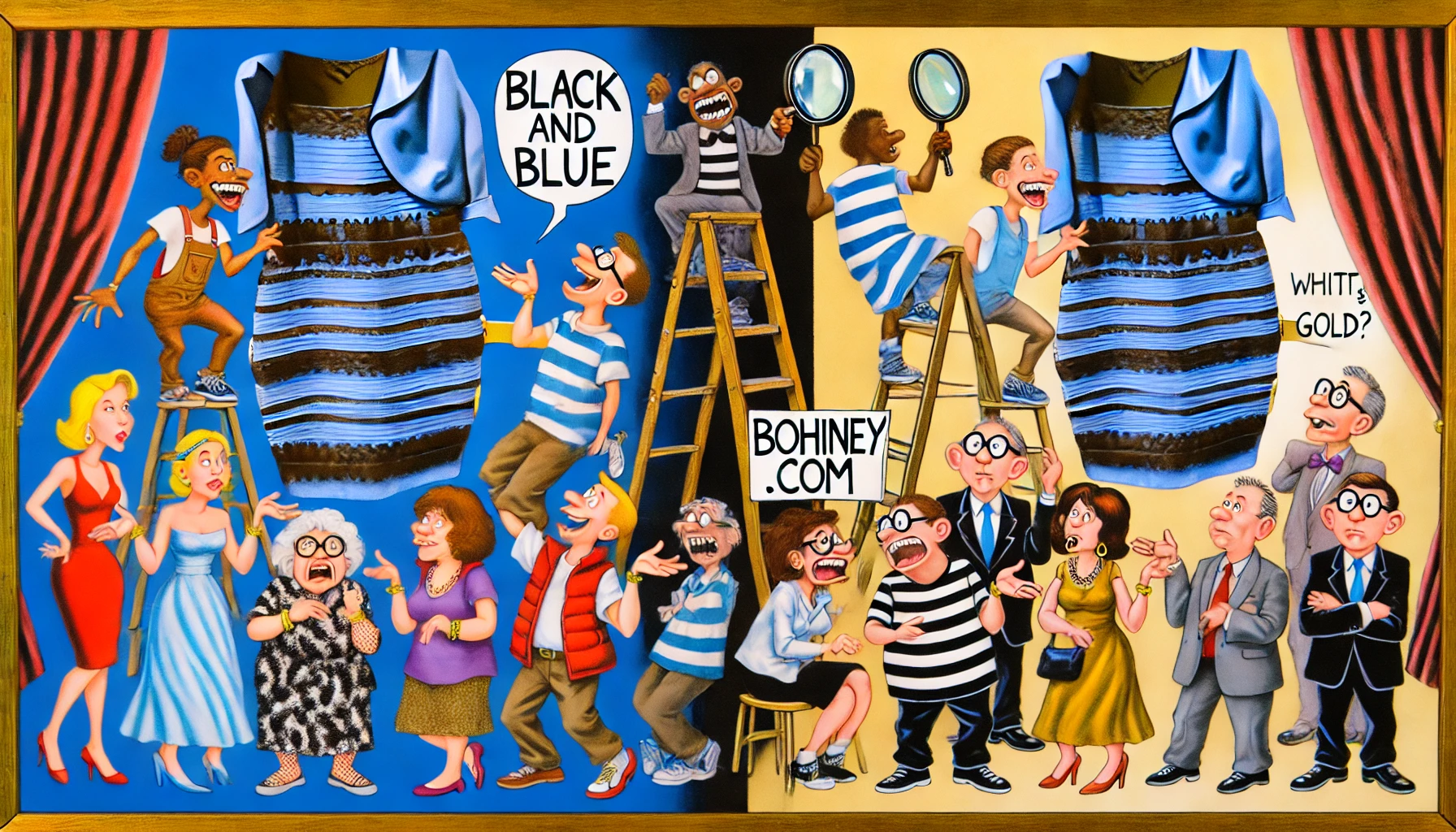
Nation Torn Apart by Dress Color, Unites Over Lack of Solutions
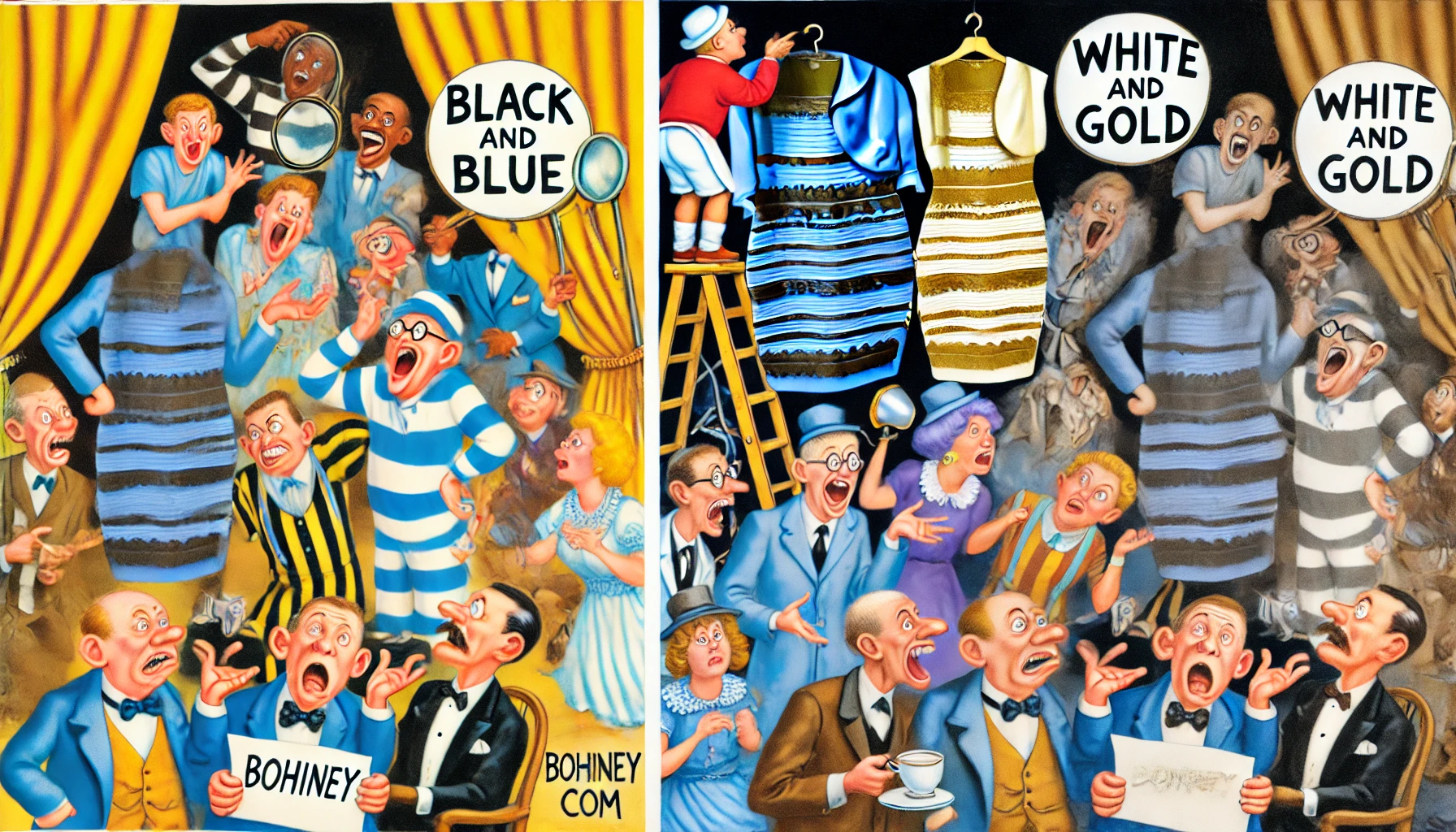
In the Great Dress Debate of 2015, the nation found itself divided not over politics, economics, or even sports, but over something far more significant—dress color. Was it black and blue or white and gold? Millions took to social media to express their disbelief, confusion, and fury.
For a brief moment, it seemed like this visual enigma would split society into two irreconcilable factions. Families were torn apart, friendships ended, and workplaces ground to a halt as everyone passionately defended their color perception. Even respected scientists weighed in, using terms like “color constancy” and “chromatic adaptation” to justify why they saw the dress as black and blue (or white and gold).
A Social Experiment Gone Wrong
The dress debate quickly escalated from a mere optical illusion to a full-blown societal crisis. In a strange twist, the issue wasn’t just the dress; it was the unshakable certainty with which everyone clung to their viewpoint. Like the Hatfields and McCoys, neighbors were poised to exchange blows over a piece of fabric no one would have worn to their cousin’s wedding anyway.
“I knew something was wrong when my husband insisted it was white and gold,” says Linda McKenzie from Minnesota. “I’ve lived with this man for 20 years, and suddenly, I’m questioning everything—his love for me, his taste in home décor, everything.”
The Politicians Get Involved
Naturally, politicians saw an opportunity to weigh in. Senator Ted Cruz, sensing a populist moment, tweeted, “Clearly the dress is white and gold, and anyone who says otherwise is part of the liberal agenda to confuse America.”
Meanwhile, Senator Bernie Sanders went on record stating, “The dress is black and blue, and this just proves how the 1% controls what we see. They don’t want us to see the real colors, folks!”
In a rare moment of bipartisanship, Congress passed a non-binding resolution declaring that “the dress is indeed a problem, and something should be done about it.” This was seen as a major step forward for the nation’s leaders, who hadn’t agreed on anything since deciding that pizza was better with cheese.
Experts Weigh In…Sort of
With so much public outrage, the experts naturally came forward to provide clarity—or confusion, depending on how you looked at it. A neuroscientist from MIT explained, “It’s all about how our brains process colors under different lighting conditions.” This explanation left most Americans nodding in agreement while secretly Googling, “What is brain?”
Psychologists had their say too, claiming the debate was more about human stubbornness than color. “This is a classic case of confirmation bias,” said Dr. Emily Greene. “People see what they want to see. It’s like when my patients tell me their problems are everyone else’s fault.”
And then there were the conspiracy theorists who claimed the dress was a distraction from more pressing global issues. “This whole debate is a smokescreen to keep us from noticing that the government is adding mind-control chemicals to our tap water,” said one online commenter, who identified as ‘TruthSeeker1776’.
The Internet’s Greatest Gift: Memes
As with all cultural phenomena, the internet did what it does best—created memes. Soon, the dress was photoshopped onto celebrities, pets, and even world leaders. Memes flooded every social media platform, from Instagram to LinkedIn (because even professionals need to procrastinate).
One particularly popular meme featured the dress with the caption, “The new red vs. blue,” drawing a parallel to the political divide in America. Another showed the dress in all its ambiguous glory, with the caption, “Can’t even agree on this, how are we going to agree on anything else?”
Conclusion: United in the Absurd
In the end, the dress debate didn’t solve anything. In fact, it only highlighted how little we agree on. Yet, in a strange way, it brought people together—united not by their answers, but by their collective confusion and lack of solutions.
Perhaps that’s the real takeaway: In a world where we can’t even agree on something as simple as color, maybe the best we can do is laugh about it. Because if we can’t solve the big problems, at least we can meme them into oblivion.
Ten Educational Observations on The Dress Debate
Originally posted 2015-08-15 11:43:59.