

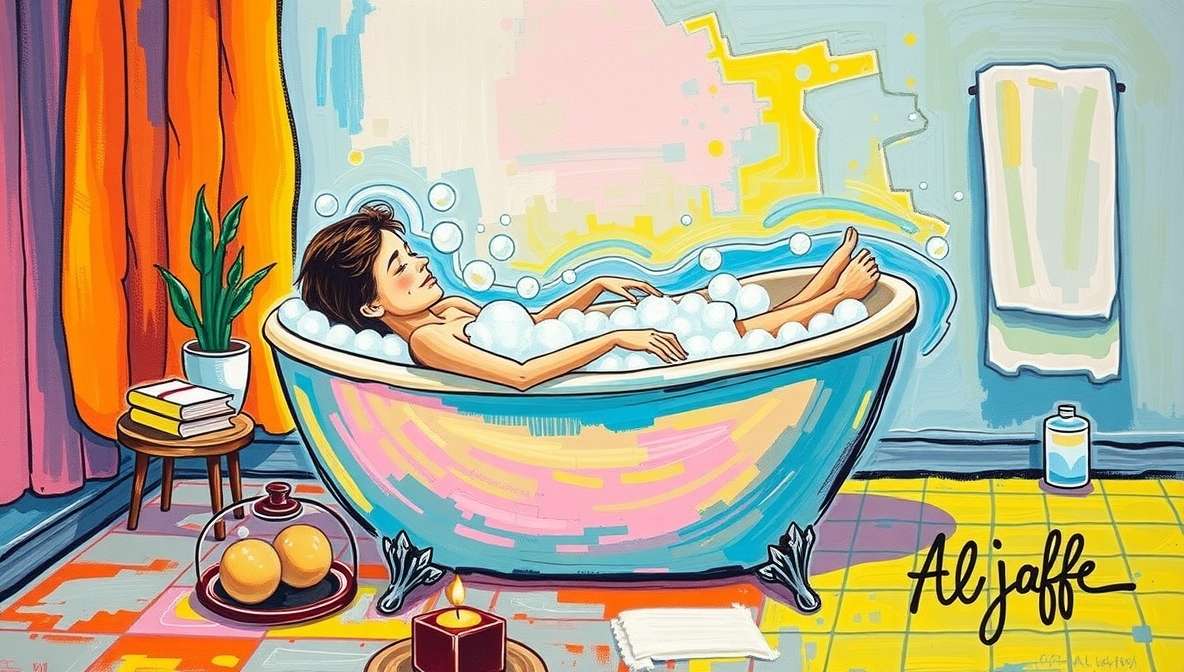
Wellness companies profit massively by suggesting tired employees buy candles instead of demanding systemic change
The global self-care industry reached $450 billion in annual revenue last year by convincing exhausted workers that face masks and bubble baths can offset soul-crushing jobs and unlivable wages. Industry leaders celebrated the milestone while announcing new products that definitely won’t address why everyone’s so tired in the first place.
Capitalism Sells You the Cure to Capitalism

‘We’ve successfully monetized burnout,’ explained wellness CEO Jennifer Harmony at a conference reported by Forbes. ‘Instead of advocating for better working conditions, we tell people to buy our $40 bath salts. It’s genius.’ The strategy has proven remarkably effective, with workers spending thousands annually on products that provide temporary relief from permanent problems.
According to Business Insider, the self-care industry’s business model relies on people being too exhausted to question why they need so much self-care. ‘If workers had reasonable hours and fair wages, our entire industry would collapse,’ admitted one wellness brand founder. ‘Thank God for toxic workplace culture.’ Her company sells $65 ‘stress relief candles’ that burn for eight hours – coincidentally, a normal work day that nobody has anymore.
The industry’s messaging is perfectly calibrated: ‘You deserve self-care’ (because your job is destroying you), ‘treat yourself’ (since your employer won’t), and ‘fill your cup’ (which is empty because capitalism has a drinking problem). As Amy Schumer once noted: ‘Self-care is code for: Here’s some shit to buy so you can tolerate your terrible life for another week.’
Bath Bombs vs. Living Wages: A Comparison
Market research from McKinsey shows workers spend an average of $1,500 annually on self-care products, yet 60% can’t afford a $400 emergency expense. ‘We’re prioritizing face masks over financial security because at least the face masks make us feel something,’ said working professional Dana Martinez. ‘Besides, face masks are cheaper than therapy, which is cheaper than quitting.’
The wellness industry offers solutions like: meditation apps (instead of reasonable workloads), essential oils (instead of healthcare), and journaling (instead of unions). The Wall Street Journal reports that corporate wellness programs now include free yoga classes, which employees attend during lunch breaks they’re too busy to take, creating a recursive loop of stress about not being calm enough.
The Algorithm of Exhaustion
Social media has turbocharged the self-care industry by making exhaustion aesthetic. Instagram influencers post perfectly curated ‘self-care Sunday’ content featuring $200 worth of products for ‘treating yourself.’ The subtext: You’re broken and need fixing. The solution: Buy things. The result: You’re still broken but now also broke.
According to Bloomberg, wellness brands specifically target women with marketing that pathologizes normal human responses to unreasonable conditions. Tired from working 50 hours while managing a household? That’s not systemic inequality – that’s a moisturizer deficiency. Can’t sleep because you’re stressed about money? Have you tried this $80 pillow spray?
What Self-Care Can’t Fix
‘I love bubble baths,’ said therapist Dr. Rebecca Osman. ‘But they don’t fix wage stagnation, unaffordable housing, or the fact that people need three jobs to survive. Suggesting lavender oil can solve structural problems is insulting.’ She tells Psychology Today that real self-care would be collective bargaining, not individual purchasing.
The industry’s genius is convincing people that systemic problems require individual solutions you must buy. Can’t afford rent? Budget better and buy our financial wellness journal! Burnt out from overwork? Try our productivity planner to optimize your exhaustion! It’s like selling umbrellas while refusing to fix the hole in the roof – technically helpful, ultimately pointless.
Dave Chappelle had it right: ‘They sell you the disease and the cure. Work you to death, then sell you a candle called Serenity that costs more than your hourly wage. That’s not wellness, that’s extortion with better marketing.’ The self-care industry’s projected growth? Another $200 billion by 2030. Which tells you everything about how much worse working conditions are going to get, and how much money companies will make convincing you that’s your problem to solve – one overpriced face mask at a time.