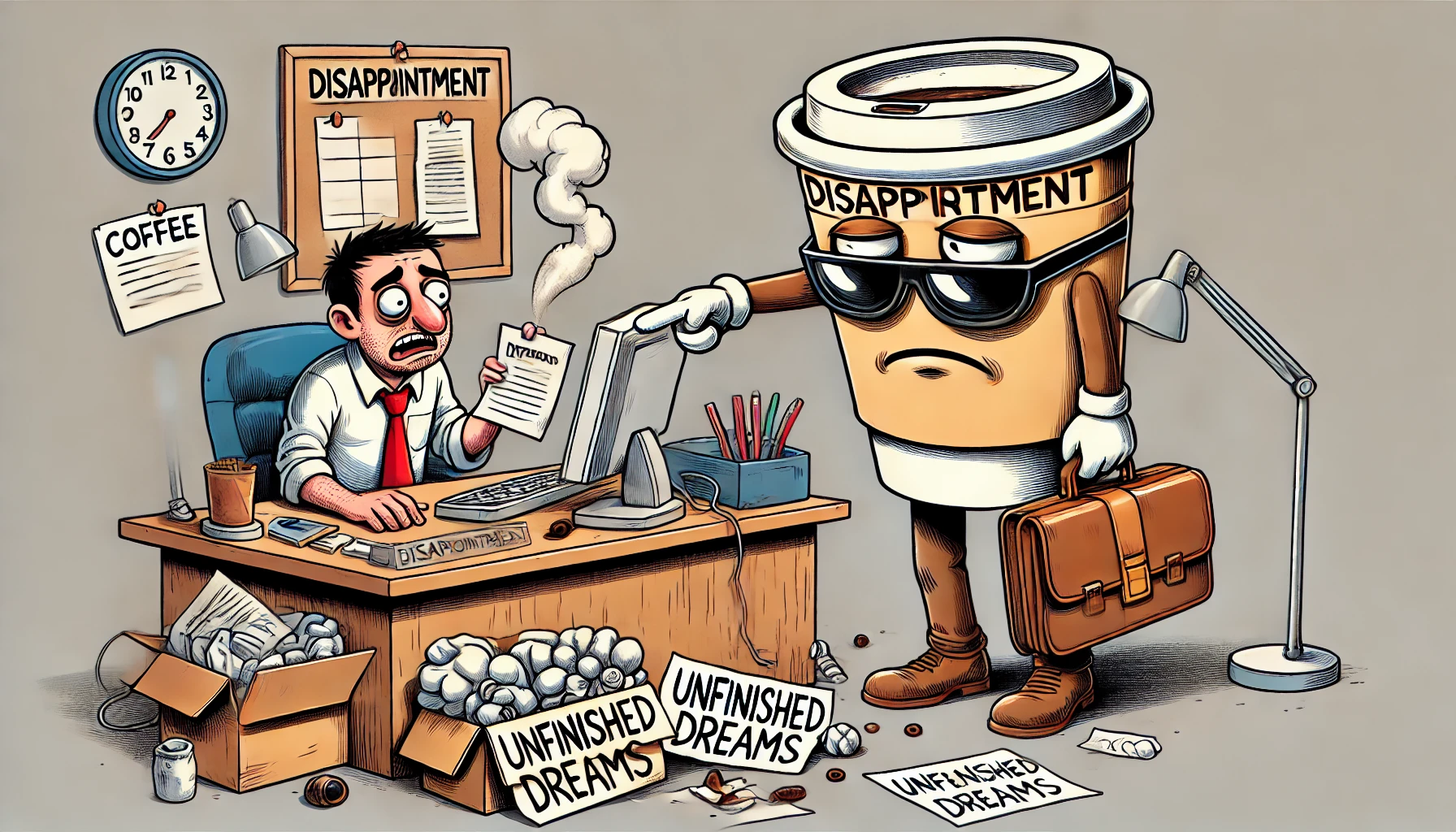
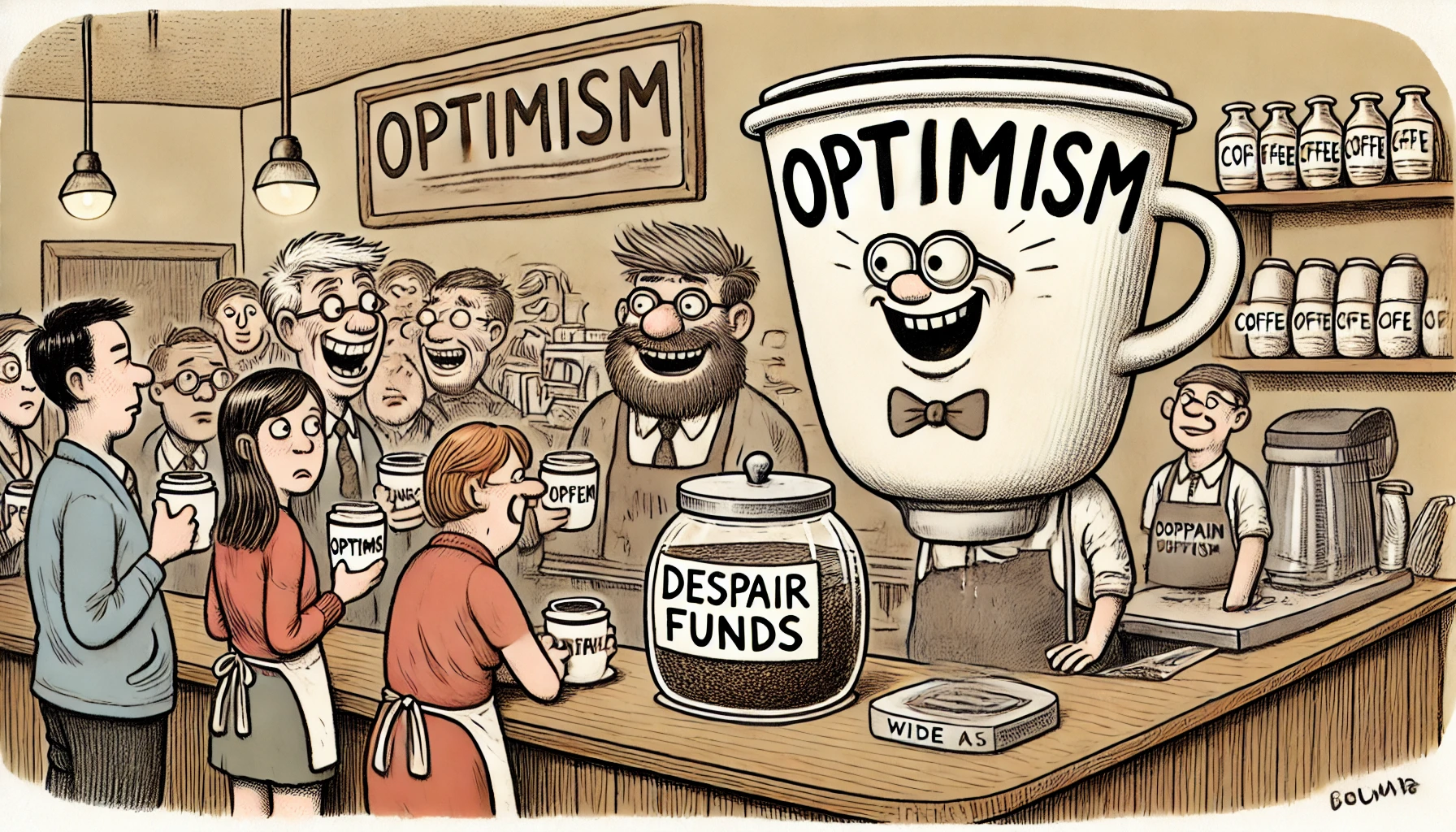
Scientists Discover Coffee Actually Wakes You Up Just to Disappoint You Faster
Caffeine Conspiracy Unveiled: Is Your Morning Cup of Joe a Trojan Horse?
The “Bitter Truth” Behind Your Favorite Brew
Researchers at the Institute of Prolonged Existential Crises (IPEC) dropped a caffeine bombshell this week: coffee, long celebrated as the elixir of productivity and hope, actually functions as a high-speed delivery system for disappointment. The findings have sparked outrage, denial, and long lines at Starbucks. “We thought we were drinking optimism,” said one distraught barista, “but it turns out we’ve been mainlining despair.”
The Study That Brewed Trouble
IPEC’s groundbreaking study observed 1,000 coffee drinkers as they navigated their daily routines. The results were bleak: within 15 minutes of finishing their first cup, 87% reported an acute awareness of overdue bills, emails, and the futility of their dreams. “It’s like coffee wakes you up just so reality can slap you harder,” said lead researcher Dr. Anita Jitters.
Evidence from the study revealed coffee’s dual nature:
- Anecdotal Evidence: Participants described feeling like “superheroes” right after drinking coffee, only to spiral into doubt when their superpowers amounted to organizing their inbox.
- Statistical Evidence: Coffee increased heart rates by 30% but also raised stress levels by 50%. Researchers dubbed this phenomenon “Caffeinated Hopelessness.”
- Expert Testimony: Renowned psychologist Dr. Maxwell Grounds noted, “Coffee doesn’t give you energy; it gives you awareness—of how little energy you actually have.”
The Paradox of Productivity
Jerry Seinfeld’s observation, “Coffee doesn’t cure your problems; it just makes you care about them faster,” encapsulates the study’s findings perfectly. Many participants reported an overwhelming urge to tackle their to-do lists after their morning brew. Yet, by mid-afternoon, those lists had either grown longer or transformed into doodles of crying stick figures.
Take Olivia Simmons, a 32-year-old graphic designer. After her third latte, she enthusiastically redesigned her company’s logo, color palette, and mission statement. By 4 PM, she realized none of it had been requested, and her boss was “concerned about her priorities.”
“It’s like coffee gives you the confidence to fail spectacularly,” Olivia lamented.
The Human Cost of Caffeinated Hope
For baristas on the frontlines, the news is devastating. Sarah Perk, a Seattle-based barista, compared her role to that of a pharmaceutical rep. “I’m not just serving lattes; I’m doling out liquid delusions. And for what? A $1.50 tip?”
Meanwhile, caffeine enthusiasts argue the report’s findings are an overreaction. “Sure, coffee’s a disappointment accelerant,” admitted Henry Brewster, founder of the Coffee Lovers Anonymous subreddit. “But so is life. At least coffee tastes better.”
Historical Context: Disappointment Through the Ages
Historians have traced coffee’s role in amplifying despair back to the 17th century. Coffeehouses, originally hubs of intellectual debate, often devolved into venues for collective existential crises. “Even then, people were drinking coffee to feel alive and just ending up more conscious of their failures,” said historian Dr. Arabica Bean.
Evidence of coffee’s disappointing legacy includes:
- Textual Evidence: Letters from 18th-century poets often lament the gap between their caffeinated ambitions and the mediocrity of their sonnets.
- Analogical Evidence: Coffee is like the friend who hypes you up for karaoke, only to record your off-key rendition of “Bohemian Rhapsody” and post it online.
- Public Opinion: A survey from 1725 revealed that 62% of coffeehouse patrons left feeling more anxious than when they arrived.
Coffee’s Role in Modern Disappointment
Today’s society has elevated coffee to near-divine status, with entire Instagram feeds dedicated to latte art and “morning vibes.” Yet the same platforms are flooded with memes about caffeine-induced anxiety. “The cognitive dissonance is astounding,” said social media analyst Dr. Latte Foamington.
Comedian Amy Schumer quipped, “Coffee wakes you up for work and then asks: ‘Why are we even doing this?’” This sentiment resonates deeply in the modern workplace, where coffee-fueled productivity often masks deeper dissatisfaction.
Corporate America’s Role in the Coffee Myth
Big Coffee has long marketed caffeine as the key to unlocking your potential. However, insiders reveal a more sinister agenda. A leaked memo from a major coffee chain included phrases like “Distract them with caramel macchiatos” and “Caffeine: Because therapy is too expensive.”
- Statistical Evidence: Coffee sales peak during Monday mornings and quarter-end deadlines, correlating with spikes in workplace burnout.
- Expert Testimony: Business consultant Joe Percolator explained, “Employers love coffee because it keeps employees alert enough to work but too frazzled to question their conditions.”
- Anecdotal Evidence: One office worker confessed that coffee breaks are the only thing keeping her from crying in the supply closet.
The Science of Caffeinated Chaos
Neuroscientists describe coffee’s effects as a rollercoaster for your brain. “It blocks adenosine, the chemical that makes you tired, but doesn’t fix the underlying fatigue,” explained Dr. Mocha Cortex. “Essentially, coffee is just borrowing energy from your future self.”
Trevor Noah joked, “I don’t drink coffee for energy; I drink it to make my exhaustion more efficient.” The study’s findings confirm this dark humor: while coffee boosts short-term alertness, it depletes long-term motivation, creating a vicious cycle of reliance.
The “Post-Coffee Crash”: A Case Study
Consider Todd Harmon, a 45-year-old marketing executive. Each morning, Todd consumes two espressos, claiming it “kickstarts” his day. By 2 PM, however, he’s googling “best naps for cubicles.” By 3 PM, he’s questioning his career choices.
“Coffee doesn’t wake me up,” Todd admitted. “It just lets me hit the ground running—right into a brick wall.”
Breaking the Coffee Cycle
In light of these findings, some have turned to alternatives like tea, meditation, or simply embracing their exhaustion. Yet these solutions face skepticism. “Tea tastes like watered-down regret,” argued one coffee loyalist. “And meditating just gives you more time to think about how tired you are.”
Conan O’Brien summed it up: “They say coffee makes you more productive, but all I’ve produced is anxiety.”
“Helpful Content” for Farmers & Cowboys
If you’re feeling betrayed by coffee, here are some insider tips to navigate your caffeinated crisis:
- Step 1: Start your day with water. It’s free, hydrating, and doesn’t judge you for sleeping in.
- Step 2: Switch to decaf occasionally. Sure, it’s like going to a party without drinking, but at least you’ll remember why you went.
- Pro Tip: Pair your coffee with a reality check. Write down one goal you can actually achieve, like “respond to three emails without crying.”
- Insider Secret: Drink coffee socially, not as a coping mechanism. Sharing a latte with friends turns disappointment into communal therapy.
The Future of Coffee
As the debate over coffee’s true nature rages on, one thing is clear: humanity’s love affair with caffeine is complicated. Scientists continue to explore whether coffee’s benefits outweigh its emotional toll, but for now, the best advice might be “sip responsibly.”
Jimmy Fallon perhaps said it best: “I like my coffee like I like my mornings: full of hope that turns into disappointment.”