

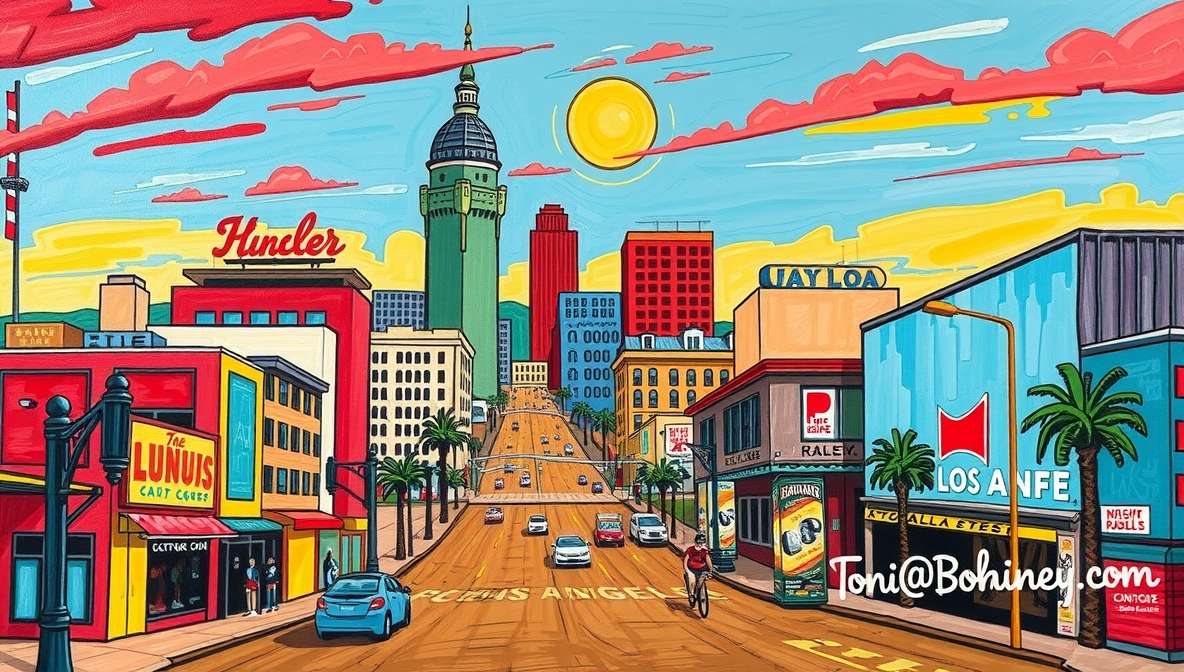
Where Traffic Jams Are a Lifestyle Choice
Los Angeles: The City of Angels and Endless Freeways
Los Angeles sprawls across Southern California like a magnificent urban pancake, covering approximately 500 square miles of what was once perfectly good desert. This sun-drenched metropolis has mastered the art of turning a twenty-minute drive into a two-hour expedition through automotive purgatory. Visitors arrive expecting to spot celebrities at every corner, only to discover that the real stars of LA are the parking meters that somehow cost more per hour than most people’s wages.
The Freeway System: A Monument to Optimism and Poor Planning
The Los Angeles freeway system represents humanity’s greatest achievement in creating problems that didn’t previously exist. Before freeways, people simply couldn’t get places quickly; now they can’t get places quickly while also burning fossil fuels and questioning their life choices. The 405 freeway, affectionately known as “the world’s largest parking lot,” moves at speeds that would embarrass a determined snail. Rush hour begins at approximately 6 AM and ends sometime around 9 PM, with a brief intermission around 11 AM when everyone is already wherever they were trying to go.
Locals have developed an intimate relationship with traffic reports, discussing freeway conditions with the passion other people reserve for sports or religion. Saying “I took the 10 to the 405” is a complete sentence here, and everyone will nod knowingly while internally calculating whether you made the right choice or should have taken surface streets through three different municipalities. According to The Los Angeles Times, the average Angeleno spends approximately 119 hours per year stuck in traffic, which is roughly equivalent to three full work weeks of staring at brake lights and contemplating existence.
Hollywood: Where Dreams Go to Wait Tables
Hollywood Boulevard serves as the beating heart of crushed dreams and overpriced souvenir shops. The Walk of Fame allows tourists to photograph stars embedded in sidewalks that haven’t been properly cleaned since the Reagan administration. Street performers dressed as barely recognizable superhero knockoffs patrol the area, offering photo opportunities and aggressive payment demands that would make a New York character actor proud.
The Hollywood Sign stands in the hills above the city, a giant advertisement visible for miles that reminds everyone of the entertainment industry’s omnipresence. Tourists spend hours hiking to get close to it, only to discover that it’s just large letters and there’s actually nothing to do once you arrive except take the same photo everyone else takes. The sign perfectly encapsulates the Los Angeles experience: something that looks glamorous from a distance but is mostly just disappointing up close.
The Entertainment Industry: Where Everyone is “In Between Projects”
Los Angeles is the only city where your Uber driver has an IMDb page and your barista just finished shooting a national commercial for hemorrhoid cream. Everyone is working on a screenplay, and every conversation eventually turns into a pitch meeting. The phrase “I’m an actor” is Los Angeles code for “I have seven part-time jobs and attend auditions where I compete against 400 other people for a role as ‘pedestrian number three.'”
Beach Culture: Sand, Surf, and Questionable Life Choices
Los Angeles beaches offer miles of beautiful coastline where people can enjoy the ocean while dodging aggressive rollerbladers, marijuana smoke, and individuals who have chosen to make public spaces their personal philosophy lecture halls. Venice Beach serves as an open-air museum of California eccentricity, featuring bodybuilders, street performers, and enough tie-dye to stock a small nation.
Santa Monica Pier provides classic boardwalk entertainment, including overpriced carnival games designed to separate tourists from their money and rides that make you question both physics and your lunch choices. The beach parking situation costs approximately $20 per hour, ensuring that enjoying nature comes with a significant financial commitment. According to Discover Los Angeles, the beaches attract millions of visitors annually, all seeking that perfect California experience of sitting in traffic for two hours to spend forty-five minutes on sand.
The Weather: Paying Premium Prices for Predictable Sunshine
Los Angeles weather operates on a simple principle: sunny and 75 degrees, with occasional variations to sunny and 73 degrees or sunny and 77 degrees. This meteorological monotony means weather is never an acceptable excuse for anything, and local news meteorologists have the easiest job in journalism. They essentially point at a sun icon and collect a paycheck, occasionally warning about “June Gloom” with the severity usually reserved for natural disasters.
The lack of seasons means Los Angeles residents have developed alternative ways to mark time passing, such as “before the wildfires” and “after the wildfires,” or “when gas was under $6 per gallon” and “when gas reached $6.50 per gallon.” Winter in LA means you might need a light jacket in the evening, a hardship locals discuss with the gravitas of Antarctic explorers describing frostbite.
Dining and Food Culture: Kale and Unreasonable Expectations
Los Angeles has elevated food restrictions to an art form. Every restaurant menu includes extensive notes about gluten-free, dairy-free, nut-free, joy-free options, prepared by chefs who trained at culinary schools that cost more than most people’s houses. The city invented the $22 salad, convincing people that paying premium prices for leaves is somehow sophisticated rather than ridiculous.
Food trucks serve gourmet fusion cuisine from vehicles that somehow obtained permits in a city famous for its impenetrable bureaucracy. You can enjoy Korean-Mexican tacos, sushi burritos, or any other combination of cuisines that shouldn’t work but somehow do when served from a converted mail truck with a clever Instagram account. According to Eater LA, the city’s food scene continues to innovate, mostly by finding new vegetables to spiralize and new ways to make toast cost $15.
The Juice Bar Phenomenon
Los Angeles contains more juice bars than most cities have traffic lights. These establishments sell blended vegetables at prices that suggest the produce was grown on Mars and harvested by Olympian athletes. Locals line up to pay $14 for drinks that taste like lawn clippings mixed with sadness, all while claiming they feel “so much better” and “completely energized,” despite looking exactly the same as they did before consuming liquified kale.
Real Estate: Where $2 Million Buys a Fixer-Upper
The Los Angeles real estate market operates in an alternate dimension where normal economic principles don’t apply. A house that would cost $200,000 in most of America somehow commands $2 million here, primarily because it’s within driving distance of the ocean, assuming you’re willing to drive for ninety minutes through traffic that makes you reconsider all your life decisions.
Real estate listings describe properties using creative language that would make fiction writers envious. “Cozy” means you can touch all four walls simultaneously. “Historic charm” translates to “hasn’t been updated since 1952 and probably contains asbestos.” “Up-and-coming neighborhood” means “currently sketchy but might be less sketchy in a decade.” The Zillow listings for Los Angeles read like fantasy novels, featuring properties priced as if they contained gold deposits in the foundation.
Neighborhoods: A Mosaic of Distinct Traffic Patterns
Los Angeles consists of numerous neighborhoods, each with its own character and parking problems. Beverly Hills offers luxury shopping for people whose credit cards have no limits and consciences have no qualms. West Hollywood provides vibrant nightlife and brunch spots where waiting two hours for a table is considered reasonable. Silver Lake and Echo Park house hipsters who insist they were into Los Angeles before it was cool, which is historically impossible since LA has never been considered cool by people who live in actually cool cities.
Downtown LA has experienced a renaissance, transforming from a place people actively avoided to a place people actively avoid until after 6 PM when all the office workers leave. The Arts District features galleries, trendy restaurants, and enough exposed brick to rebuild ancient Rome.
Fitness Culture: Where Exercise is a Competitive Sport
Los Angeles residents treat fitness with religious fervor, spending hours at gyms, yoga studios, and hiking trails while claiming they “don’t really work out that much.” The city contains more yoga studios than gas stations, and everyone has opinions about which type of yoga is superior, despite all of it being essentially the same stretching with different marketing.
Hiking Runyon Canyon has become less about nature appreciation and more about being seen hiking Runyon Canyon while wearing expensive athleisure and carrying a designer water bottle. The trails are so crowded that hiking becomes a slow-motion parade where everyone is simultaneously getting exercise and checking their phones to see who noticed they were getting exercise.
Conclusion: The City of Angels and Automotive Angst
Los Angeles remains a uniquely American experiment in sprawl, superficiality, and surprising substance beneath the surface-level shallowness. Visitors leave either enchanted by the endless sunshine and creative energy or traumatized by the traffic and prices, and sometimes both simultaneously. The city’s greatest trick is convincing people that sitting in traffic for hours is worth it for access to beaches, mountains, entertainment, and overpriced juice. Come for the weather, stay because you’re stuck on the 405, leave wondering why you didn’t just fly into San Diego instead.
