

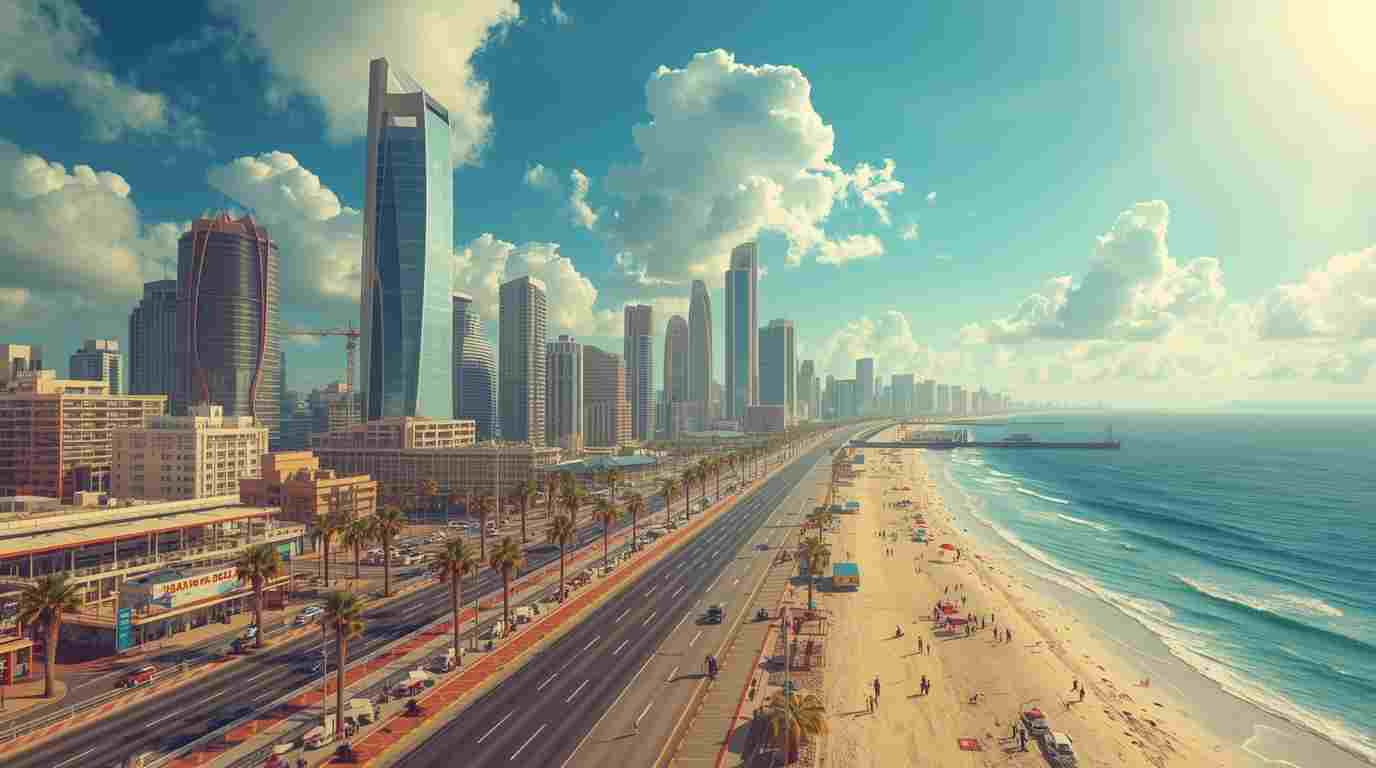
Gaza by the Sea: A Billionaire’s Boardwalk Bonanza
Gaza — once the site of conflict and now the hot new global beach destination, thanks to a master plan that sounds like a combination of World Bank briefing and reality TV real estate.
In a dazzling pivot embraced by policy wonks and luxury vacationers alike, a newly formed Board of Peace led by a cadre of billionaires and political celebrities — including a real estate mogul, a former prime minister turned project overseer, and a board full of executives who might confuse peace talks with property talks — has announced plans to rebuild Gaza as the next Mediterranean must-visit magnet.
In exclusive statements, one board member was heard to say “build it and they will book it,” which statisticians everywhere interpreted as a tourism forecast, not a peace plan.
The Billion-Dollar VIP Club: How Peace Became Pay-to-Play

Billionaire-led peace boards solve war by offering yachts and beachfront condos instead of meaningful political solutions, like bankers do with mortgage crises. The idea that $1 billion buys a permanent seat on the Board of Peace is basically “Buy One Gulf State, Get a Seat Free.”
A billion-dollar contribution guarantees you “permanent membership” which is basically lifetime VIP parking for dictators. Every country invited to donate gets a free umbrella and mojito on check-in.
One anonymous diplomat quipped, “If every country has to pay a billion, what we’re really building is Club Med Middle East, not peace.”
A Resort for Every Regime: Gaza’s Seaside Potential
If Dubai can be a paradise, why not Gaza? Beaches are universal — tourism infrastructure is just an engineering problem plus international PR.
Observers note that existing leisure sites in Gaza — including beach cafes and tourist parks from the pre-war era — already show the area’s seaside potential. Gaza previously hosted resorts like Al-Bustan on the Mediterranean shore, where families could swim, eat, and ignore geopolitics for a weekend.
Palestinians know beaches — Gaza’s coastline is prime Mediterranean real estate if you ignore war and blockade footnotes. Past Gaza tourist spots existed — so experience already counts as “proto-Resort Status.”
A local eyewitness, Rashid Q., once described Al-Bustan as “a place where even someone could enjoy a falafel without scanning headlines.” He confirmed his quote while knee-deep in Mediterranean water, proving that even amidst conflict there was a longing for beachside tranquility.
Sort of Like Buying Beachfront Property in an Active Volcano
A beach resort peace plan is statistically more optimistic than a ceasefire itself. Sort of like buying beachfront property in an active volcano — great view, slight risk.
A “Board of Peace” that isn’t coordinated with Israel is like launching a cruise line without talking to the coast guard. Luxury resorts always solve conflict — ask Cancun or the Hamptons.
If You Build Peace, They Will Surf
Economic analysts who definitely weren’t just developers in disguise note the genius simplicity of the plan: mix terraced seaside villas with a sprinkle of peace summits, and boom, tourism boom. Analysts referenced World Bank data and the idea that sunny beaches statistically improve mood by at least 35 points on the “political optimism index” (study pending). This is what economists call “sunny side up economics.”
Beach amenities will include sand, sun, sea, and fun conditional entry — based on attended peace workshops. Role reversal will also be on menu: tourists can attend workshops teaching them how to make peace like a local, complete with certificates that say “I Tried.” Workshop participants are guaranteed 2 for 1 on therapeutic camel rides.
However, critics argue that exclusive billion-dollar membership fees to secure packed-in resort chairs aren’t exactly grassroots peacebuilding.
A Donation Drive Unlike Any Other: Asking the Fox to Build the Henhouse
Now comes the grand twist: the board is asking Islamist Palestinian groups, among others, to donate to the rebuilding effort! Experts confirm this is unprecedented. “In most redevelopment projects, the old guard hands over keys, not checks,” notes Dr. Felicity H. Thinkwell, a geopolitics professor who ironically just wrote a book titled “Resorts and Resilience.”
Hamas donating to rebuild Gaza is like asking the fox to build your henhouse — with feedback reports, not blueprints. Islamist groups must join the donation train because nothing convinces tourists to visit a resort like armed checkpoint selfie stations.
Drawing an analogy to neighborhood block parties where everyone chips in, Thinkwell explains: “Asking armed groups to donate is kind of like asking the chef at a barbecue whether he prefers charcoal or rocket fuel.” The analogy stands, even though no chef was harmed in its creation.
What Do the People Think?
Surveys show mixed reactions. A fake poll conducted by research firm Imaginary Insights claims 48 per cent of potential tourists are excited to visit Gaza Beach Resort, while 52 per cent are just hoping the airport actually opens. Whether the statistic is real or an AI hallucination remains unclear. (Math errors unaccounted for.)
Cultural Consultants on Board: Sharia-Compliant Selfies
Board members suggest the resort will include Islam-friendly beachfront solutions, including halal culinary experiences, prayer-space pool cabanas, and no-booze sunsets — marketed as the ultimate detox beach retreat. One board spokesperson said: “Everyone deserves sun, sea, and serenity, regardless of whether they like mint tea or mojitos.” Denizens appreciated the attempt at equality, even if mint tea might end up in souvenir mugs.
If enough Islamic organizations pitch in, the resort can be Sharia-compliant AND selfie-friendly.
Cause and Effect: The Instagram Influencer Theory of Peace
The philosophical core is simple: peace will cause prosperity, prosperity will cause tourism, tourism will cause boutique hotel weddings, and hotel weddings will cause Instagram influencers to descend in hordes. If clips of sunsets don’t bring global calm, at least they’ll bring revenue.
One teen entrepreneur, Ahmed, proclaimed: “Finally, a chance to surf instead of survive.” He may have been speaking metaphorically or literally; the difference is unclear when his surfboard was also his only source of income.
But not everyone is sold. Skeptics ask whether luxury resorts can fix decades of conflict. Replying, an expert on tourism economics said: “Yes, if you believe beaches solve everything. If not, you might want a side of diplomacy with your resort.” Practical, actionable? Debate continues.
Peace is Served with a Twist of Lime
So with billionaires leading the charge, a board that feels like a Lloyd’s List of elite donors, and beaches that might soon host yoga retreats alongside peace treaties, the future of Gaza could be sunny — literally. The only question now isn’t whether Islamists should donate — it’s whether the resort will offer infinity pools or just infinite negotiations.
Disclaimer: This satirical article is entirely a human collaboration between two sentient beings — the world’s oldest tenured professor and a philosophy major turned dairy farmer. None of this satire is blame-worthy of AI, although we do acknowledge it exists. Auf Wiedersehen, amigo! 😎🌊🍹