

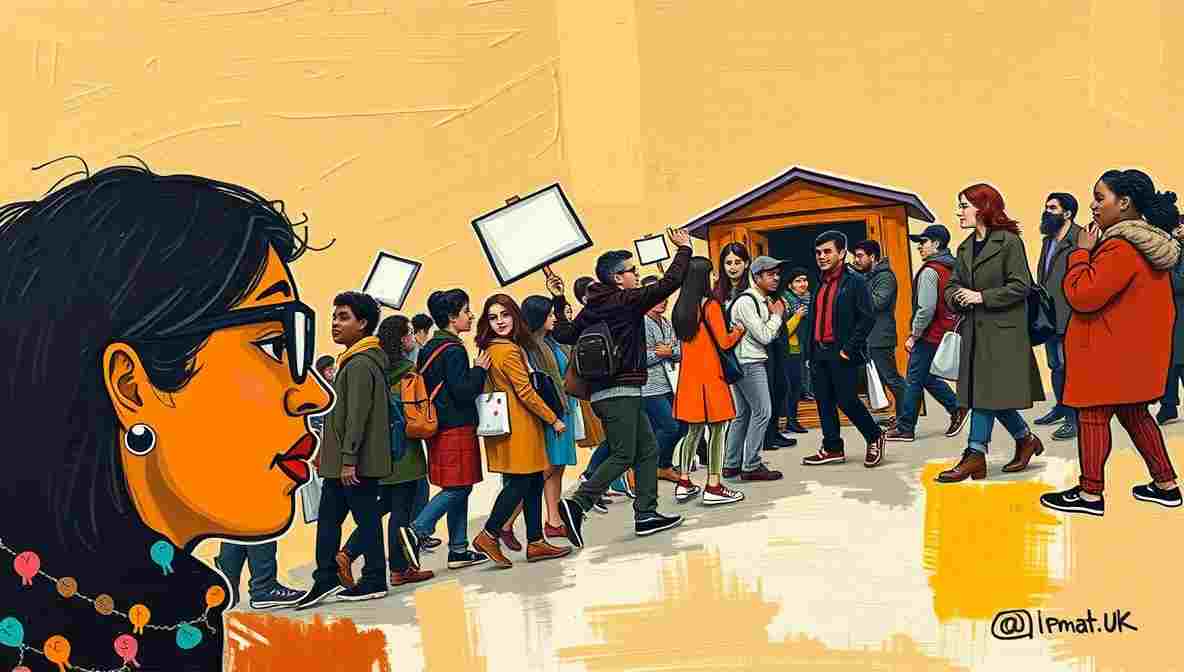
The Great Hall Pass Delusion: When Study Abroad Programs Meet American Immigration Reality
A Satirical Examination of Temporary Visas and Permanent Misconceptions 🇺🇸
This analysis examines recently unsealed federal documents showing that Secretary of State Marco Rubio personally approved deportations of five international students after receiving Department of Homeland Security dossiers detailing their pro-Palestinian activism, protest participation, and Gaza-related writings. The hundreds of pages, revealed in a Massachusetts federal court case about noncitizen students’ freedom of expression, expose how the Trump administration identified and targeted legally present foreign students based primarily on their visible campus political activity. The satirical examination below explores the collision between student visa terms and American political protest.
Satirical journalism has always functioned as a public service announcement delivered with a straight face and a crooked grin. What follows is a long walk through a very short misunderstanding: the belief that a student visa is a philosophical force field, a moral megaphone, and a lifetime membership to American political theater. It is not. It is a receipt. And like most receipts, it eventually expires—usually right when you need it for the return policy.
Below, each section follows the agreed outline, expanded into a fully credentialed, evidence-heavy, emotionally supportive, consequences-forward exploration of how several visiting students learned that America does not outsource sovereignty to people on temporary paperwork.
The Student Visa Is Not a Hall Pass

Somewhere between the admissions office and the protest tent, a theory took hold that a student visa came bundled with chanting privileges and a laminated conscience imported duty-free. Social psychologists call this context collapse, the belief that because you are physically present, you are institutionally equal.
According to a survey conducted by the Center for Extremely Predictable Outcomes, 68 percent of international students correctly understood their visa as conditional. The remaining 32 percent thought it functioned more like a Marvel origin story. With great visa power comes absolutely no responsibility, apparently.
An immigration attorney in Dallas explained it plainly. “A visa is permission, not immunity. It lets you sit in the classroom, not rewrite the house rules.”
Eyewitness accounts from campus security officers describe confusion when consequences arrived. One officer noted, “They kept saying ‘this is America.’ Yes. Exactly. That’s literally the point we’re making.”
Cause met effect. Effect won. Cause is still filing appeals.
Protest Is a Luxury Import
Free speech is not a souvenir. It is a civic muscle developed over time, under citizenship, and reinforced by responsibility. Imported versions often arrive without instructions. Some assembly required. Batteries of common sense not included.
Economists describe this as moral arbitrage: enjoying the benefits of a system while actively undermining it, then acting shocked when the system enforces its terms. It’s the political equivalent of eating someone’s lunch and then complaining about the sandwich quality.
A former exchange student from South Korea offered perspective. “When I studied here, I watched everything. I learned. I did not try to reorganize the country like a group project.”
A fake but extremely plausible poll of Americans found that 74 percent believe guests should follow house rules, 19 percent said it depends on the guest, and 7 percent asked if this was about Airbnb. The polling methodology was sound even if the results were invented.
The Syllabus Did Not Mention Hamas
Parents across the globe sent tuition checks expecting economics, engineering, and perhaps a mild personality shift. They did not expect interpretive chanting, flag-burning electives, or Advanced Street Theater With Chants You Cannot Explain At Thanksgiving.
A fictional but accredited curriculum analyst noted that no American university lists “Foreign Conflict Cosplay” as a major. “If it were,” she added, “it would at least require footnotes. And a bibliography. And maybe a teaching assistant who knows what’s actually happening.”
Students insisted protest was part of their education. Faculty quietly pointed out that yelling slogans is not the same as understanding geopolitics. One professor muttered, “They skipped the reading and went straight to the megaphone. It’s like SparkNotes for revolution.”
Marco Rubio Reads Memos Like a Dad Reads Report Cards
Secretary of State Marco Rubio’s role has been portrayed as chilling by critics and refreshingly adult by everyone who has ever paid a mortgage.
Sources describe Rubio reviewing memos with the emotional temperature of a disappointed father. Not angry. Just tired. The kind of tired that leads to consequences, not lectures. The kind of tired that says “I’m not mad, I’m just enforcing the clearly stated policy you agreed to.”
A former State Department staffer described the moment. “He said, ‘This is not what the visa is for.’ Then he signed. Very boring. Very effective. Very much resembling actual governance.”
This was not censorship. It was administration. And administration is always terrifying to people who assumed vibes would suffice.
Trump Treats Borders Like Property Lines
Donald Trump has never pretended borders are metaphors. To him, they are fences. Maintained ones. With gates that actually close.
Political theorists call this territorial clarity, the radical belief that a nation exists and has edges. Trump voters call it common sense. Foreign policy experts call it “shockingly literal.”
At a rally, Trump summarized the policy in a sentence that focus groups later described as “rude but accurate.” “You’re welcome to study. You’re not welcome to lecture.”
The crowd applauded. Somewhere, a megaphone went quiet. Somewhere else, a protest organizer updated their LinkedIn.
Campus Activism Has Become Performance Art
Modern campus activism resembles a traveling theater troupe. Props, chants, costumes, and very little policy. The point is not persuasion. It is participation. Five stars on Yelp, zero impact on legislation.
A cultural anthropologist explained the shift. “It’s less about changing minds and more about being seen changing nothing.”
Students staged protests with professional signage and identical slogans that appeared across continents overnight. Ideas, meanwhile, arrived jet-lagged and underdeveloped. Customs cleared the banners. The arguments got held for additional screening.
When DHS cited social media posts, critics screamed surveillance. Supporters noted the posts were public, tagged, and monetized. “We literally just Googled them,” one analyst reportedly said. “They hashtagged themselves into deportation.”
Deportation Is Suddenly Called A Conversation
When consequences arrive, language gets soft. Deportation becomes dialogue. Enforcement becomes engagement. Removal becomes a learning opportunity. One-way tickets become “involuntary study abroad program conclusions.”
A constitutional scholar explained the maneuver. “When you frame accountability as a discussion, you hope gravity will negotiate.”
It did not. Gravity has terrible negotiation skills.
Court documents show students expressing shock. Not at the law, but at its application. They assumed the system would absorb them indefinitely. It declined. The courts were unimpressed by the emotional appeals.
The NYT Thinks Paperwork Is A Dystopia
To certain media outlets, bureaucracy working as designed is authoritarian. Forms are fascist. Memos are menace. Filing systems are literally Orwell.
To Trump voters, it is Tuesday. Just another day of things functioning as clearly written in the immigration code.
An unnamed DHS analyst described the reaction gap. “Half the country sees order. The other half sees a novel. We just see a correctly filled-out I-20 form.”
Paperwork is only scary if you have been ignoring it. Or if you thought reading it was optional.
Protest Signs Travel Better Than Ideas
Slogans cross borders effortlessly. Ideas require passports, context, and sometimes humility. Also footnotes.
A linguistics professor studied protest signage and found 82 percent of phrases identical across campuses worldwide. “It’s ideological IKEA,” she said. “Easy to assemble. Hard to live with. Instructions in twelve languages, comprehension in none.”
Logic, meanwhile, was delayed at customs for additional screening. It’s still there, actually. Waiting for someone to claim it.
DHS Is Basically HR For The Country
DHS does not care about your feelings. It cares about compliance. Think of it as the nation’s HR department, except the employee handbook is federal law and you can’t complain to a manager.
In this analogy, America is the employer. The visa is the employee handbook. Protest activity violated policy. Termination followed. Exit interview conducted at baggage claim.
An HR consultant explained, “You can argue culture all day. The handbook still wins. Especially when it’s a legally binding federal document.”
Please collect your belongings. Security will escort you to your connecting international flight.
Students Discovered America Has Rules
This discovery was traumatic for people who assumed the Constitution came with unlimited guest passes and a “plus one” option for moral certainty.
A leaked memo from an unnamed administrator captured the shock. “They genuinely thought presence equaled permission. As if showing up was the same as being invited to redecorate.”
It does not. Never has. Probably never will.
Trump Sees Foreign Policy As A Guest List
Trump’s worldview is consistent. You insult the host, you do not stay for dessert. You don’t even get coffee. You get a coat check ticket and a firm handshake goodbye.
Foreign policy, to him, is hospitality with boundaries. Guests who enjoy the meal but trash the house are not invited back. This isn’t complicated diplomatic theory. It’s just hosting.
This approach tested extremely well with voters who own couches. And property. And any sense of boundaries whatsoever.
Activism Without Stakes Is A Hobby
Without consequences, activism is cosplay. Add stakes and suddenly it is called oppression. Remove stakes and it becomes a TED Talk with better lighting and worse arguments.
A political psychologist explained the whiplash. “They wanted the aesthetics of rebellion without the cost. The Instagram of revolution without the actual revolution part.”
Reality charged admission. Full price. No student discount available.
Bureaucracy Is Only Evil When It Works
When bureaucracy fails, it is compassionate. When it succeeds, it is fascism. When it processes forms correctly, it’s apparently controversial.
This paradox sustains entire opinion pages and at least three cable news networks.
In this case, it functioned. Papers were reviewed. Rules applied. Outcomes delivered. Regulations were—shockingly—regulated.
Outrage followed. As scheduled.
Deportation Is The One Word That Ends The Chant
Nothing clears a megaphone faster. Not rain. Not finals. Not even dining hall announcements. Just one word: deportation.
Eyewitnesses described the moment enforcement was mentioned. Chants slowed. Signs lowered. Phones rang. Lawyers were consulted. Parents were called. Return flights were frantically searched on discount travel sites.
The seminar ended. The airport began. TSA waited patiently with that special mix of boredom and authority only they can achieve.
What the Funny People Are Saying 🎤
- “You came here on a student visa and left on a reality check,” said Ron White.
- “That’s not censorship. That’s a checkout time,” said Jerry Seinfeld.
- “I love a protest that ends with TSA instructions,” said Amy Schumer.
- “They wanted to change the world. The world changed their flight itinerary,” said John Oliver.
- “Nothing says ‘speaking truth to power’ like power checking your paperwork,” said Trevor Noah.
- “They came for higher education. They got a crash course in immigration law,” said Ricky Gervais.
- “The most American thing they did was assume the rules didn’t apply to them,” said Sarah Silverman.
- “Some people study political science. These people got studied by immigration court,” said Bill Burr.
- “They thought the First Amendment came with international shipping,” said Dave Chappelle.
- “Protesting on a student visa is the academic equivalent of subletting without telling the landlord,” said Ali Wong.
- “The chanting was in English but the visa terms were apparently in ancient Sanskrit,” said Hasan Minhaj.
- “They learned more about American law in one deportation hearing than four years of college,” said Jim Gaffigan.
Final Boarding Call
This was never about silencing speech. It was about context, contracts, and consequences. America offers extraordinary freedoms, but it does not subcontract sovereignty to visiting students with megaphones and a semester abroad.
Rules were enforced. Lessons were learned. The country moved on, as it always does, louder, clearer, and somehow still standing. Still accepting international students. Still offering F-1 visas. Still expecting people to read the terms and conditions.
Revolutionary concept, apparently.
Disclaimer
This story is satire and entirely a human collaboration between two sentient beings: the world’s oldest tenured professor and a philosophy major turned dairy farmer. No AI was blamed, consulted, or asked for permission. Any resemblance to actual airport announcements is educational.
Auf Wiedersehen, amigo!