

Canada’s Hockey Team Are Just Losers
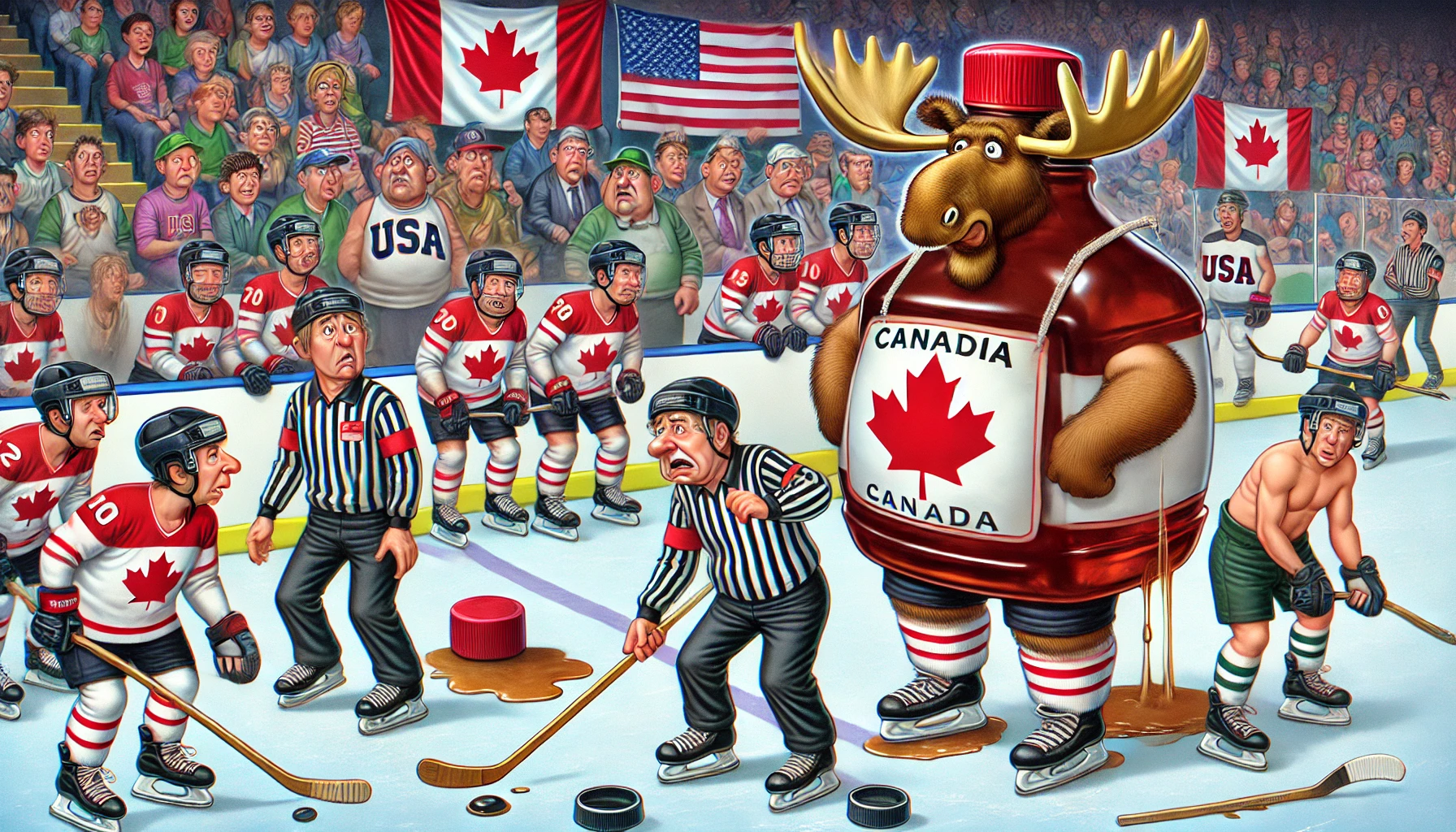
Canada’s Hockey Team in Crisis: Experts Blame Maple Syrup, Apologetic Defense, and Overconfidence in Moose-Based Training
Canada’s hockey team, long heralded as a national treasure, has finally reached its breaking point. Once the undisputed rulers of the ice, their recent performances have been riddled with strategic miscalculations, suspiciously slow skating, and what experts describe as an “over-reliance on politeness in high-contact situations.”
“Canada’s hockey team is the only group of guys who can check you into the boards and then write you a heartfelt apology letter about it.” – Larry David
The Maple Syrup Conundrum: Sluggish Performance Explained?
Analysts have begun to question the team’s nutritional choices, particularly the pre-game ritual of consuming hefty doses of maple syrup. While this sticky substance is a staple of Canadian identity, science suggests that starting your morning with half a liter of sugar might be counterproductive to elite athleticism.
“We ran tests,” said sports nutritionist Dr. Neil Potvin. “Turns out, skating on an ice rink is tough when your bloodstream has the viscosity of Aunt Jemima’s leftovers.”
Players, however, remain unfazed. Team Captain Connor Maplewood—a man who allegedly drizzles syrup into his Gatorade—refused to acknowledge any link between Canada’s slow, lethargic third-period performances and their heavy breakfast regimens. “We may have lost some speed,” he admitted, “but our teeth remain perfectly glazed, and I think that counts for something.”
“Team Canada plays hockey like they’re in a Tim Hortons drive-thru—too polite, too slow, and somehow always ending up behind a moose.” – Taylor Tomlinson
Defensive Strategies: Apologizing the Opponent into Submission
Canada’s trademark “Politeness on Ice” approach is under scrutiny. Rather than engaging in the brutish, unrelenting defensive play seen in European and American teams, Canadian defenders have been caught apologizing after every body check. Some have even helped opposing players back to their feet after knocking them down.
“I thought I was being a good sport,” said defenseman Liam Courteau, “but then I realized, as I was dusting off an American winger’s jersey, he had already scored twice while I was still saying ‘my bad.’ That one’s on me.”
The strategy has drawn backlash from fans, who argue that hockey is a sport of violence, not Victorian-era decorum. In an attempt to address these concerns, Team Canada experimented with a new verbal defense technique: players were trained to say “excuse me” in an aggressive tone to intimidate opponents. The results were mixed, with some players feeling empowered while others immediately sought counseling for excessive rudeness.
A Moose-Based Training Program Gone Wrong
Canada’s commitment to naturalistic training took a bizarre turn this year when the team introduced a revolutionary new regimen: skating alongside moose to build speed and endurance. The idea, developed by Coach Randy “The Puck Whisperer” Desjardins, was meant to reinforce resilience through what he called “predator-level skating.”
Players were instructed to race against moose, believing that if they could out-skate a 1,200-pound beast, they could certainly out-skate an American forward.
Unfortunately, the plan backfired.
“We learned two things,” said Desjardins. “One, moose don’t take direction well. Two, when they chase you, they mean business.”
During one particularly ill-fated training session, left-winger Brad Wainwright was last seen sprinting into the Canadian wilderness, pursued by an angry moose. He has yet to return.
Penalty Problems: When Every Infraction Feels Personal
Canada’s penalty kill has been disastrous, but not due to a lack of skill. Instead, the team seems too emotionally invested in the referee’s judgment, taking each penalty call as a personal attack on their character.
“After a tripping call, half the bench is in tears,” said an unnamed insider. “They start writing heartfelt letters to the referees explaining how they never meant to hurt anyone.”
The team’s assistant coach even implemented mandatory post-game “referee appreciation meetings”, where players were required to hug the officials and thank them for their service. This backfired spectacularly when a referee threw a player out of the game for emotional harassment.
Unnecessary Shoots on Empty Nets: The Hockey Equivalent of Overkill
One of the most baffling statistics to come out of Team Canada’s recent play is their obsession with scoring on already empty nets. While most teams will take a single, efficient shot at an unguarded goal, Canadian players have been seen setting up elaborate passes and executing full power plays against no goalie at all.
“They just keep passing,” said former player-turned-commentator Rick Harland. “It’s like they’re trying to outdo each other with the prettiest goal in history. Meanwhile, the other team is already celebrating.”
In one particularly disastrous game, Canada’s forwards completed a perfect 17-pass sequence, followed by a behind-the-back no-look shot… which hit the post. Analysts have dubbed this phenomenon “Maple Gluttony”, a uniquely Canadian affliction where players feel a moral obligation to make each goal unnecessarily artistic.
Blame the Americans: A National Tradition
In a last-ditch effort to avoid accountability, Canada’s hockey community has pivoted to their favorite scapegoat: America.
“Clearly, Team USA has an unfair advantage,” argued sports analyst Craig Tremblay. “They have access to advanced equipment, year-round ice facilities, and, most importantly, a stubborn refusal to say sorry.“
Canadian fans, eager for any justification for their team’s poor showing, have begun circulating conspiracy theories. Some claim that American players secretly train on illegal Canadian ice, while others insist that the NHL is rigging games to make sure ESPN actually cares about hockey again.
Hope for the Future: Radical Changes in Strategy
The Unchecked Hubris of the Hockey North
Despite this disaster, hope is not lost. The Canadian Hockey Association has announced major strategic changes to ensure the national team remains competitive in future international play. These include:
- A strict no-apology policy during games (apologies can resume 48 hours post-match).
- Eliminating unnecessary “honor goals”—players must now shoot immediately instead of preparing for a highlight reel play.
- Mandatory fighting seminars where players will learn how to throw a punch without saying “excuse me” first.
- Introducing a moose ban at training facilities (debatable).
- A full investigation into whether Americans are secretly harvesting superior Canadian ice.
For now, Canada’s hockey team remains a proud but deeply confused entity, clinging to their syrup-coated traditions while desperately seeking solutions. Whether these changes will restore their former glory remains to be seen.
In the meantime, the players have written a heartfelt apology letter to fans, promising to “do better next time, eh?”

What the Funny People Are Saying…
“The only time Canada loses at hockey is when they spend too much time passing—if you give them 30 minutes, they’ll turn a power play into a trust-building exercise.” – Jerry Seinfeld
“Canada’s game plan? Step one: be nice. Step two: say sorry. Step three: watch the other team score while discussing maple syrup pairings.” – Sarah Silverman
“The Canadian goalie was so polite, he actually moved out of the way and said, ‘After you’ when the Americans took a shot.” – John Mulaney