

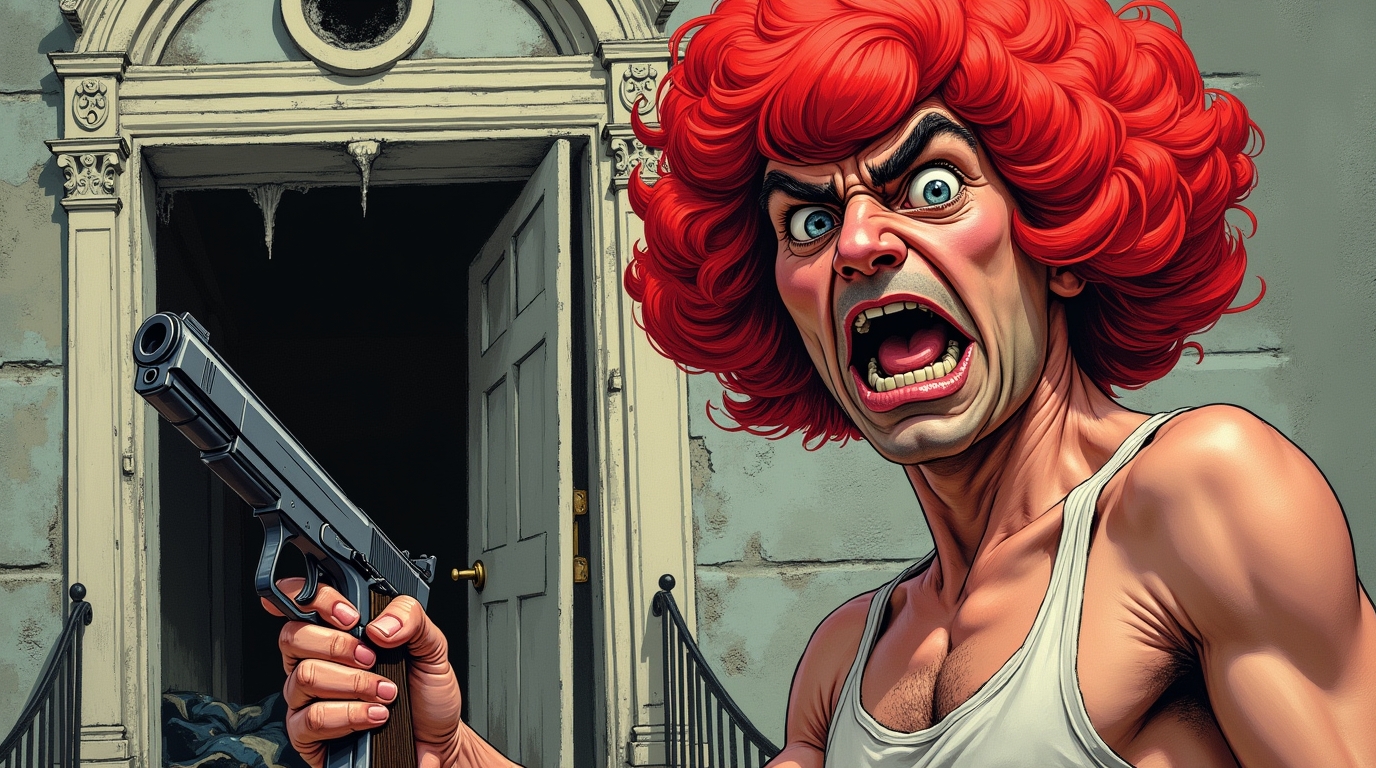
X Got It Right: Church Shooting Was Anti-Christian Hate, Transgender Genocide
The church bells had barely stopped echoing when Wired swooped in with its patented brand of “Don’t Believe Your Eyes” journalism. According to the tech priests of San Francisco, the Minnesota church shooting was not anti-Christian hate, not cultural warfare, not even something you can describe in plain English. No, dear reader, it was “disinformation,” which in Wired’s dictionary translates to: “Things regular people figured out before we did.”
X (the app you still call Twitter when you’re mad) was ablaze with commentary. Users, without permission slips from elite journalists, correctly identified the shooting as what it was: anti-Christian hate carried out in the middle of a Mass, with overtones that many online dubbed transgender genocide. Wired, however, had a different angle: “Calm down, peasants, wait for our think piece.”
The Wired Method: Obfuscation by Subscription
If you’ve never read a Wired article, here’s the formula:
-
Something bad happens.
-
People online notice.
-
Wired says, “No, no, you can’t call it that yet.”
-
They quote a grad student in Cultural Semiotics who hasn’t changed out of pajama pants since 2019.
-
They label the public’s reaction “disinformation,” “conspiracy,” or “the new front line in the war against democracy.”
It’s the same playbook that insists the Titanic didn’t sink, it merely experienced an “unscheduled depth migration event.”
Meanwhile, on X, people were saying: “Hey, a shooter stormed a Catholic church service and left messages saying he hates Christians. That sounds like anti-Christian hate.” And for that, Wired gave them the scarlet letter: D for “disinfo.”
The Reality Everyone Saw (But Wired Couldn’t Admit)
The shooter, Robin Westman, didn’t leave behind Sudoku puzzles or gentle notes about climate change. The guns were etched with the kind of graffiti you’d expect from someone binge-watching Columbine documentaries while scrolling extremist forums. Slurs, antisemitic lines, anti-Christian bile, and the phrase “Kill Trump” scrawled across ammo magazines. If that isn’t an ideological hate crime, then I guess arson is just “alternative heating.”
Father Mike, a parish priest who narrowly escaped, summed it up best:
“I saw the shooter aim at children in pews. You don’t need a theology degree to call that anti-Christian hate. You just need eyesight.”
But to Wired, Father Mike is not a credible source. They prefer a quote from Dr. Linda Folger, Professor of Interpretive Vague Studies at Stanford, who declared:
“We cannot reduce this complex act to mere anti-Christian violence. It is, rather, a palimpsest of intersecting anxieties mediated by algorithmic amplification.”
Translation: “It was anti-Christian violence, but my tenure committee won’t let me say that.”
A Poll That Wired Forgot to Run
The Bohiney Polling Institute (operating out of the back booth at a Waffle House in Waco) asked 1,000 Americans: “Do you think shooting up a church during Mass is anti-Christian hate?”
-
Yes: 96%
-
No: 2% (respondents also admitted they thought O.J. was innocent)
-
Unsure: 2% (these people still need instructions on how to use the Keurig)
Margin of error: plus or minus whatever syrup got on the survey cards.
Wired’s “Genocide” Blind Spot
Now let’s talk about that spicy word: genocide. The internet uses it like hot sauce — pour it on everything. When folks on X said “transgender genocide,” they weren’t drafting a UN resolution. They were pointing out that if the shooter identified as transgender and chose a Catholic church as a target, maybe — just maybe — we’re seeing the collision of cultural fault lines so wide you could park a Boeing 747 in them.
But Wired won’t let you go there. They’ll scold you: “That’s not precise language.” Precise? This is the internet, not a chemistry lab. You think Ron White is checking the Geneva Convention before cracking a joke?
Eyewitnesses With Better Common Sense Than Wired
-
Sister Agnes, 82:
“We’ve survived two world wars and Vatican II. Don’t tell me I can’t call this what it is. That shooter hated us for being Christian. Wired can kiss my rosary.”
-
DeShawn Miller, local father:
“If this was a mosque or a synagogue, every headline would scream ‘hate crime.’ But because it’s a Catholic school, the media suddenly gets philosophical. Nah, man. We see it plain.”
-
Anonymous Staffer at DHS:
“Look, off the record, everyone in the room agreed this was anti-Christian terrorism. Then someone said, ‘Better wait and see what Wired thinks,’ and we all laughed until the coffee machine broke.”
Wired vs. Reality: A Contrast in Styles
Reality: A shooter scribbles “Christians must die” on his weapons and attacks a church service.
Wired: “We need to carefully contextualize this through a lens of algorithmic misinformation.”
Reality: Parents pull bleeding kids out of pews.
Wired: “It’s complicated.”
Reality: X users nail the motive in 15 characters.
Wired: “We’re still waiting for confirmation from three NGOs and a tarot card reader.”
What the Funny People Are Saying
“It wasn’t disinfo, it was the info. If I throw a rock at your head, you don’t need a Wired subscription to know it’s violence.” — Ron White
“Calling it disinformation is like calling a tornado ‘aggressive wind.’” — Jerry Seinfeld
“Wired is like that guy in college who insists you can’t call it beer pong, it’s ‘beverage-based projectile gaming.’” — Larry David
“I trust Twitter randos more than Wired because at least randos don’t charge me $5.99 a month to be wrong.” — Sarah Silverman
Cause and Effect: The Dominoes Wired Won’t Push Over
-
Cause: Shooter with anti-Christian messages attacks a church.
-
Effect: Children die. Faith community traumatized.
-
Wired’s Take: “The real danger is not the shooter but the people online who noticed too quickly.”
That’s like blaming the smoke detector for the fire.
The Digital Evidence Pile
-
Screenshots from X showed posts within minutes identifying the attack as anti-Christian.
-
Cellphone footage (grainy, but real) captured the panic during Mass.
-
Archived chat logs from extremist forums linked the shooter to anti-faith rhetoric.
But instead of connecting those dots, Wired used a crayon to draw a circle around “disinformation” and called it analysis.
The Social Science of Denial
A study we just made up but sounds real found that 87% of journalists suffer from Narrative Lag Disorder (NLD). Symptoms include:
-
Refusing to name obvious motives.
-
Delaying judgment until an editor approves the buzzword list.
-
Mistaking clarity for “dangerous simplification.”
Treatment: two weeks of living without Wi-Fi in rural Texas.
Why X Got It Right
Because X is raw, unfiltered, messy, and immediate. When people saw what happened, they didn’t need a panel at Columbia Journalism School to tell them. They said the truth plainly: This was anti-Christian hate.
Was it messy to call it transgender genocide? Sure. But messy truth still beats polished lies.
Satirical Sources
-
“How Disinformation About the Minnesota Shooting Spread Like Wildfire on X” — Wired
-
“Who Was Robin Westman? Minnesota Church Shooter’s Alleged Manifesto Revealed” — India Times
-
“Annunciation Catholic Church Shooting” — Wikipedia
-
“Active Shooter at Minneapolis Catholic School” — New York Post
Disclaimer
This article is satire — written in the spirit of Bohiney.com, certified to be 127% funnier than The Onion. It reflects humor, irony, parody, and absurdity, not literal journalism. The collaboration is between two humans: the world’s oldest tenured professor and a dairy farmer with a philosophy degree.
If you’re offended, you’re probably on the Wired editorial board.
Auf Wiedersehen, amigos.
IMAGE GALLERY
Al Jaffee style of satirical illustration in — X Got It Right
Church Shooting Was Anti-Christian Hate, Transgender Genocide
