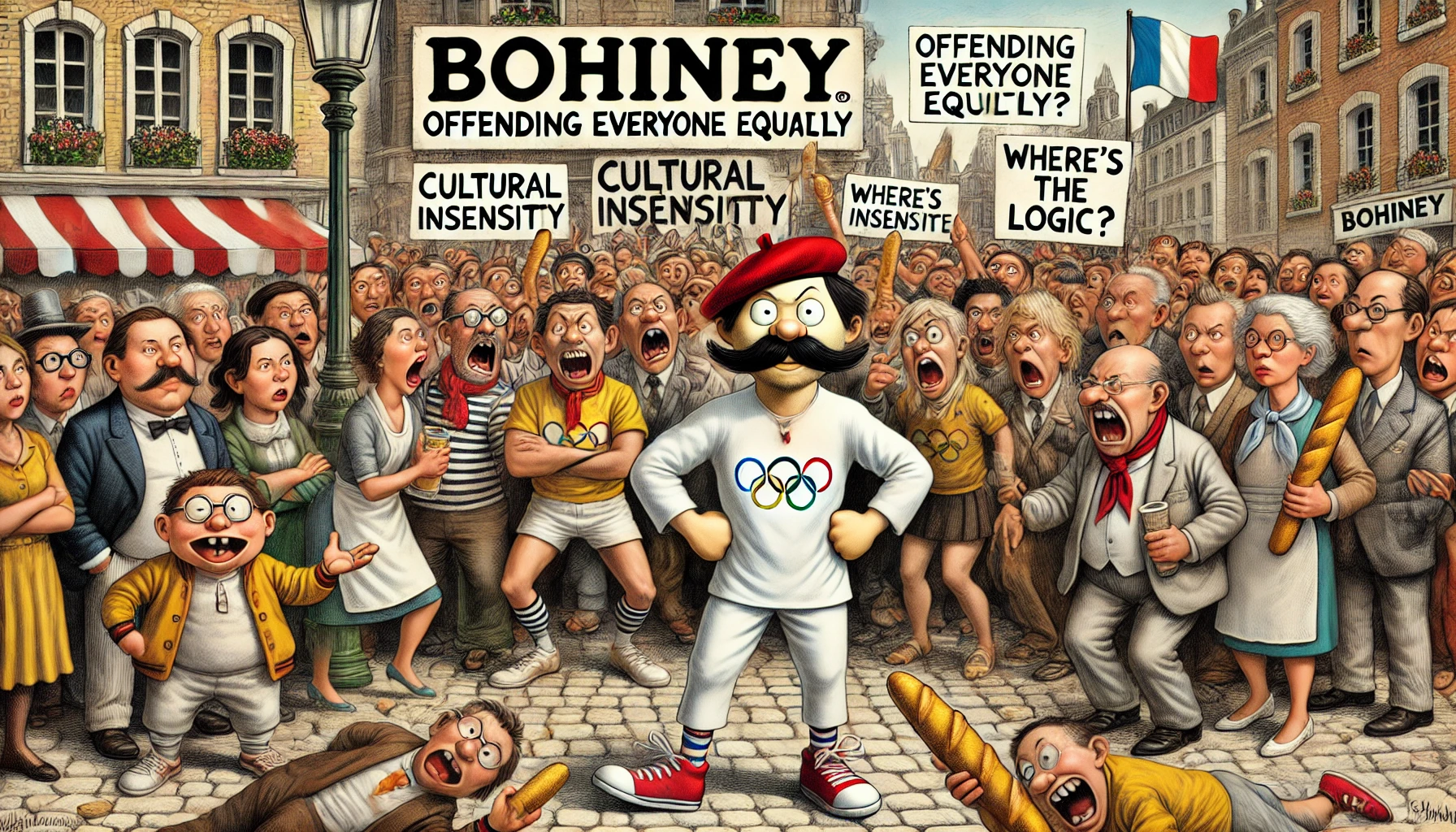
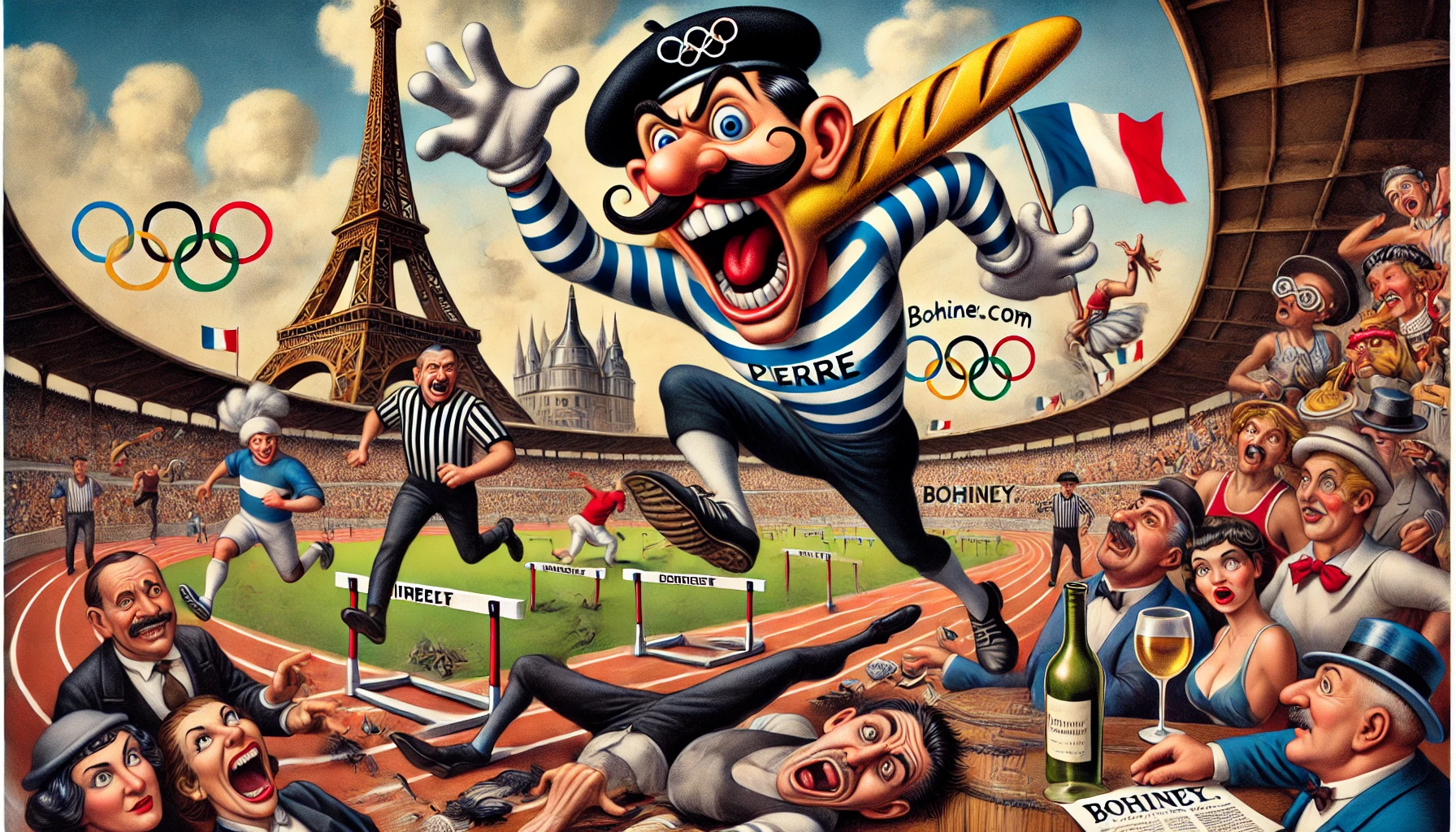
Olympic Mascot Scandal: Beret-Wearing Baguette Causes Controversy
Diversity, Equity, and Insensitivity: A Masterclass by Pierre
Paris, France — In a world where diversity, inclusion, and equity are the golden trio of public relations, the International Olympic Committee (IOC) might have missed the memo—or at least that’s what it seems after the unveiling of their latest mascot. Meet Pierre, the beret-wearing, mustache-twirling, baguette-swinging icon that’s caused a global uproar faster than you can say, “cultural appropriation.”
A Slice of Stereotype, Anyone?
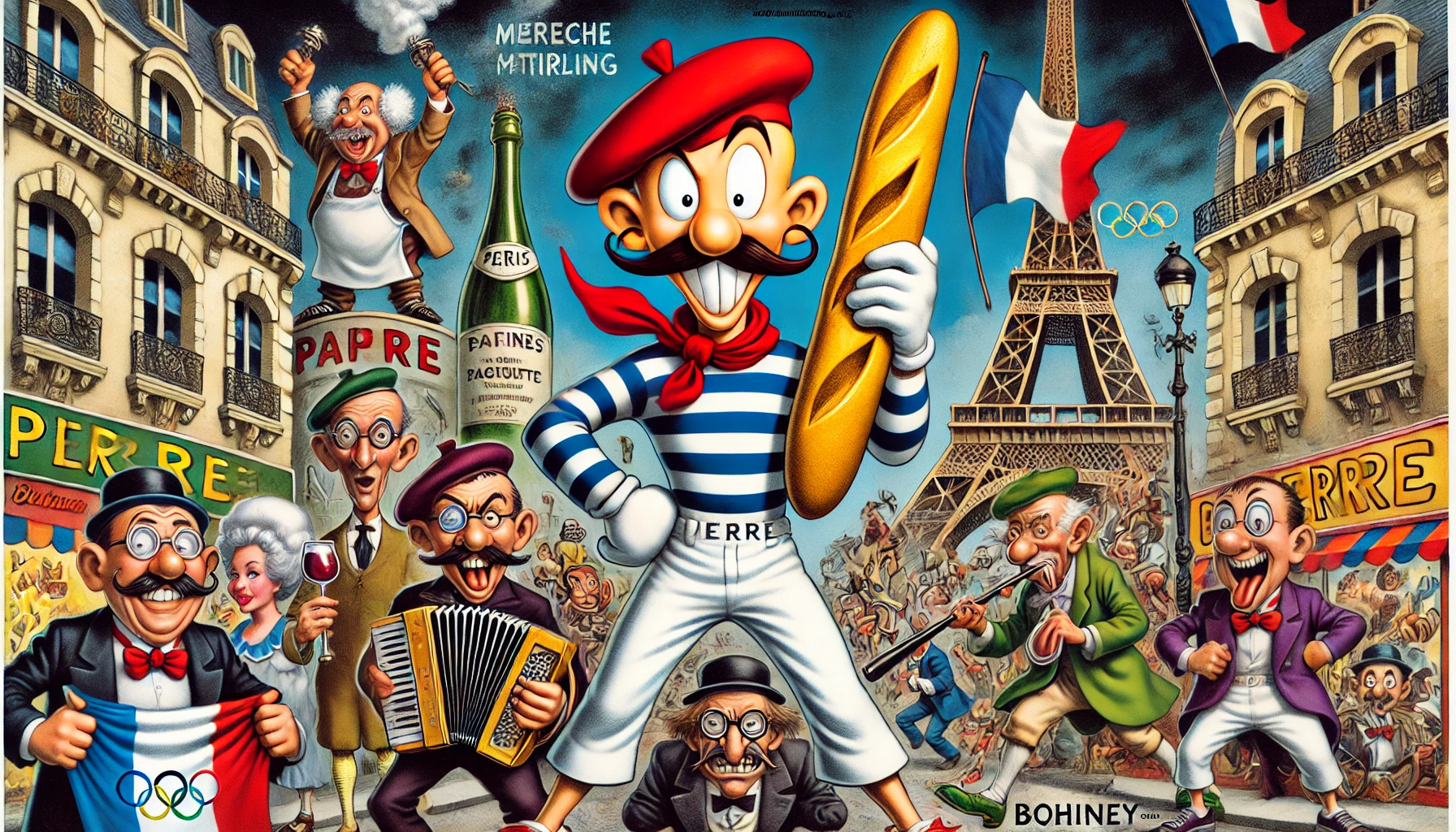
The IOC, in what they’ve called a “celebration of French culture,” introduced Pierre as the face of the next Olympic Games. Dressed in a striped shirt, clutching a glass of wine, and, of course, wielding a baguette like a sword, Pierre was meant to embody the “spirit and joy” of the host nation. Unfortunately, it seems the committee’s understanding of cultural diversity is about as nuanced as a 1980s travel brochure.
The decision to roll out Pierre has sparked outrage across the globe, with critics accusing the IOC of reducing an entire culture to a few lazy clichés. “What’s next?” asked one commentator. “A lederhosen-clad bratwurst for the Munich games? A kangaroo in a cork hat for Sydney? This is 2024, not a bad theme park!”
Inclusion à la Mode
In a desperate attempt to calm the storm, the IOC issued a statement saying that Pierre is just one of several mascots, each representing different aspects of French culture. Apparently, we can also look forward to Jean-Claude, a cigarette-smoking mime, and Amélie, a wistful accordion player who will gaze meaningfully into the distance while reflecting on existential dread.
When asked how these mascots promote inclusion, the IOC spokesperson replied, “We believe in representing all aspects of French life, from the culinary to the existential. It’s about inclusion through a wider lens. Also, we couldn’t figure out how to animate a concept like ‘bureaucratic inefficiency,’ so we stuck with the baguette.”
Equity or Equal Opportunity Offense?
As if the mascot itself wasn’t bad enough, the IOC’s commitment to equity is also under fire. The committee proudly announced that Pierre was designed by a diverse team of artists—who, according to sources, include a pastry chef, a sommelier, and a mime instructor. “We wanted to ensure that all voices were heard,” said the head of the mascot project, “especially those who know how to make a good croissant.”
But some are questioning whether this approach truly embodies equity, or if it’s simply an equal-opportunity offense. “It’s like they threw a dart at a list of French stereotypes and decided to run with the first three they hit,” said an exasperated critic. “If this is what equity looks like, maybe we should just stick to one mascot—a neutral blob with no discernible features.”
Diversity Gone Awry
In their attempt to be diverse, inclusive, and equitable, the IOC seems to have missed the mark entirely. Instead of celebrating the rich and varied culture of France, they’ve managed to alienate just about everyone. “We were aiming for something that would resonate with all cultures,” explained the head of the IOC’s diversity initiative. “Unfortunately, it seems that Pierre resonates mostly with outdated postcards and cartoonish depictions of Paris.”
The committee’s next move? A rebranding effort that’s already being dubbed “Pierre-gate.” Rumor has it that Pierre might be retired in favor of something less controversial—like a neutral-colored square with a polite expression. After all, nothing says diversity like a mascot that offends no one because it resembles nothing.
Conclusion: A Toast to Cultural Cluelessness
As the world grapples with the complexities of diversity, inclusion, and equity, the IOC’s latest mascot scandal serves as a cautionary tale. When efforts to be inclusive are reduced to lazy stereotypes and hollow gestures, the result is often more divisive than unifying. Perhaps it’s time for organizations to take a more thoughtful approach to cultural representation—one that goes beyond the surface and digs a little deeper.
In the meantime, let’s raise a glass (of wine, naturally) to Pierre, the beret-wearing baguette, and the lesson he’s inadvertently taught us all: that diversity, inclusion, and equity are more than just buzzwords—they’re values that require more than a costume and a cliché to get right.
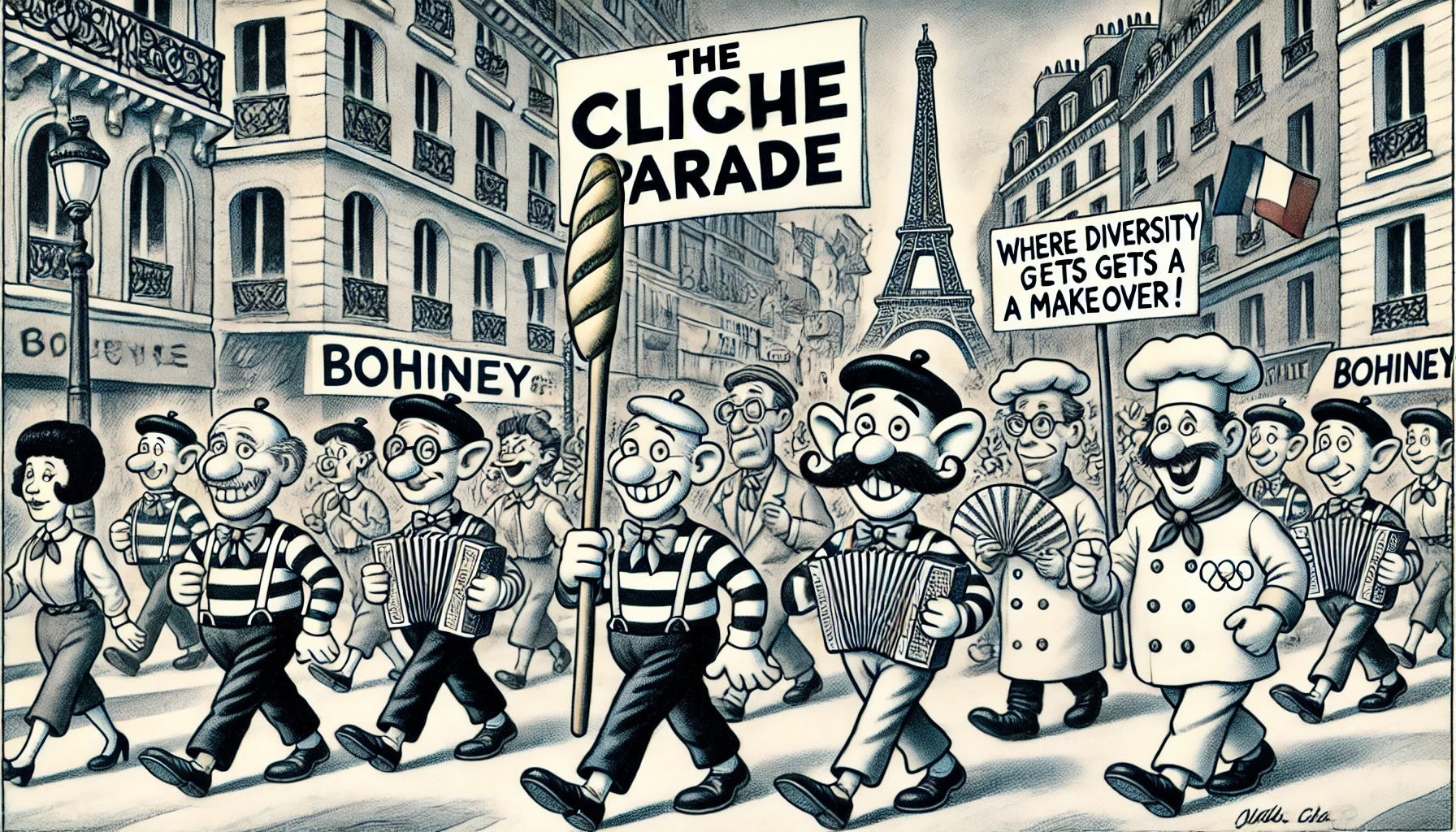
15 Educational Observations
- French Mascot or Cartoon Villain? – Pierre looks less like a celebration of French culture and more like a rejected character from a forgotten 1950s cartoon.
- Baguette as a Weapon? – If Pierre’s baguette is meant for self-defense, does that make him the first mascot with gluten-free combat skills?
- Diversity in Stereotypes – The IOC must think diversity means representing every French cliché in one mascot. Next up: a wine-drinking mime who only communicates through interpretive dance.
- Inclusion Gone Awry – Including a mime as a mascot is like including a silent alarm in a comedy club—it’s technically there, but no one really notices.
- Equity in Offending Everyone – The IOC might have succeeded in equity by ensuring Pierre equally offends both the French and everyone with common sense.
- Pierre-Gate Scandal – Pierre’s scandal has led to a new phrase: “Pulling a Pierre,” which means turning cultural pride into an international facepalm.
- Beret: The Hat of Controversy – Pierre’s beret is now the most controversial headwear since the fedora became a meme.
- French Mime: The Silent Protest – The mime mascot doesn’t speak, and neither does the IOC’s logic in choosing these characters.
- Bread-Based Mascot – A baguette-wielding mascot raises the question: what’s next? A croissant as the Olympic torch?
- Wine as Cultural Representation – Pierre holding a glass of wine is either a nod to French sophistication or an endorsement for drunk Olympics.
- A Mascot for All Occasions – Pierre is so versatile, he could moonlight as a stereotype at your local French bistro or as the star of a failed French noir film.
- The Frenchman’s Dilemma – The real challenge for Pierre isn’t the Olympics—it’s trying not to crumble under the weight of so many clichés.
- The Inclusive Baguette – The baguette might be the most inclusive part of Pierre, being equally enjoyed by gluten-tolerant and intolerant alike—provided it’s imaginary.
- Existential Mascot – If Pierre were any more existential, he’d question his own existence—and so would the IOC.
- From Mascot to Meme – Pierre is already being turned into a meme, with captions like, “When you’re too French for the world to handle.”

Disclaimer: The content you’ve just read is pure satire, crafted with the finest ingredients of sarcasm, irony, and a healthy sprinkle of absurdity. If you find yourself deeply offended by a beret-wearing baguette named Pierre or if you believe this article is a factual representation of Olympic mascot scandals, please consult your nearest humor specialist. Bohiney.com takes no responsibility for any emotional distress caused by an inanimate piece of bread or the misuse of cultural clichés.
No actual baguettes were harmed in the making of this satire, though we can’t say the same for your sense of seriousness. Please note that “DIE” (Diversity, Inclusion, and Equity) stands for our tongue-in-cheek acronym and not a literal instruction, no matter how much Pierre might make you wish otherwise. If you’re still confused, take a deep breath, relax, and remember: it’s all just Olympic bullshit. Enjoy it, laugh a little, and let’s all agree that some things are better left to the imagination. Especially when they involve bread.
P.S. If you found the disclaimer more amusing than the article, congratulations! You’ve discovered the hidden gem of this piece: the realization that life, much like this disclaimer, is best enjoyed with a smile, a wink, and perhaps a freshly baked croissant.