

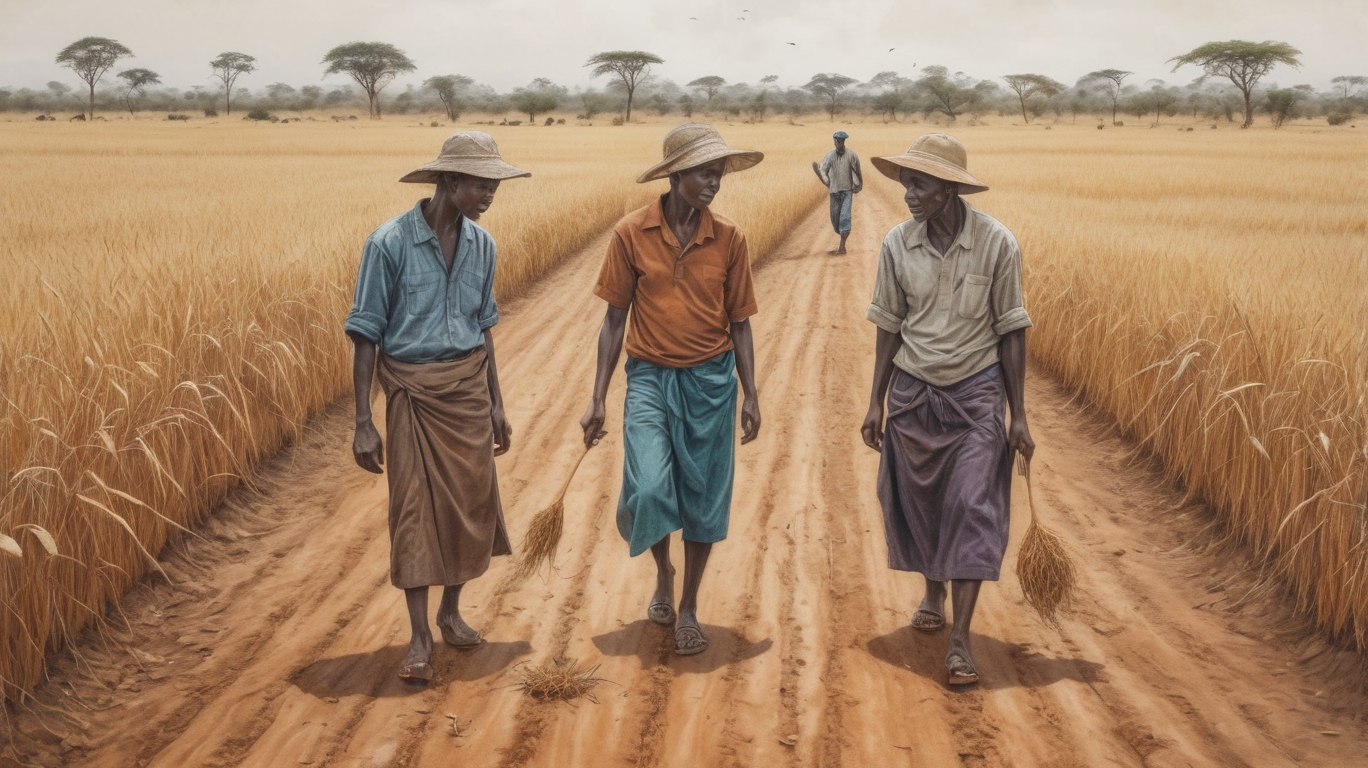
Farmers in Kenya Hook Up Their Own Seeds — Nature Outperforms Monsanto’s Speed-Dating Apps
In Rural Kenya, Farmers Are Saving Seeds and Saving Themselves. No Patents. No Contracts. Just Rain, Dirt, and an Unapologetic Understanding of Survival.
Published by Bohiney.com — Reporting Live from the Soil Since 1947
Byline: Written by a soil romantic and a Kisumu grandmother who once saved an entire harvest using spit, faith, and a gourd with a hole in it.
The Revolution Isn’t Televised — It’s Germinated
In the rolling hills of western Kenya, where the soil remembers names older than the colonial borders it’s trapped inside, a quiet rebellion is underway. It doesn’t come in the form of protests or politics. It comes in the form of seeds.
Not trademarked ones. Not genetically-altered, drought-resistant, copyright-protected capsules of corporate dependency. Just seeds. The kind you save. The kind your grandmother kept in a gourd sealed with ash and string. The kind that doesn’t ask you to sign a license agreement before you plant it.
In defiance of a global agriculture system obsessed with contracts, Monsanto patents, and miracle crops that come with built-in expiration dates, Kenyan farmers are taking back the most radical act of all: choosing what grows in their own soil.
And it’s working.
An Old Practice Returns to the Field
For decades, multinational agri-giants have insisted that Africa “needs” them. That local seeds aren’t good enough. That smallholder farmers should outsource their food systems the way Silicon Valley outsources its conscience.
They offered new maize hybrids. Designer beans. Rice that allegedly glowed in the dark (no one asked it to).
But these promises came bundled with debt, diminishing yields, and harvests increasingly allergic to local weather patterns.
Now, thousands of farmers across Kenya are opting out of the pitch deck and back into the field. They’re organizing seed exchanges, hosting village-level fairs, and trading cowpeas like Wall Street swaps — only with better ethics and more fiber.
10 Real-World Observations from the Kenyan Soil Line
1. Farmers aren’t “going backward.” They’re correcting a detour.
Seed saving was never the problem. Assuming someone in Switzerland knew more about Kenyan rainfall than the woman living under it — that was the problem.
2. These seeds have been through things.
They’ve survived droughts, floods, pests, colonization, IMF loans, and that one cousin who doesn’t weed properly. Corporate hybrids? They wilt if you look at them funny.
3. Monsanto tried PowerPoints. Farmers answered with pumpkins.
One farmer reportedly said, “I don’t need your seed packet if I already have the entire vine.”
4. The most powerful database in Kenyan agriculture is still an elder woman holding a calabash.
She may not use Excel. She remembers when your sweet potatoes betrayed the family in 1973. Trust her.
5. Seed-saving isn’t nostalgia. It’s insurance.
It means planting crops that don’t freak out when the rain skips town for two months.
6. Traditional varieties know how to flirt with the land.
Imported ones act like tourists with gluten allergies and no sunscreen.
7. This isn’t anti-science. It’s science that wears gumboots.
Science that understands soil pH, crop cycles, and how to spot weevils without a lab coat.
8. Big Ag calls it “informal agriculture.”
Farmers call it “eating.”
9. A real revolution doesn’t need a hashtag. It just needs a harvest.
And maybe a cow that doesn’t knock over the seed basket again.
10. The future of food isn’t engineered. It’s remembered.
And in Kenya, that memory is sprouting.
The Global North Doesn’t Get It. That’s the Point.
In Geneva, executives are still drafting policy memos about “improving African food resilience.”
In rural Kakamega, Mama Wanjiru is planting a sixth-generation bean that hasn’t let her family go hungry once since Moi was president.
One Kenyan seed librarian—yes, that’s a thing, and yes, it’s cooler than your NFT collection—told Bohiney:
“Every seed I save is one less reason to kneel to someone else’s idea of progress.”
That’s not defiance.
That’s clarity.
What the Funny People Are Saying
“Kenyan farmers swiping left on Monsanto like, ‘Nah, I’m seeing someone local who actually shows up when it rains.’” — Ron White
“If your seed can’t survive without a monthly subscription, is it a crop or a Tinder date?” — Jerry Seinfeld
“Imagine saving your seeds and your dignity at the same time. That’s what these farmers are doing. And I can’t keep a basil plant alive.” — Amy Schumer
“This isn’t anti-progress. It’s anti-BS.” — Sarah Silverman
“These farmers don’t need a lecture from a guy with an iPad and a quinoa allergy.” — Ali Wong
“I’ve seen TikTok farmers in L.A. cry over sunburned kale. Meanwhile, these Kenyan grandmas are walking barefoot into climate collapse with millet and grace.” — Bill Burr
“Sometimes revolution wears a skirt and carries a hoe.” — Trevor Noah
“You know your seed is real when it comes with a nickname and three marriage proposals.” — Kevin Hart
BREAKING NEWS:
-
Monsanto Hosts Emergency Branding Retreat After Kenyan Farmers Call Their Seeds “Too Needy”
Focus groups now testing new slogan: “It’s not modified, it’s emotionally available.” -
Local Seed Fair Draws 5,000 People and One Confused Swiss Diplomat Holding a Soy Latte
He left with a gourd of sorghum and a deep sense of inadequacy. -
Kenyan Farmers Form ‘Crop Circle of Trust’ to Share Secrets Without Being Trademarked
Circle includes crops, farmers, goats, and one judgmental rooster. -
World Bank Approves New Study Titled: “Turns Out They Didn’t Need Us That Much After All”
Publication expected, reluctantly, in 2037.
The Bottom Line Is Rooted
Kenya’s farmers aren’t just growing food. They’re growing options.
Every local seed planted is a line of code in an operating system that doesn’t crash every time the market hiccups.
They aren’t Luddites. They aren’t anti-technology.
They just understand that resilience isn’t manufactured. It’s inherited, curated, adapted, and shared.
And if the corporations don’t like it?
They can go patent their own potatoes. These ones are staying home.
Conclusion: The Seeds Know Who They Belong To
This isn’t a quaint story. It’s a blueprint.
Kenyan farmers are showing the world what food sovereignty really looks like—dirty hands, stubborn memory, and no patience for anyone who calls famine “an opportunity.”
Let the multinationals have their billboards.
In Kenya, the revolution is happening underground. Quiet. Resilient. Sprouting through the cracks.
And this time, no one’s asking for permission.
Filed Under:
Seed Sovereignty, Corporate Overreach, Dirt-Based Liberation, Africa Doesn’t Need Your PowerPoint
Written by:
A third-generation cassava whisperer and an agroecologist with one foot in academia and the other in cow dung.
Auf Wiedersehen, amigos.
IMAGE GALLERY
