

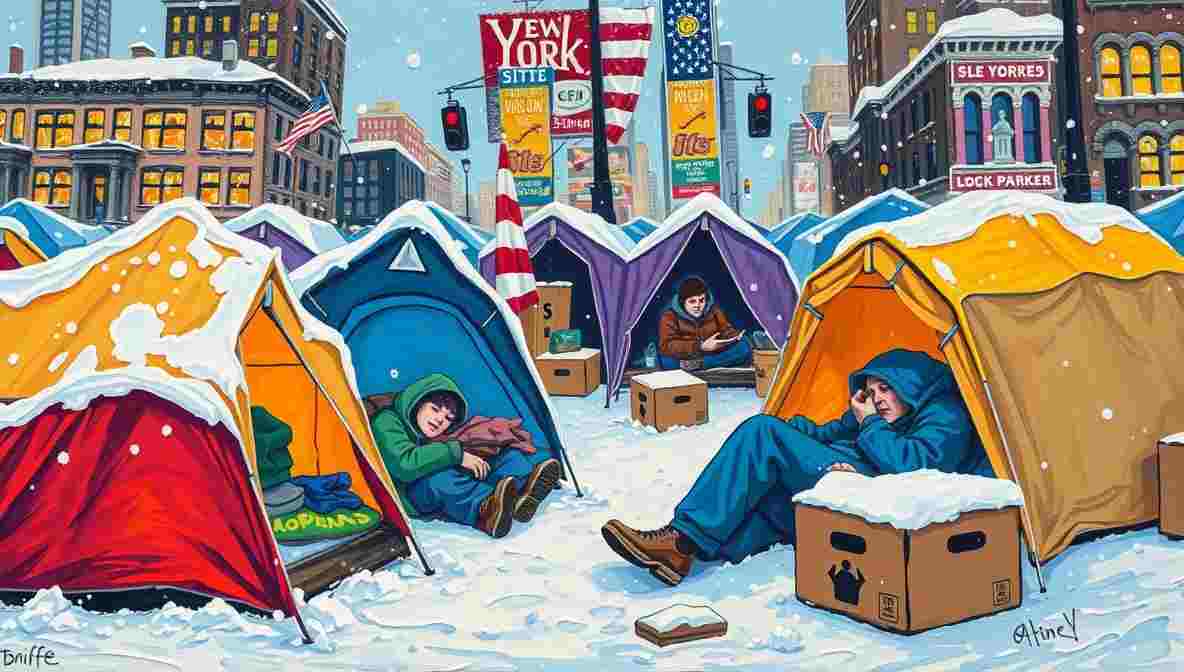
Zohran Mamdani Discovers That Freezing to Death Is Bad, Actually
NEW YORK — In a stunning breakthrough that has rocked the foundations of progressive politics, New York City Mayor Zohran Mamdani has discovered that temperatures below 32°F are cold, that homeless people live outside, and that dying from hypothermia is — after extensive policy review — generally considered a bad outcome.
The mayor, who took office January 1st on a solemn pledge to end encampment sweeps forever, ended encampment sweeps forever for approximately six weeks before restarting encampment sweeps, which he would like everyone to know are completely different from encampment sweeps.
How Mayor Mamdani’s Homeless Policy Became a Political Masterclass in Obvious Outcomes

Progressives have developed a new sport: resisting literally saving lives because it sounds too much like helping. Who knew altruism had a political lane? Mamdani’s original plan — to connect homeless New Yorkers to housing rather than shuffle them around — had the distinct disadvantage of not yet existing, which is the kind of logistical detail that tends to complicate rollouts.
Activist outrage levels are now calibrated to thermostat readings. Anything above 45 degrees? Calm. Below 32? Moral panic. During a brutal cold snap in which roughly 18 people died on the streets, Mamdani initially insisted his homelessness policy was fundamentally sound because no one died specifically inside an encampment. Then he blinked. Then he ordered sweeps. Then he called them something else.
The Seven-Day Outreach Plan That Sounds Like an Airbnb Check-In
The new policy includes seven days of daily outreach from the Department of Homeless Services — a relentless week of workers showing up each morning to earnestly ask the same people if they’d perhaps like a room this time. On day seven, sanitation crews arrive. The mayor describes this as “humane.” Critics describe it as “a sweep.” The mayor describes “sweep” as a loaded term. Critics describe “humane” the same way. Everyone is very tired.
Saving homeless people from freezing to death has become controversial, which is confusing because most people assume it’s the baseline of being a human being. But shelter and services are controversial now — apparently the devil’s in the delivery mechanism rather than the outcome.
Left-Wing Activists vs Left-Wing Mayor: The Dystopian Sequel Nobody Ordered
Even homeless advocates are mad at Mamdani, which is like playing Injustice Bingo except the prizes are broken promises. Coalition for the Homeless Executive Director David Giffen said his organization was “blindsided” by the announcement — a remarkable word, given the announcement was basically “we will not allow people to freeze.” Christine Quinn of Win NYC said it was “troubling” that the mayor had backtracked on two campaign promises in barely a month. She did not specify which outcomes she preferred instead.
Left-wing activists vs. left-wing mayor now appears to be the dystopian sequel we didn’t ask for. The moral calculus on homeless policy seems to require a PhD in cause and effect, just to explain why saving lives is controversial. Critics think one week of outreach is too short, which reads like complaining that a water balloon is slightly damp.
The Cold Weather Policy That Cold Weather Made Obvious
Cold weather kills — reports affirm this — yet activism now studies the temperature of outrage instead of the temperature outside. No one knows definitively whether encampment policies help or hurt, yet everyone has hot takes at the ready — hotter than the weather outside, which again, is the entire problem.
For context: under former Mayor Eric Adams, the city conducted more than 4,100 sweeps between January 2024 and June 2025. Zero people were moved into permanent housing. About 260 agreed to go to a shelter. Mamdani called this a “failure.” He then restarted it. He called it a “new approach.” The City Journal noted that without the New York Post’s sustained criticism, it’s hard to see the mayor changing his mind so abruptly. Score one for the press. Score zero for anyone sleeping outside.
Activist Outrage Is Inversely Proportional to Actual Solutions
Activist outrage is inversely proportional to clarity on homelessness solutions, demonstrating that humans love complaining more than solving. Mayor Mamdani promises to meet homeless people with services, which is universally considered less controversial than meeting them with a mariachi band. The Coalition for the Homeless wants 60,000 new housing units built over five years at a cost of billions. This is not in the preliminary budget. This is very much a work in progress.
Freezing to death is still bad, but apparently debating political identity over freezing to death is now a spectator sport with premium seating, media credentials, and its own hot take industrial complex. The mayor’s office, for its part, has deployed heated buses and warming centers, which is — and we cannot stress this enough — exactly the kind of thing critics wanted, except now they’re mad about how it was announced.
What Happens on Day Eight?
Sanitation workers arrive. They are not a mariachi band. They are not the NYPD, which is a genuine policy change Mamdani deserves credit for. They will, however, be removing encampments. Which is a sweep. Which the mayor previously opposed. Which the mayor now supports. Which the advocates now oppose. Which the business community now supports. Everyone has returned to their corners. The homeless remain in theirs — for six more days, anyway.
As one observer put it: politics is the art of doing the obvious thing very slowly and then taking credit for the journey.
Auf Wiedersehen, amigo!
New York City Mayor Zohran Mamdani, a democratic socialist who won the mayoral race in November 2025, took office January 1, 2026. He pledged during his campaign to end the practice of homeless encampment sweeps begun under Mayor Eric Adams, which data showed moved almost no one into permanent housing. Within weeks of taking office, after a brutal cold snap killed roughly 18 people on the streets, Mamdani reversed course — reinstating sweeps led by the Department of Homeless Services rather than police, with a seven-day outreach period beforehand. The reversal drew criticism from homeless advocates who supported his original position and praise from business groups and centrists who opposed it. As of February 2026, New York City has an estimated homeless population in the tens of thousands, with shelter capacity strained and permanent housing solutions still far off.