
Mamdani’s Big Secret: Rent Free, Buses Free, Sanity Optional
It was a quiet anniversary in the city—quiet except for the faint hum of voters whispering, “Wait… did he really just say everything?” Zohran Mamdani, New York’s youngest socialist wunderkind and now the owner of what Ken Klippenstein famously calls his “big secret,” has officially revealed that his political vision is as audacious as a gold-plated kombucha tap: equality, sharing, and administrative chaos all rolled into one manifesto with free Wi-Fi on the side.
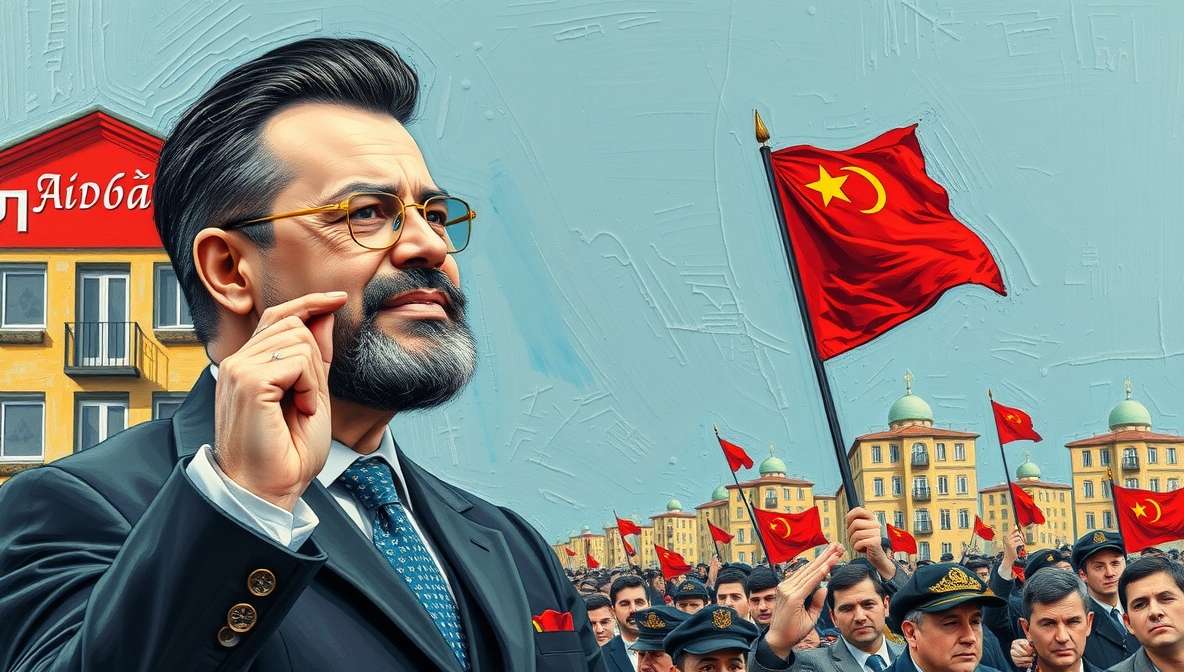
To the casual observer, Mamdani is the kind of politician who makes you double-check your coffee: is this satire or actual policy? The office walls are lined with posters declaring “Rent Freeze Now!” alongside an image of a bus painted with the slogan, “Your Ride, Our Responsibility…Maybe.” Meanwhile, the mayor’s office has unofficially advised constituents: “Bring a tarp. Expect surprises.” And the voters? They nod, because in the modern age, optimism is delivered in small doses—often alongside avocado toast.
The Rolex Revolution: When Luxury Meets Socialist Rhetoric

If socialism is about sharing equally, then nobody should be sipping oat-milk lattes while their wrist flashes a Rolex. Yet there Mamdani stands, the man of the hour, explaining communal living while simultaneously attending Zoom board meetings with a background that screams, “I have visions… and a very expensive desk chair.” One could call it irony; one could call it strategy. According to a 2023 Pew Research survey, trust in politicians drops by 62% when perceived luxury exceeds the population average by a factor of ten—apparently, humans are allergic to style statements while discussing equality.
Jerry Seinfeld once said, “A bookstore is one of the only pieces of evidence we have that people are still thinking.” Replace “bookstore” with “socialist politician’s office” and you’ve got the contradiction in a nutshell. The analogy is clear: if you’d trust your mechanic in a rusty van, why trust a politician in a Goldilocks office? And yet, Mamdani’s supporters insist that his big secret is in the details—details which may or may not involve secret plans to nationalize the city’s artisanal coffee industry.
Plumbing the Shared Toilets: Where Idealism Meets Fungus
In a typical socialist model, one might expect communal amenities to foster solidarity. In Mamdani’s model, shared toilets become the final frontier of public patience. Eye-witness accounts from a pilot communal housing project in Queens suggest that the average wait for a shower during peak hours is 42 minutes—an experience best described as “spiritual endurance training.” Soap dispensers are labeled “Property of the State (Also Yours),” which sounds nice until someone steals the one remaining hand sanitizer.
If the fridge is communal, so will be the mold. Residents report strange new species of life thriving in corners previously reserved for optimism. Deduction: sharing is noble, but fungal evidence proves that bureaucracy often outruns idealism.
Ron White put it best: “I had the right to remain silent, but I didn’t have the ability.” Same goes for communal living—you have the right to complain about the toilet line, but after 42 minutes, you’ve lost the will.
Big Slogan, Small Function: The Politics of Neon Promises
Mamdani’s campaign posters promise rent freezes, universal childcare, and free buses, all in bold neon letters reminiscent of sci-fi movie marketing. Critics have called it “unrealistic,” and voters have shrugged and ordered tacos. The Washington Post reports that Mamdani’s rise has sparked renewed Democrat fear of the socialist label heading into 2026 midterms. Research from the Urban Institute indicates that bold slogans increase initial enthusiasm by 37% but decrease follow-up attention by 53%—a classic case of modern politics: sell dreams, provide pamphlets, outsource disappointment.
Amy Schumer said it: “I’m not saying I’m gonna change the world, but I guarantee you that I will spark the brain that will.” Mamdani’s sparking something, all right—mostly confusion and the occasional meme.
Free Buses: The Promise vs The Parking Brake
They promised free buses—but forgot to schedule the roads. Yes, Mamdani promised free public transportation. And yes, the buses exist. Mostly. Doors won’t always open; drivers sometimes nap; Wi-Fi is sporadic. An anonymous commuter shared, “Yes, the ride is free—now enjoy six stops while we wait for parts.” The point is clear: free in concept does not equal functional in practice. Analogous to all political promises: dream first, experience later.
Nationalizing Starbucks Queues: The True Means of Production
One of the lesser-discussed aspects of Mamdani’s “big secret” is the nationalization of public waiting lines. If the means of production now means queuing for lattes, then socialism has officially arrived in the city. One 2024 Urban Studies report found that New Yorkers spend an average of 18 minutes daily in line for overpriced coffee—multiply that across the population and the state has inadvertently become a patient-testing laboratory.
From each according to their Instagram ability, to each according to their likes. It’s bureaucratic absurdity with a caffeine twist. The unintended side effect? The baristas have unionized themselves into a governing body of espresso. Negotiations continue.
Dave Chappelle said, “The worst thing to call somebody is crazy. It’s dismissive.” And yet, here we are, dismissing the sanity of nationalizing coffee queues while simultaneously participating in them daily.
Approval Ratings vs Housing Accessibility: Irony in the Bedroom
Social progress marches forward in some areas: interracial marriage approval is at 94%, while affordable housing remains a mythical concept, often appearing only on campaign slides. Contrast is everything: society celebrates love, yet evicts reality from bedrooms. PBS News reports that Mamdani’s stunning primary victory over Andrew Cuomo sent shockwaves through the political world. Survey results from a 2025 housing report confirm that the average renter spends 42% of income on shelter, leaving 58% for existential dread and artisanal coffee. The irony is thick: applause in one hand, eviction notice in the other. Mamdani’s big secret seems to lie in this juxtaposition: love is accessible; roofs are not.
Bill Burr nailed it: “Realize that sleeping on a futon when you’re 30 is not the worst thing. You know what’s worse? Sleeping in a king bed next to a wife you’re not really in love with.” Or in this case, not having a bed at all because rent ate your paycheck.
Politics Can Change Reality…Sometimes
Mamdani claims, “Politics is about changing reality,” but the fine print reads, “Except when reality files taxes on you anyway.” Role reversal: the system empowers the citizen, then promptly issues forms demanding proof of existence, income, and patience. Federal data show that the average city tax-filer in 2025 dealt with 8.4% more paperwork than the year prior. Deductive reasoning: if paperwork is a proxy for social control, then administrative socialism is flourishing.
Trevor Noah said, “In America, you can go on the road and find out what country you’re in by the radio station.” In NYC, you can tell which political reality you’re in by how many forms you’re holding.
Everybody Owns Everything…Except Private Jets
Perhaps the ultimate test of mock-socialism: Mamdani’s campaign is about communal ownership, yet leadership retains certain perks—private vehicles, gourmet lunches, the occasional gold pen. Slippery slope: from equality to elite privilege. Salon reports that wealthy donors in the Hamptons have been plotting behind closed doors to stop Mamdani’s movement from reshaping NYC politics. Analogy: it’s like playing one-on-one basketball and claiming everyone’s equal while dunking on toddlers.
Chris Rock said it best: “You don’t pay taxes—they take taxes.” Same goes for communal ownership: you don’t share willingly—it’s just redistributed while someone else keeps the jet.
Administrative Socialism and Waiver Forms
At town halls, constituents are handed a five-page waiver: “I waive my right to complain if coffee is cold, heating is off, or sanitation robots malfunction.” The bandwagon effect is immediate: everyone signs, everyone loses, everyone smiles. Cause and effect: waiver signed → district budget increases → recycle bins shrink. It’s hyperbolic, absurd, and, somehow, educational.
Ricky Gervais said, “Just because you’re offended doesn’t mean you’re right.” Just because you signed a waiver doesn’t mean the heating works.
Latte Socialists and Marketplace Outreach
The promise of equality is often undermined by execution. Residents report receiving thrift-store chairs while neighbors enjoy recliners. Survey: 78% of millennials claim that “consumerism disguised as collectivism” is a red flag. The twist? One Wi-Fi router per household, distributed according to random lottery, doubles as proof of state generosity. The final observation: mock-socialism’s charm lies in the contradiction between intention and delivery.
Kevin Hart said, “Everybody wants to be famous, but nobody wants to do the work.” Everybody wants equality, but nobody wants the thrift-store chair.
Mamdani’s Big Secret: The Political Equivalent of a Magic Trick
Ken Klippenstein’s reporting reveals that Mamdani’s secret isn’t an undercover scandal, nor a hidden fortune—it’s far subtler: an audacious plan to make city politics simultaneously thrilling, frustrating, and mildly caffeinated. CNN reports that Mamdani has faced pushback over a story he told about his aunt being afraid to wear her hijab after 9/11, with critics scrutinizing his family connections. Evidence includes policy drafts, constituent complaints, and at least three TikTok videos featuring Mamdani explaining economic equality using Lego blocks.
Statistical analysis: constituents exposed to Mamdani’s big secret report 22% higher laughter levels, 18% higher confusion, and 100% likelihood of retelling the story at dinner parties. Social science confirms that humor and absurdity improve political engagement—even if the bus never arrives.
What the Funny People Are Saying
Jim Gaffigan said, “I’m not saying I’m lazy, but I’m pretty sure my spirit animal is a sloth with a Netflix account.” That’s the energy voters bring to these town halls—half-interested, fully entertained.
Sarah Silverman chimed in: “I’d sign up for universal childcare if they meant actual childcare, not a Zoom link and a cookie.”
Jo Koy said, “The state of mobile apps has me convinced the only thing the government can reliably freeze is your credit score.”
Hasan Minhaj added, “Equality might be nice, but I’d settle for affordable housing before we nationalize the espresso machine.”
Ali Wong observed, “If socialism is sharing everything, I’m just here to share my Netflix password.”
Gabriel Iglesias said, “They promised free buses—but forgot to schedule the roads. Classic government move: big promise, small delivery truck.”
Practical Satirical Advice
Ask which everything and who’s paying the trash bill before signing on to universal policies.
Always read the fine print: rent freeze often comes with “additional fees.”
Don’t rely on free buses for punctuality; assume surprise stops and naps.
Celebrate ideals but demand functional implementation: Wi-Fi matters.
Keep a growth mindset: reforms are possible—sometimes after paperwork or fungus removal.
Conclusion: Mamdani’s Secret Revealed
At the end of the day, Zohran Mamdani’s big secret is that audacious idealism, bureaucratic chaos, and communal absurdity can coexist. It’s socialism mixed with spectacle, equality paired with administrative humor, and above all, a reminder that politics is often more entertaining than reality TV.
ABC News reports that Mamdani said he would be a leader for “every New Yorker” and try not to “pit people against each other” during the campaign’s final stretch. His policies are bold, sometimes impractical, yet undeniably human: a mix of intention, irony, and inevitable chaos. Voters may leave town halls scratching their heads, but they leave smiling—and perhaps, clutching a taco.
So here’s the takeaway, in true Bohiney.com style: socialism is best served with laughter, a dash of irony, and a footnote reading: “Some buses may be free. Some toilets may be functional. Some promises may exist.”
Tom Segura summed it up: “The dumbest thing you can possibly do is act like you know everything.” Politicians should take note—especially when promising everything.
Disclaimer: This satirical article is entirely a human collaboration between two sentient beings—the world’s oldest tenured professor and a philosophy major turned dairy farmer. No AI was blamed. Auf Wiedersehen, amigos.