

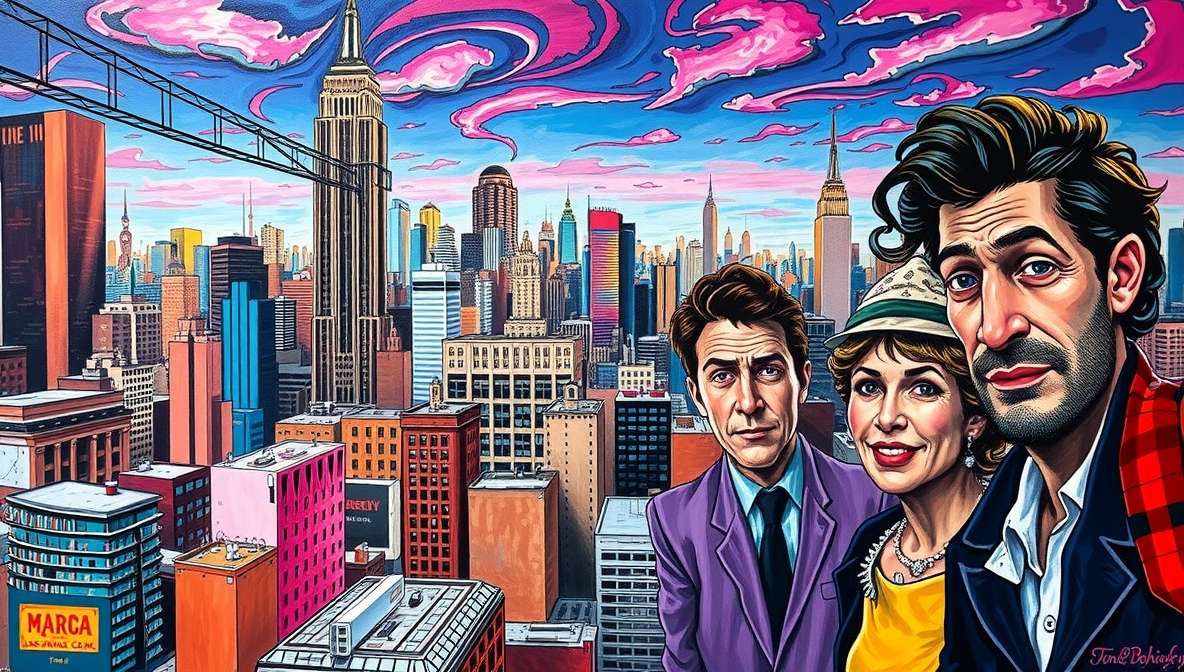
Mamdani Bets NYC’s Future on Rich People Who Can Afford to Leave
What’s Going On
The Atlantic article argues that while Zohran Mamdani rose to power on a “tax the rich and fund social services” platform, New York’s fiscal health remains heavily dependent on the city’s wealthy one-percent. It’s like discovering your entire restaurant business model depends on one guy who really likes your soup, and now you’re thinking about charging him triple.
Under the current tax structure, the top 1% of earners in New York generate about 41% of state income-tax revenues, and around 40% of the city’s own income-tax revenue. That’s not a diverse portfolio, that’s putting all your eggs in a basket carried by people who can afford to buy a farm in Florida.
Mamdani proposes raising the city income tax for earners over $1 million annually (roughly the “top 1%”) by 50%. That, along with hikes in corporate taxes, is meant to fund universal child care, free buses, housing affordability measures, and other progressive social policies. As Jerry Seinfeld said, “You ever notice how politicians always have a plan? The plan is: someone else pays for it.”
Why This Is Controversial and Risky
Heavy Dependence on a Fragile Top-Heavy Tax Base

New York has long relied on its wealthy elite to carry a disproportionately large share of the tax burden and, by extension, its social safety net. The whole system is basically a house of cards built on people who have the resources to knock it down and leave whenever they want. It’s financial planning meets hostage negotiation.
The problem: many top earners aren’t billionaires immune to sticker shock. They may already feel they “pay enough,” and an extra bite could push them to reconsider whether New York remains worth it. These aren’t oligarchs with private armies, they’re successful doctors, lawyers, and business owners who can do math and own GPS devices.
Dave Chappelle said, “Rich people love New York until the bill comes. Then they love Florida real fast.”
Evidence Suggests Taxes Drive Mobility Among the Wealthy
Academic literature increasingly shows that wealthy individuals are relatively mobile when faced with higher taxes. In multiple contexts (including U.S. states, and European jurisdictions), raising taxes on high earners has led to measurable migration among that group. Shocking development: people with money use that money to avoid giving more of it away.
In New York’s case: because it’s a city, not a state or country, relocating doesn’t require uprooting completely. High-net-worth individuals can simply declare residence in a nearby suburb, or move to a state with no or low income tax (e.g., Florida or Texas), while still working (or spending) time in the city. It’s like breaking up with someone but still using their Netflix account, except in reverse and with tax implications.
Bill Burr said, “You know what rich people are really good at? Leaving. They’ve been practicing their whole lives.”
Also, remote work remains prevalent post-pandemic, further reducing the friction of relocating: wealthy professionals might keep earning NYC-scale wages while living wherever tax burdens are lighter. The pandemic taught everyone that Zoom calls work just as well from a beach house as from a Manhattan loft, except one involves less honking and more savings.
Declining Appeal to New Wealthy Residents
The Atlantic notes that although the number of “income-millionaires” in New York has nearly doubled since 2010, this growth lags behind national trends: overall U.S. millionaires tripled in that period, with many clustering in no-income-tax states. New York is basically losing the millionaire beauty pageant to states whose main attractions are strip malls and humidity.
A nonpartisan watchdog group estimates that had New York maintained its 2010 share of national high earners, 2022 revenues would have been $13.2 billion higher, more than enough to fund many of Mamdani’s proposals without raising taxes. That’s the equivalent of finding $13 billion in the couch cushions and deciding to set the couch on fire instead.
This suggests a structural problem: New York is attracting fewer new high-earners, which makes increasing tax rates riskier. It’s like a nightclub with a declining customer base deciding to double the cover charge and wondering why the line gets shorter.
Amy Schumer said, “New York keeps raising prices like it’s the only city in America. Spoiler alert: Texas exists and they have air conditioning.”
Potential Consequences If Wealthy Residents Start Leaving
If a significant portion of high earners and capital departs the city, several developments are likely, and none of them involve unicorns or happy endings:
Revenue Shortfalls
The city may find itself unable to sustain expanded social programs. Losing just a fraction of the wealthy tax base could wipe out the extra revenue Mamdani aims to raise, and the city could even face a deficit if remaining tax contributions shrink. It’s like planning a lavish wedding based on your rich uncle’s promised gift, then watching him move to the Bahamas and change his phone number.
Kevin Hart said, “You can’t spend money you don’t have from people who aren’t here anymore. That’s not a budget, that’s a prayer.”
Decline in Corporate Investment and Job Creation
Some firms might relocate or downsize NYC operations to avoid high corporate tax burdens, hurting job growth and shrinking opportunities for highly skilled workers. Companies follow money like sharks follow blood, except corporations have better lawyers and worse PR departments.
Social and Economic Decay
If wealth concentration declines and corporate presence weakens, the city could enter a downward spiral similar to past decades: rising taxes, declining city services, deteriorating quality of life, and continued out-migration. Anyone old enough to remember the 1970s is having traumatic flashbacks to burning buildings and fiscal collapse, and they’re not nostalgic about it.
Chris Rock said, “You know what happens when all the rich people leave? The rest of us have to pay for everything, and we’re already broke.”
Greater Volatility
Because most wealth comes from capital gains and investments, which fluctuate more than wages, the city’s revenue base would become more unpredictable, tying social programs to market cycles. Nothing says “stable social safety net” like funding childcare with the same volatility as cryptocurrency.
Counter-Arguments and Reasons Why the Feared Exodus May Not Happen or May Be Limited
Several studies suggest migration out of high-tax areas among the rich is slower than popularly assumed, especially among those with deep community, business, and social ties. Rich people love threatening to leave, but actually packing up a mansion and relocating your entire social network is annoying even when you can afford to hire people to do it for you.
According to Citizens Budget Commission, while New York’s millionaire population has shrunk relative to national growth, the city still maintains many millionaires, and the loss doesn’t automatically translate to empty luxury skyscrapers. Some wealthy people genuinely love New York and will pay premium prices to stay, like paying $18 for a sandwich because it’s “authentic.”
Ricky Gervais said, “Rich people complain about taxes but most of them won’t actually move because they’d miss complaining about New York to other rich people in New York.”
Some argue that if Mamdani invests tax revenues effectively by improving public transit, housing, childcare, the improvements could retain or attract residents (rich or working-class) who appreciate better services. The theory is solid: make the city better, people want to stay. Revolutionary concept that involves actually delivering on promises.
Also, out-migration tends to spike only under extraordinary circumstances (like pandemic-level disruptions). In normal times, social inertia tends to keep people in place. Humans are lazy creatures who hate change, even wealthy humans who can afford to hire people to manage their change for them.
Trevor Noah said, “Politicians always think people won’t leave, like we’re all emotionally attached to potholes and subway delays.”
What This Means for Ordinary New Yorkers and What to Watch
For middle- and low-income New Yorkers, Mamdani’s proposals may promise real benefits: affordable housing, better transit, universal childcare. These are genuinely life-changing programs that could transform how working families survive in an impossibly expensive city. But there’s a big if: the plan depends on wealthy residents staying in town and continuing to pay top-tier taxes.
Things to monitor over the next 2-5 years:
- Migration data among high earners and households making over $1 million/year
- Trends in luxury real-estate sales and occupancy
- Corporate relocation or downsizing announcements
- Budget performance
- Quality and outcomes of social programs funded by the tax
If luxury penthouses start sitting empty and corporate headquarters start relocating to Austin, that’s your canary in the coal mine. Pay attention to the data, not the rhetoric, because politicians will insist everything is fine until the city is literally on fire.
Tom Segura said, “The best predictor of future behavior is past behavior, and rich people’s past behavior is: they leave when you charge them more.”
My Assessment
Mamdani’s agenda could work if the city invests wisely. But betting on wealthy residents staying no matter what is risky. Empirical evidence shows taxes influence mobility, especially when low-tax alternatives exist and remote work is viable. If enough top earners leave, NYC could face lower revenues and reduced economic dynamism, ironically undermining the social programs the mayor wants to expand.
The fundamental problem with “tax the rich” strategies is that rich people have options, and those options include “not being here anymore.” It’s like trying to keep an unhappy spouse by demanding more of their paycheck. Eventually, they hire a divorce lawyer who knows about Florida’s favorable tax treatment.
Nate Bargatze said, “You ever notice politicians act surprised when people do exactly what you’d expect them to do? That’s not economics, that’s just being bad at predicting human behavior.”
The city needs revenue, working families need support, and wealthy residents need to contribute their fair share. Finding that balance requires wisdom, restraint, and acknowledging that even the richest New Yorkers have accountants, moving companies, and the ability to Google “states with no income tax.” Ignoring these realities doesn’t make them disappear, it just makes your budget projections wildly optimistic and your social programs dangerously underfunded.
References
- The Atlantic: Rich New Yorkers Leave – Mamdani Wealth Tax Consequences
- Forbes: If Mamdani Raises NYC Taxes Will the Wealthy Leave the City
- Forbes: Will Mamdani’s Proposed Millionaire Tax Save or Sink New York City
- Roosevelt Forward: The Rich Don’t Flee They Bluff
- Phys.org: New York Wealthy Tax Exodus Mamdani