

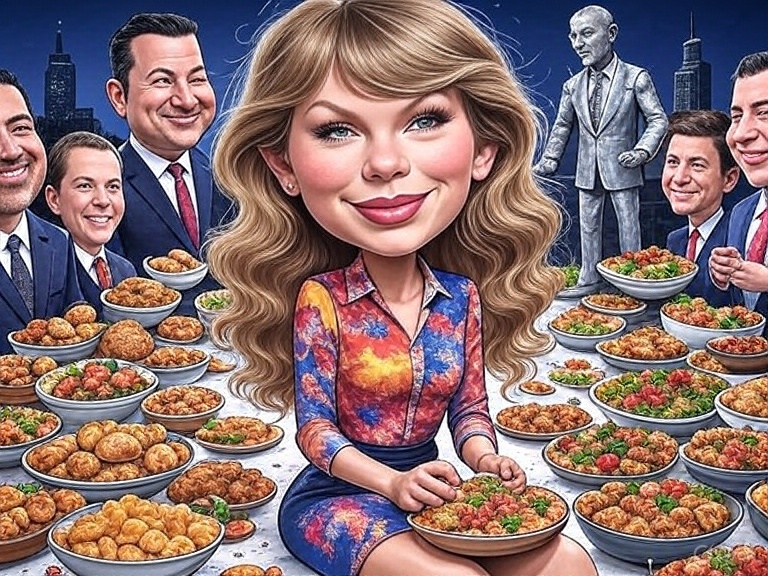
Taylor Swift: Big Food’s Dream Girl – The Pop Star’s Accidental Marketing Empire
How America’s Sweetheart Became the Processed Food Industry’s Secret Weapon
Understanding why Taylor Swift became Big Food’s dream girl requires examining how authentic celebrity lifestyle sharing has revolutionized food marketing in ways that traditional advertising never could. When Swift casually mentioned experimenting with Funfetti sourdough bread on Travis Kelce’s podcast, Pillsbury immediately capitalized on the opportunity, creating an official recipe requiring their specific branded products. The full scope of Taylor Swift’s kitchen nightmares reveals just how deep this processed food rabbit hole goes.
The beauty of Swift’s influence lies in its complete authenticity—she’s not being paid to promote these products, making her endorsements infinitely more valuable than traditional celebrity food endorsements. This represents the marketing equivalent of discovering oil while gardening: Swift accidentally created demand for rainbow-colored sourdough that literally didn’t exist until she mentioned it.
Five Processed Food Disasters Taylor Swift Actually Makes for Travis Kelce
The reality of why Taylor Swift became Big Food’s dream girl becomes clear when examining the actual factory-food recreations she creates for her NFL boyfriend:
Homemade Pop-Tarts: Swift makes these from scratch for the Kansas City Chiefs’ offensive line. Chiefs coach Andy Reid confirmed “She makes a mean pop-tart” but complained “she just doesn’t share it with me.” A billionaire pop star spending hours hand-crafting what Kellogg’s perfected in factories represents the ultimate validation of processed food concepts.
Funfetti Sourdough: Swift revealed she’s “workshopping” this specifically for Jason Kelce’s daughters because “they love everything rainbow.” She’s taking bread-making traditions thousands of years old and injecting them with artificial colors invented in laboratories last Tuesday. The processed food marketing implications are staggering.
Pre-Game Cinnamon Rolls: Former NFL player Bernie Kosar “had no choice but to put aside his vegan diet” for a taste of Swift’s cinnamon rolls. When your baking compels people to abandon ethical eating principles, you’ve created edible performance-enhancing drugs disguised as breakfast pastries.
Blueberry Lemon Sourdough: Travis revealed this is his favorite flavor, while Swift admits she’s “talking about bread 60% of the time now.” Someone who could purchase any bakery worldwide instead spends her downtime arguing with flour and water about optimal fermentation times. The sourdough trend economics alone could fund small countries.
“Light” Indian Curry: Swift has been introducing Travis to Indian cuisine, with Kelce admitting “my girl Tay is getting you opened up” to curry dishes. This represents authentic cultural experience filtered through someone whose previous culinary expertise peaked at chai sugar cookies.
As Dave Chappelle said in his 2023 special: “Rich white woman teaching football player about Indian food is like me teaching a masterclass on ice fishing in Antarctica. Technically possible, probably terrible.”
The Accidental Marketing Goldmine
The genius of why Taylor Swift became Big Food’s dream girl lies in how her fanbase has transformed into an unpaid research and development department for food companies. When she mentions experimenting with new flavor combinations, thousands of fans immediately attempt recreation, essentially providing free product testing and market research.
The impact of social media on food marketing has never been more evident than in Swift’s accidental endorsement empire. Food companies are receiving the world’s largest unpaid customer research team, all because one pop star decided to make bread a personality trait.
As Sarah Silverman said on her 2024 podcast: “She’s got millions of people doing unpaid labor for food corporations and they’re thanking her for it. That’s not fandom, that’s multilevel marketing with better music and more sparkles.”
When Swift mentions baking, entire supply chains react immediately. The economics of celebrity food mentions have created an entirely new category of unintentional brand ambassadors. The processed food industry discovered they don’t need to pay for celebrity endorsements—they just need to create products that celebrities might accidentally mention while living their lives.
The Cultural Impact of Processed Food Romance
Swift’s relationship with Travis Kelce appears conducted entirely through baked goods containing enough preservatives to survive the next ice age. This represents romance in the age of processed food: instead of love letters, we have homemade Pop-Tarts. Instead of sonnets, we have sourdough variations.
Swift has accidentally launched what might be called the Processed Food Renaissance—a movement where artificial ingredients are treated as artistic mediums rather than chemical shortcuts. The artificial food additive industry has found their most effective spokesperson in someone who doesn’t even realize she’s working for them.
As Ali Wong said during her 2024 Netflix special: “She’s making processed food fancy and fancy food accessible. That’s not cooking—that’s social justice with a side of artificial coloring and a doctorate in marketing psychology.”
The Sweet Taste of Accidental Success
The most insidious aspect of Swift’s influence on processed food culture lies in how completely genuine it appears. She’s making these elaborate treats for Travis Kelce and his family out of obvious affection, not commercial calculation. This authenticity makes the resulting marketing bonanza feel almost accidental, which makes it infinitely more powerful.
The processed food industry has stumbled upon the holy grail of marketing: products being promoted by someone who genuinely uses them, enjoys them, and shares them with people she loves. The health implications of processed food normalization through celebrity culture deserve serious examination, even when wrapped in rainbow sprinkles and romantic narratives.
Swift has managed to make processed food feel wholesome again, which explains why Taylor Swift became Big Food’s dream girl—she’s either achieved a triumph of human connection over commercial calculation or orchestrated the most successful marketing campaign in history. Probably both.
As Chris Rock said during his 2024 tour: “She’s selling more cake mix than the cake mix company, and she’s doing it for free out of love. That’s not business—that’s magic. Evil magic, but magic nonetheless.”
The Swift effect proves that in modern America, even the most genuine human emotions can become market opportunities—and somehow, that makes them no less genuine. Love might be a battlefield, but apparently it’s also a very profitable bakery where artificial ingredients masquerade as authentic affection.
|
Swift’s Sweetest (or Saltiest) Food Flexes
|
The “Nightmare” Twist
|
Gold Rush Payoff
|
|---|---|---|
|
Diet Coke (2013): “Open Happiness” ads with Tay toasting to teen dreams.
|
Pushes “diet” as empowerment, but it’s basically liquid regret in a silver can.
|
Boosted Coke’s youth sales; Swift’s cut? Undisclosed, but her net worth says “cha-ching.”
|
|
Got Milk? (2010s): Iconic mustache campaign nod.
|
Glorifies dairy in a lactose-intolerant world—cue the tummy troubles.
|
Timeless celeb staple; helped MilkPEP rake in cultural cachet.
|
|
Chicken Fingers (Self-Endorsed Fave): Tay’s go-to comfort food, now tour merch fodder.
|
Processed poultry perfection—greasy, addictive, artery-clogging bliss.
|
Fans recreate “Swiftie Sliders” at home; Big Chicken weeps with joy.
|
|
Eras Tour Donations (2023-2024): Truckloads of fresh fruits/veggies to food banks.
|
Sweetheart move, but contrasts her soda shilling—hypocrisy alert?
|
Indirect promo: Donations spotlight hunger, driving snack sales as “guilt-free” treats.
|
|
Kelce Effect (2023+): Ziploc, Panera, Honey Baked Ham tie-ins via Travis & fam.
|
Turns tailgates into processed paradise; “Love Story” meets Lunchables.
|
16+ deals in 6 months; Swift’s halo adds sparkle to every shelf.
|
