

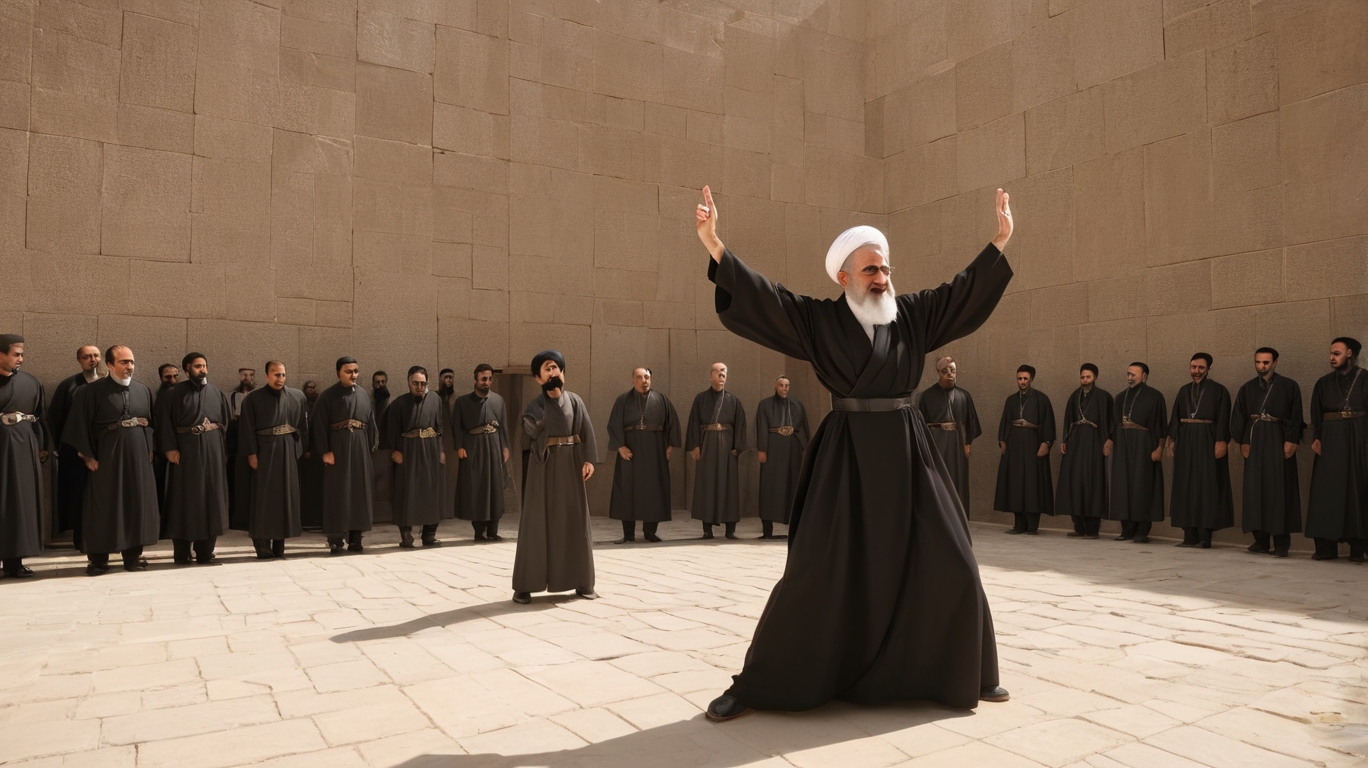
Iran Executes Six – and for once, no one was executed for dancing…
Iran Executes Six, Nation Breathes Sigh of Relief: “At Least Nobody Twerked”
By: Shirin “Tap-to-Mute” Azadi, Tehran’s Only Certified Choreographer-Journalist Hybrid
TEHRAN, IRAN — Iran, long considered a nation of poets, revolutionaries, and people whose hobbies must be approved by twelve committees and a fax machine, was rocked by the news that six citizens had been executed for “collaborating with Mossad.”
But what truly made headlines?
The fact that, for once, no one was executed for dancing.
This sparked national confusion. Skepticism. Hope. And most of all: celebratory shoulder shimmies in private kitchens across the nation.
“Six dead? Tragic. But no moonwalking? That’s progress.” — Maryam Ghaffari, Instagram poet, housebound choreographer
Dancing with the Stars? More Like Dancing with the Death Penalty
Iran Executes Six, Finally Separates Dance from Death Penalty
Iran’s complex relationship with rhythm dates back decades, when officials first declared dancing to be a Western imperialist plot designed to weaken knees and embolden joy.
In 2014, six young Iranians were arrested for filming a dance to Pharrell’s “Happy.” The regime responded swiftly with detentions, interrogations, and a state-wide reminder that happiness is a Class B felony.
Since then, Iranian citizens have learned to approach dancing the way one approaches nuclear policy: cautiously, in secret, and preferably without witnesses.
So when the judiciary executed six people last week for espionage, the internet exploded with relief.
“No pirouettes. No pop-locks. Just plain old capital punishment. Phew.” — @TiredOfTreason
Meet the Victims: All Guilt, No Jazz Hands
Six Executed in Iran—Jazz Hands Remain Legal, For Now
According to the Islamic Republic News Agency (IRNA), the six individuals executed were charged with:
-
Espionage
-
Collaboration with hostile foreign powers
-
Possessing suspicious USB sticks
-
And—unofficially—owning iPhones
None were reported to have danced, belly-shook, breakdanced, or even two-stepped during interrogations. Analysts say this may mark a significant shift in enforcement priorities—from crimes of joy to crimes of geopolitics.
“This is a terrifying regression toward normal authoritarianism,” said Dr. Nima Tabrizi, professor of Sassy Repression Studies at the University of Somewhere In Exile.
“We’re used to the moral panic over movement. Now they’re just killing people for alleged crimes instead of interpretive expression. Frankly, it’s unsettling.”
A Timeline of Dance-Related Criminal History
-
2009: Flash mobs criminalized. “Joy should not be spontaneous,” warned then-minister.
-
2014: “Happy” dancers arrested, forced to express sorrow via mime.
-
2018: Teen girl posts Instagram dance, becomes global symbol—and briefly the nation’s Most Wanted.
-
2023: Man in Tabriz tap-dances to avoid potholes, cited for “public rhythm.”
-
2024: Officials install surveillance AI to detect “excessive shoulder movement.”
-
2025: Executions resume, but no one appears to have done the robot. National panic subsides.
The Maryam Ghaffari Doctrine: “Execute If You Must, But Leave the Foxtrot Alone”
Ghaffari, who originally posted her viral joke after the executions, has since gone underground—both figuratively and literally, teaching clandestine bachata in her cousin’s basement.
Her statement resonated with millions:
“We’ve normalized death, but we still fear criminalized dance. It’s like they want our bodies stiff before we’re even dead.”
Iranian Twitter (read: VPN-routed Telegram screenshots) erupted in ironic hashtags:
-
#JustEspionage
-
#AtLeastNotBeyonce
-
#ExecutionButMakeItBureaucratic
Even state-run satirist outlets cautiously joined in.
IRNA’s Humor Section posted:
“At this rate, Mossad’s real crime might be introducing us to salsa.”
Behind the Scenes: The Official Reason for the Executions
State television showed the six suspects blindfolded and “confessing” in suspiciously well-lit settings. Charges included:
-
Logging into Gmail too confidently
-
Walking near a centrifuge with “ambiguous intentions”
Sources close to the security services confirmed that two of the suspects “were very limber” and one “knew far too much about beat drops.”
But no dancing footage surfaced—so the public drew the only logical conclusion:
The regime had finally learned to differentiate between espionage and popping-and-locking.
Progress?
Underground Reaction: The Joyful Rebellion
As news spread, Tehran’s young people did what they always do in times of chaos: they partied softly.
In one whispered report, a rooftop gathering in the Ekbatan neighborhood included up to four people nodding rhythmically, which experts believe may have evolved from the jail-proof version of a headbang.
In Rasht, one woman reportedly danced with her curtains closed and her phone in the freezer.
In Mashhad, a wedding featured a DJ who simply tapped his finger on the table to the beat. “No music,” he clarified. “Just emotional percussion.”
Government Response: “We’re Not Anti-Dance. We’re Just Pro-Silence.”
Supreme Leader Ayatollah Khamenei responded to online speculation during his weekly sermon:
“We have not banned dancing. We have simply decided it is beneath our martyrs. Also, it looks silly. Especially the flossing.”
He then quoted a hadith about modesty and reminded the public that joy must be pre-approved by a committee of three mullahs, one accountant, and a retired revolutionary.
Comedian Reaction: “Finally, They’re Back to Old-Fashioned Murder”
Comedians both inside and outside Iran chimed in with morbid enthusiasm.
“Iran is now so unpredictable, executions are comforting.” — Majid Jafarzadeh
“Nobody twerked, and yet people died. So it turns out, maybe it wasn’t about the dancing?” — Shahla Ramin
“Six executed, but the TikTok kids live on. Truly, we are a nation of contradiction.” — Hamed Navidi
International observers began using Iran’s execution choices as an informal human rights barometer:
-
Execution + dancing? Totalitarianism.
-
Execution without dancing? Transitional fascism.
-
No execution + dancing? Clearly someone’s asleep at the Ministry of Virtue.
Meanwhile, Back on State TV…
State media attempted to redirect attention from the executions with a 9-part documentary titled “Dancing With Satan: The Western Plot to Shake Hips and Faith.”
Episode titles included:
-
“Booty Shaking and the Fall of Byzantium”
-
“Disco: America’s Silent Weapon”
-
“Hip-Hop: How Beats Betray Belief”
Unfortunately, the production backfired when youth watched it ironically, then recreated scenes on TikTok using pixelated filter masks and SpongeBob audio.
The Ministry of Culture was reportedly “horrified,” but budget-constrained.
Cultural Consequences: One Small Step for Brutality, One Giant Leap for Meh
Iranian citizens now face a strange new normal: executions without dancing.
“I almost don’t recognize this government anymore,” said 58-year-old Azar. “It’s like they’re trying to go full totalitarian, but without the flair.”
Others expressed cautious hope.
“Maybe next time, they won’t kill anyone. Or better, maybe next time we’ll dance at the executions and confuse them into leniency.”
Foreign Reaction: UN Releases Statement, Everyone Skims It
The United Nations issued a strongly-worded tweet from a junior intern’s phone:
“We urge Iran to cease executions of all forms. Also, happy Pride Month.”
The EU offered to send emotionally supportive choreography therapists, while the US sent a confused ambassador who asked whether this was about TikTok again.
Meanwhile, Reza Pahlavi, speaking from exile, offered:
“If Iran is going to execute people, let’s at least make sure they’ve lived joyfully first. Give them ten minutes of breakdancing. It’s what the constitution would want.”
Final Scene: A Dance Deferred
As news cycles shifted and hashtags faded, six executed citizens were buried in somber ceremonies, their graves unmarked, their families silent.
But across the country, in bedrooms, kitchens, alleyways, and abandoned rooftops, the people moved again.
Just slightly. Just enough.
To remember.
To defy.
To say: “We noticed.”
“I didn’t dance today. I merely existed rhythmically,” one girl texted her cousin while bouncing on the balls of her feet. “I think I’m safe.”
Disclaimer
This satirical article was co-authored by a banned dance instructor, three off-duty taxi drivers, and one Ayatollah’s rebellious niece. All characters are fictional, except those who have tragically become state statistics.
