

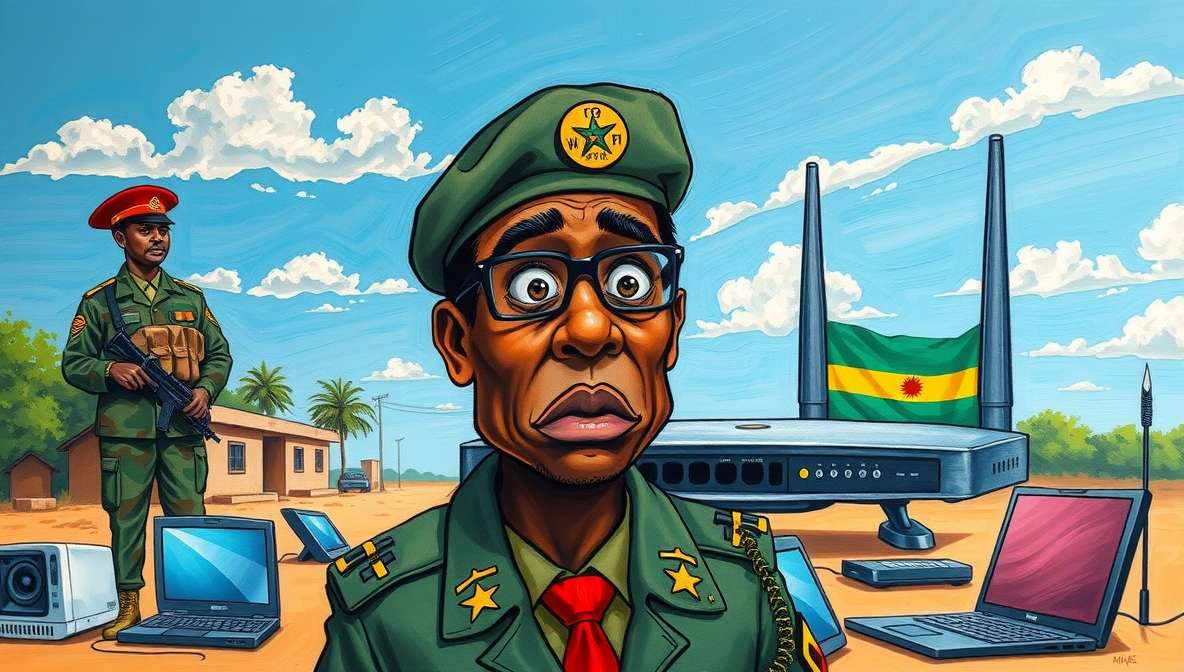
Madagascar’s Military Coup Takes Unexpected Turn: Army Now Provides Wi-Fi
When National Security Meets Network Security
In an unprecedented twist on traditional military coups, Madagascar’s armed forces have reportedly prioritized internet infrastructure over conventional governance following political upheaval—a move that reflects changing priorities in the digital age.
The Digital Divide in Developing Nations

Madagascar, like many developing nations, faces significant challenges in internet accessibility and digital infrastructure. According to World Bank data, internet penetration in Madagascar remains well below global averages, creating obstacles for economic development and access to information.
The island nation of approximately 28 million people has struggled with political instability for decades. Political transitions have historically disrupted services and development, making consistent infrastructure improvements difficult.
Military and Technology: An Unusual Combination
While the scenario of soldiers doubling as IT support seems far-fetched, militaries worldwide have increasingly focused on cybersecurity and digital infrastructure. Many armed forces now include specialized technology units recognizing that modern security involves both physical and digital domains.
Countries like Estonia have pioneered the integration of military capabilities with digital infrastructure protection, particularly after experiencing significant cyberattacks. Their model demonstrates how national security increasingly depends on robust digital systems.
Internet Access as a Human Right
The United Nations has recognized internet access as tied to fundamental rights including freedom of expression and access to information. In developing nations, improved connectivity correlates with economic growth, education access, and healthcare delivery.
For Madagascar, whose economy relies heavily on agriculture and emerging tourism, better internet infrastructure could significantly impact development. Digital connectivity enables mobile banking, distance learning, and access to global markets—all crucial for economic advancement.
The Real Madagascar Situation
Madagascar faces genuine challenges including political instability, poverty, and climate vulnerability. The country requires sustained international support and domestic stability to address infrastructure needs, including telecommunications.
Organizations like the International Telecommunication Union work to improve connectivity in developing nations, recognizing that digital infrastructure is increasingly essential for participation in the global economy and access to critical services.
A Metaphor for Modern Priorities
While the image of generals managing routers is absurd, it highlights real questions about governance priorities in the 21st century. Should governments treat internet access as critical infrastructure equivalent to roads and electricity? As societies become increasingly digital, these questions gain urgency.
The satirical scenario of Madagascar’s “Wi-Fi coup” ultimately reflects genuine debates about development priorities, the role of technology in governance, and how nations balance traditional security concerns with emerging digital needs in an interconnected world.