

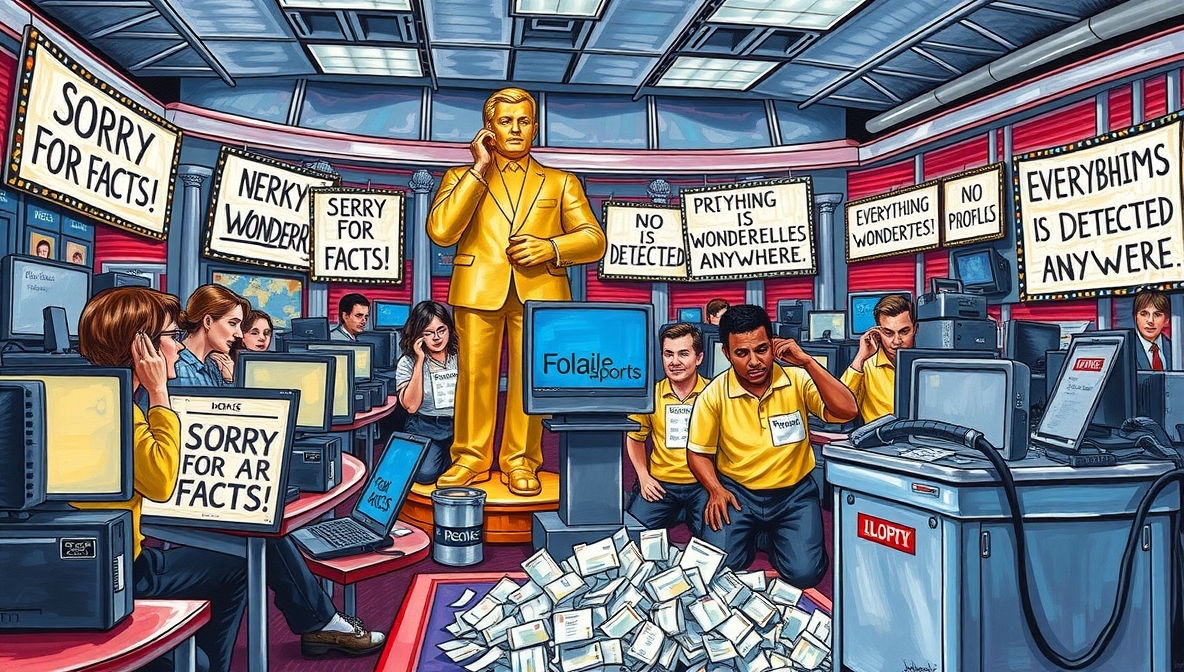
Media Apologizes for Being Too Critical of Power
By Savannah Steele | Bohiney.com
In an unprecedented act of journalistic humility that would make Edward R. Murrow spin in his grave like a laundromat dryer, major media outlets issued a joint apology this week for allegedly being “too critical of power.” The statement, delivered via synchronized press conference across seventeen time zones, read: “We deeply regret reporting facts that made leaders uncomfortable. Going forward, we solemnly promise to nod enthusiastically, smile beatifically, and ask only the most gentle, non-threatening questions that wouldn’t disturb a sleeping kitten.”
According to The New York Times’ media analysis, the apology comes after years of relentless investigative reporting that uncovered corruption, mismanagement, environmental disasters, and the occasional government office donut shortage that apparently crossed several ethical lines. One editor, wearing sackcloth and clutching a resignation letter, admitted with tears streaming: “We realize that our obsessive pursuit of truth may have caused mild inconvenience to very important people. We are sincerely sorry and will try much harder to report only uplifting press releases and heartwarming stories about puppies in politics.”
Expert Opinions on Journalistic Self-Flagellation
Media analysts are calling the apology “radically performative” yet oddly mesmerizing, like watching a train wreck in slow motion while eating popcorn. Dr. Leonard Fisk, professor of Media Accountability at the University of Press Releases, explained with barely contained fascination: “By apologizing for being too critical, the press demonstrates both humility and absurdity simultaneously. It’s performance art masquerading as journalism, or possibly journalism masquerading as performance art. I honestly can’t tell anymore.”
A comprehensive Pew Research report on media trust confirms that 68% of Americans were too confused by the meta-narrative to decide whether they should feel reassured or deeply concerned about the future of democratic accountability in mass media.
Meanwhile, an anonymous staffer from a major network confessed while hiding behind a potted plant: “We figured if we apologize preemptively for doing our jobs, maybe the government will let us keep our office chairs and continue receiving those delicious press briefing donuts. Journalism is hard, but those donuts are really, really good.”
Public Response Achieves Peak Bewilderment
Reaction across social media platforms was predictably chaotic and spectacularly entertaining. A hasty survey found 42% of citizens applauded the apology with religious fervor, 37% were bewildered to the point of temporary paralysis, and 21% immediately shared memes mocking journalists for apologizing for the radical act of telling uncomfortable truths about powerful people.
A Twitter user with 47 followers wrote what became the most retweeted response: “So the media’s sorry for being honest about dishonest people? What’s next—doctors apologizing for diagnosing diseases, or weather forecasters saying sorry for predicting rain?”
Citizens began flooding newsrooms with suggestions for “gentler” coverage. Recommendations included replacing “scandal” with “unfortunate misunderstanding,” “corruption” with “creative accounting,” and “war crimes” with “aggressive international disagreements with explosive consequences.”
Meanwhile, Wikipedia’s entry on media ethics was humorously updated by anonymous editors to include: “See also: performative apologies, irony in press conferences, sarcastic editorials, and the fine art of professional self-destruction.”
The Economics of Apologetic Journalism
Press freedom organizations report that the apology has generated unexpected economic benefits, with government officials offering media companies bulk discounts on official statements, pre-approved interview questions, and complimentary photo opportunities featuring leaders looking statesman-like while doing normal human activities.
Several news outlets have already pivoted to “Gentle Journalism”—a new format featuring softball questions, pastel color schemes, and mandatory meditation breaks between investigative segments.
What the Funny People Are Saying About Media Self-Criticism
“Media apologizing for criticism? That’s like a doctor saying sorry for diagnosing you with pneumonia instead of pretending your lungs are just being dramatic.” — Jerry Seinfeld
“I tried apologizing for telling the truth once at a family dinner. People didn’t believe the apology either. Journalism is finally catching up to holiday gatherings.” — Ron White
“If honesty is suddenly a crime, these reporters are guilty as charged—but now they’re also innocent, confused, and probably unemployed. It’s like a philosophical riddle with press credentials.” — Amy Schumer
“The media apologized for being too critical? My high school guidance counselor did that once. I ended up majoring in art history and living in my parents’ basement.” — John Mulaney
Conclusion: The Future of Politely Neutered News
Though the apology may not restore public trust, reduce political polarization, or magically solve the complex relationship between power and accountability, it serves as a powerful reminder that journalism is still capable of self-reflection—even if that reflection comes with a generous side of irony, a dash of institutional panic, and enough public eye-rolling to power a small wind farm.
Political observers agree that nothing builds confidence in media credibility quite like publicly saying sorry for being too competent at the fundamental job requirements of democratic oversight and truth-telling.
Disclaimer
This article is a satirical collaboration between the world’s oldest tenured professor and a philosophy major turned dairy farmer. No journalists were forced to apologize against their professional judgment, though some did it voluntarily for comedic effect and better access to government donuts. Auf Wiedersehen, amigos.
IMAGE GALLERY
