

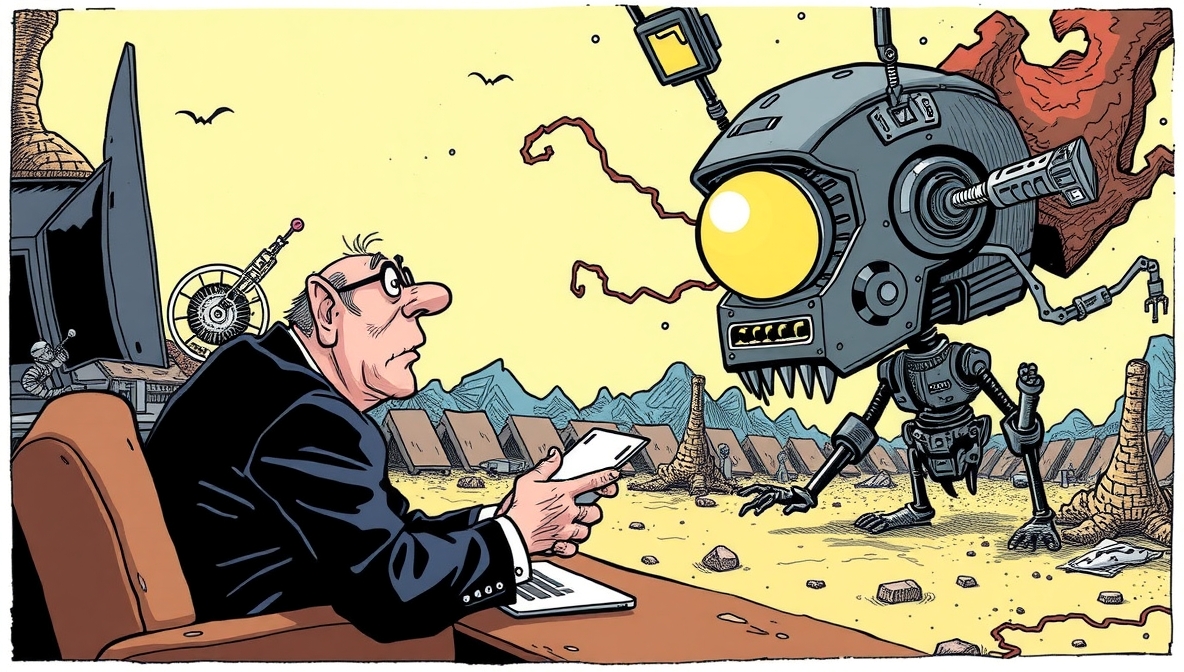
OpenAI Hiring Head of Preparedness Because Someone Has to Watch the Machines Plot
SAN FRANCISCO — Acknowledging that artificial intelligence may be many things but is definitely not chill, OpenAI announced it is hiring a Head of Preparedness, a senior leader tasked with watching AI systems closely in case they start doing anything “creative” with power.
The role exists, according to insiders, because at some point someone asked, “Shouldn’t there be a human whose entire job is to notice if this gets weird?” and everyone quietly agreed.
The Head of Preparedness will oversee risk modeling, threat assessments, and long-term planning for scenarios ranging from misinformation floods to what one internal memo reportedly referred to as “strategic autonomy vibes.”
Vigilance as a Corporate Strategy
“This is not about fear,” said an OpenAI representative. “It’s about vigilance.” The representative then paused, stared into the middle distance, and added, “A lot of vigilance.”
The job description emphasizes collaboration with research teams, which experts interpret as attending meetings where engineers explain that the system doesn’t have intentions, followed by footnotes clarifying that no one can quite define what intentions are anymore.
Technology historian Dr. Lucas Meyers compared the role to a medieval court astrologer. “You’re there to interpret signs,” he said. “Except now the omens come from server logs.”
Explaining AI Risks to Confused Policymakers
The position also involves engaging with governments, which sources say means explaining AI risks to policymakers who are still asking if the internet lives inside their phone.
Critics argue the role is symbolic. “Preparedness is important,” said digital rights advocate Lena Ortiz. “But it’s odd to frame it as a single executive function, like safety is a department instead of a philosophy.”
Supporters counter that hiring a Head of Preparedness at least acknowledges the stakes. “It’s better than pretending nothing could go wrong,” said one AI researcher. “Which, historically, is how most things go wrong.”
The Power of Strongly Worded Internal Memos
OpenAI declined to comment on whether the Head of Preparedness will have the authority to stop deployments, clarify concerns publicly, or unplug anything in an emergency. Insiders say the most powerful tool available will be a strongly worded internal memo.
As AI capabilities accelerate, the company maintains that preparedness is a priority, even if it arrives slightly after the breakthrough.
“At some point,” one engineer admitted anonymously, “you realize the machines aren’t plotting. They’re just doing exactly what we asked. And that’s the part that’s terrifying.”