

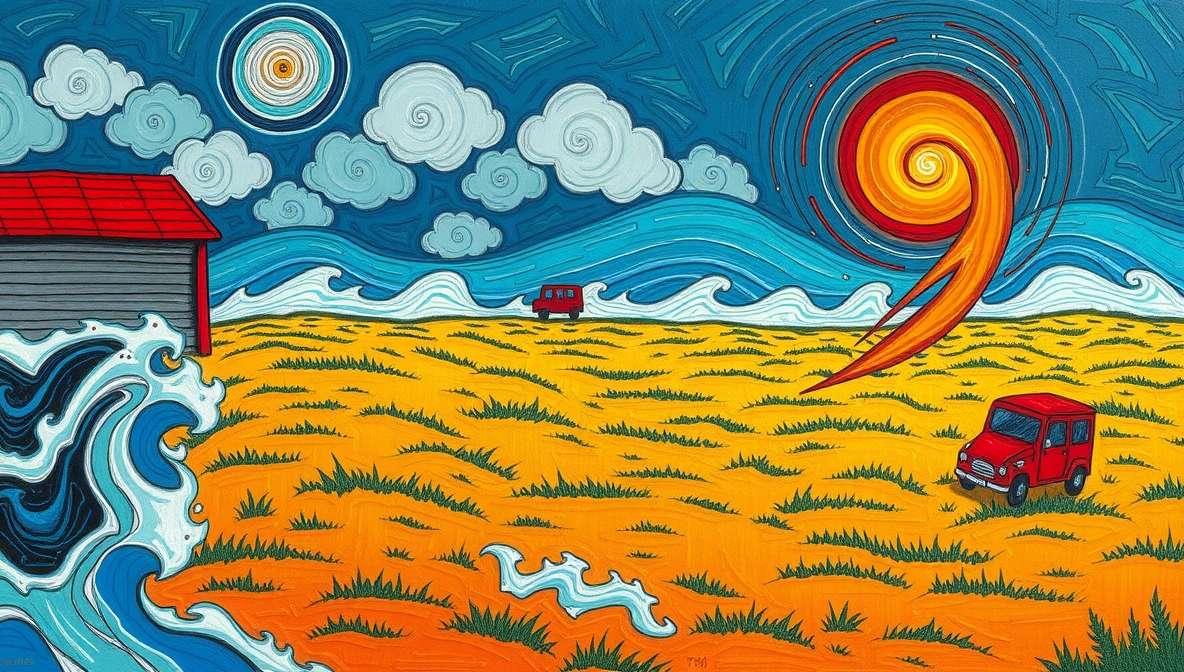
People Who Name Their Emotions After Weather Patterns: The Forecast for Your Feelings
When Your Anger Is a Category 5 Hurricane
The Meteorological Approach to Mental Health
The latest evolution in therapy culture involves people naming their emotions after weather phenomena. Anxiety isn’t just anxiety–it’s “Tropical Storm Trevor.” Depression isn’t a clinical condition–it’s “Overcast Olivia.” Rage isn’t a temporary state–it’s “Hurricane Harold.” These are adults treating their feelings like they’re tracking systems on the Weather Channel.
This isn’t metaphor–it’s commitment. People genuinely refer to their emotional states using weather terminology and proper names, creating elaborate tracking systems for their internal climate patterns. They discuss their emotional forecast, prepare for incoming systems, and warn others when conditions are deteriorating. It’s psychological management meets meteorology, and nobody asked for this crossover.
The Naming Ceremony for Feelings
“I met someone who introduced their anxiety as ‘Foggy Francis,'” said Dave Chappelle. “Not ‘I have anxiety.’ Their anxiety has a NAME and a WEATHER TYPE. What happened to just saying ‘I’m anxious’? When did feelings need government designation like actual storms?”
The naming process involves matching emotional states to corresponding weather patterns. Anxiety becomes fog or light drizzle. Anger transforms into thunderstorms or hurricanes. Sadness becomes overcast skies or steady rain. Each emotion gets its own weather designation and personal name, creating an emotional forecast that rivals actual meteorology in complexity.
Some people maintain emotional weather journals, tracking their named feelings across days, weeks, months. They create graphs showing frequency and intensity of different emotional systems, note what triggers certain weather patterns, and develop elaborate prediction models for when “Stormy Steve” might appear. This is data analytics applied to feelings, which sounds helpful until you realize it’s mostly just overthinking with extra steps.
The Forecast You Didn’t Request

Jerry Seinfeld said, “People are giving emotional forecasts now. ‘Cloudy Catherine is rolling in, expect intermittent sadness with a chance of crying by evening.’ It’s too much information. Just say you’re sad. We don’t need the five-day outlook on your feelings.”
The emotional weather reporting has become social media content. People post daily emotional forecasts, sharing which named feelings are active and what intensity levels friends should expect. These aren’t vague posts–they’re detailed meteorological reports about internal states, complete with emoji weather symbols and severity warnings.
The Instagram Stories feature emotional weather maps showing different feelings as pressure systems moving across the person’s psychological landscape. “Hurricane Hannah is approaching from the east (work stress) while Foggy Fred lingers in the west (general anxiety).” This is emotional disclosure as weather broadcasting, and the production values are concerningly high.
The Category System for Anger
Amy Schumer said, “Someone told me their anger was a Category 3. I asked ‘Category 3 what?’ They said ‘Hurricane.’ Their ANGER has a HURRICANE CATEGORY. Like there’s a Saffir-Simpson scale for being pissed off. Where’s the measurement? Who’s rating this?”
Anger gets the most elaborate weather classification. People designate their rage using hurricane categories, with Category 1 being mild irritation and Category 5 representing existential fury. They warn others: “I’m tracking a Category 4 right now, might want to keep distance.” This is using natural disaster terminology to describe being angry about traffic.
The categorization implies scientific measurement that doesn’t exist. There’s no emotional equivalent to wind speed or barometric pressure. People are self-assessing their anger on a made-up scale and expecting others to take these designations seriously. “My rage is hitting 130 mph winds” is not medical information–it’s theater.
The Depression Becomes Permanent Cloud Cover
Chris Rock said, “Depression is ‘Overcast Oliver’ who’s apparently here all winter. Oliver isn’t leaving. Oliver has moved in. At what point do you stop saying Oliver is visiting and admit Oliver IS you? That’s not a weather system–that’s climate.”
Depression naming creates problematic distance from the actual condition. By calling it “Overcast Oliver” or “Gray Gary,” people externalize clinical depression as temporary weather passing through. But depression isn’t weather–it’s a mental health condition requiring treatment, not a forecast requiring umbrella preparation.
The weather metaphor breaks down when the “weather” never clears. People maintain the fiction of Oliver being a visiting system despite Oliver being present for months or years. At some point, permanent overcast isn’t weather–it’s your new reality requiring actual intervention beyond cute naming conventions.
The Warning System for Social Situations
Bill Burr said, “They issue emotional weather warnings before seeing people. ‘Heads up, Thunderstorm Theresa might appear at dinner tonight.’ Now I’m preparing for someone’s mood like I’m boarding up windows before a hurricane. Just stay home if you’re that unstable.”
People use their emotional weather systems as advance warning for friends and family. Text messages announce incoming emotional systems: “FYI, Blizzard Betty is active today, might cancel plans.” This is treating mood swings as force majeure events beyond their control, requiring others to accommodate their named weather patterns.
The warnings create social obligations around others’ emotional states. Friends must track multiple people’s emotional forecasts, adjust plans according to various weather systems, and provide appropriate responses when different named emotions activate. It’s emotional labor dressed up as meteorological tracking.
The Relationship Negotiations Around Feelings
Kevin Hart said, “Dating someone with named emotional weather means you’re in a relationship with them AND their weather systems. That’s not a couple–that’s a weather station with benefits. I didn’t sign up to track Tornado Tina’s movement patterns.”
Romantic relationships become complicated when one partner maintains an emotional weather system. The other partner must learn all the named feelings, understand their triggers, track their patterns, and adjust behavior according to which weather is currently active. Dating someone becomes managing their internal meteorology, which wasn’t in the relationship description.
Some couples try to synchronize their emotional weather systems, coordinating which named feelings are acceptable to experience simultaneously. “If your Hurricane Helen is active, my Foggy Frank needs to stay dormant.” This is relationship management as air traffic control, preventing emotional system collisions.
The Therapy Sessions That Enable This
Ricky Gervais said, “Therapists started this with ’emotional weather’ as metaphor and clients took it literally. Now therapists are stuck discussing Stormy Steve like he’s a real entity. They created a monster. A meteorological psychological monster.”
The therapy community uses weather metaphors to help clients understand emotional fluctuation. The problem is clients have weaponized the metaphor into full personality systems requiring names, tracking, and elaborate management strategies. What started as therapeutic tool became identity construction project.
Therapists report spending sessions discussing the named weather patterns rather than underlying issues. “How is Rainy Rachel doing?” becomes the focus instead of “What’s causing your sadness?” The naming creates distance from actual emotional processing, turning therapy into weather updates about fictional entities.
The Social Media Weather Station
Ali Wong said, “Every morning someone posts their emotional weather forecast like they’re Al Roker. ‘Partly cloudy with a chance of Anxious Andy, clearing by afternoon.’ Nobody asked. Nobody needs your feelings forecast. We all have weather–we just don’t announce it.”
Social media has become weather reporting for named emotions. People post elaborate forecasts, create graphics showing their emotional pressure systems, tag friends in weather updates. The content is relentless–daily emotional forecasts, hourly updates when conditions change, breaking news when unexpected weather systems emerge.
The engagement these posts receive reinforces the behavior. Followers offer sympathy, advice, or their own weather reports, creating networks of people all broadcasting their emotional meteorology. It’s support groups meets The Weather Channel, and everyone’s overcommitted to the bit.
The Workplace Accommodation Request for Feelings
Sarah Silverman said, “Someone told HR that Blizzard Beatrice would prevent them from attending the meeting. HR asked for a doctor’s note. They brought in their journal of emotional weather patterns. HR is not equipped for this timeline.”
Workplace accommodation requests now include emotional weather language. Employees explain absences or performance issues using their named feeling systems. “Hurricane Howard was active and I couldn’t focus.” Managers must determine if this is legitimate mental health need or elaborate excuse involving fictional weather characters.
HR departments struggle to create policies around emotional weather naming without either dismissing genuine mental health conditions or enabling elaborate theatrical frameworks for normal human emotions. There’s no handbook for this–nobody anticipated needing workplace policies about employees’ personified feelings.
The Children Adopting the Language
Trevor Noah said, “Kids are learning this from parents. Five-year-olds saying ‘Rainy Rebecca is here’ instead of ‘I’m sad.’ We’re teaching children to distance themselves from emotions using weather metaphors. What could possibly go wrong with that psychological foundation?”
Children raised around emotional weather naming learn to externalize their feelings before they fully understand them. Instead of developing emotional intelligence and regulation skills, they’re learning to assign weather patterns to normal human experiences. The long-term impact of this linguistic distancing from emotional reality is unknown but probably not great.
Schools report students explaining behavioral issues using emotional weather terminology learned at home. “Thunderstorm Tommy made me hit him” becomes the explanation for aggression. Teachers must translate between normal emotional development and whatever meteorological framework the kid learned from therapy-culture parents.
The Breaking Point of the Metaphor
Tom Segura said, “At some point you realize you’ve spent more time naming and tracking your emotions than actually feeling them. You’ve turned emotions into a hobby. That’s not mental health–that’s avoidance with extra steps and weather terminology.”
The fundamental problem is that naming emotions after weather systems creates artificial distance from actual emotional experience. You’re not processing anger–you’re tracking Hurricane Harold. You’re not working through sadness–you’re forecasting Overcast Oliver. The naming becomes barrier to genuine emotional engagement.
Weather passes. Emotions require processing, understanding, sometimes intervention. By treating feelings like weather systems that will naturally pass, people avoid the actual work of mental health management. The cute names and elaborate tracking systems are theater that looks like self-care but functions as elaborate avoidance.
The Reality Behind the Forecast
Emotions aren’t weather. They’re not external forces moving through–they’re internal experiences requiring acknowledgment, understanding, and sometimes professional treatment. Naming them after storms doesn’t make them easier to handle. It just makes them easier to talk about without actually addressing them.
The emotional weather naming trend represents peak therapy culture: taking legitimate therapeutic concepts and transforming them into performative personal brand elements. It’s not about healing–it’s about having interesting things to post about your internal life while maintaining comfortable distance from actual emotional vulnerability.
So next time someone tells you about Foggy Frank or Hurricane Helen, understand what you’re really hearing: someone who’s learned to perform emotional awareness without actually doing the work of emotional processing. The weather will change, but the avoidance patterns remain constant. That’s not a forecast–that’s just the climate we’ve created, one named emotion at a time.