

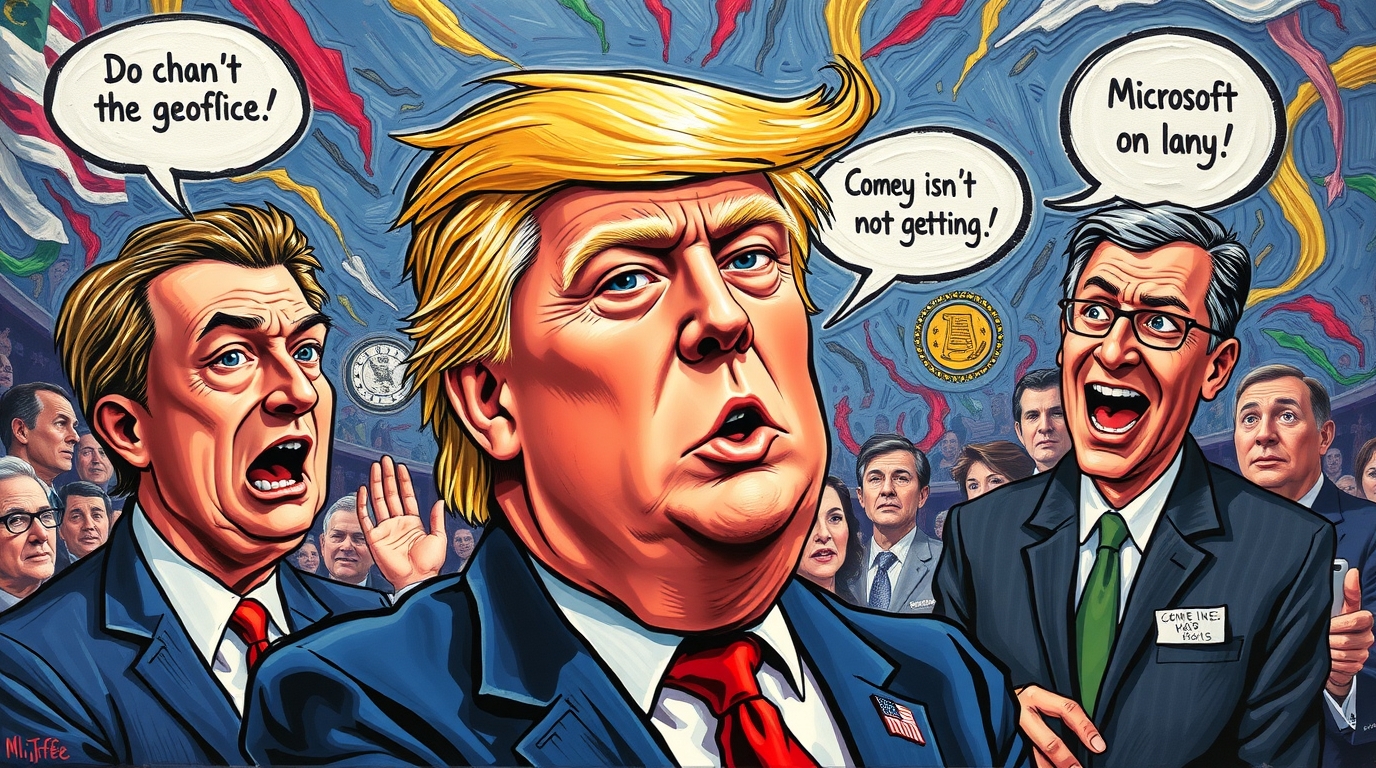
Trump Demands Microsoft Fire Lawyer — Because Comey Isn’t Getting Enough Drama
Bedminster, NJ — Former President Donald Trump demanded Microsoft immediately terminate one of its corporate lawyers, not because the lawyer violated ethics or leaked classified information, but because the lawyer hasn’t provided enough dramatic content for James Comey’s struggling media career.
Corporate Drama Becomes Political Theater
“Comey needs material, folks,” Trump declared during a rally held inside a New Jersey ShopRite, strategically positioned between the organic kale and discounted rotisserie chickens. The venue choice itself raised eyebrows, though Trump insisted grocery stores represent “real America” better than convention centers.
Microsoft responded with corporate bewilderment typically reserved for Windows update complaints. “We were unaware that James Comey’s emotional well-being was part of our quarterly objectives,” the company stated, adding they believed their responsibilities involved cloud computing, not manufacturing clouds of political gossip.
The targeted lawyer, described only as “someone who reads contracts and drinks too much coffee,” became collateral damage in what political analysts call “the great drama deficit crisis of 2025.” Sources close to Comey suggest the former FBI director has been struggling to maintain relevance since his last book tour ended with more empty bookstores than a Borders liquidation sale.
The Drama Dependency Problem

Political observers note Comey’s career trajectory resembles a reality TV show that lost its primary antagonist. Without Trump actively targeting him, Comey has been reduced to NPR interviews and occasional Twitter posts that generate less engagement than cat videos.
“It’s like watching Batman without the Joker,” Jerry Seinfeld said during his recent stand-up special. “You’ve got this guy in a cape standing around wondering why nobody cares about his moral compass anymore.”
The Microsoft lawyer’s testimony about political interference in corporate contracts apparently triggered Trump’s intervention instincts. Anonymous sources suggest Trump views every Comey appearance as a performance review, rating dramatic impact on a scale of “sad” to “tremendous.”
America’s Attention Economy Strikes Again
A recent Pew Research survey found 62% of Americans believe Comey is “more tolerable with background music,” while 23% suggested he pursue “weather forecasting or furniture sales.” The remaining 15% admitted they confused him with the actor who played Commissioner Gordon.
The attention economy’s cruel mathematics have left former political figures scrambling for relevance in increasingly creative ways. Some launch podcasts, others write memoirs, but few have achieved the symbiotic drama cycle that Trump and Comey perfected during their peak conflict years.
“You know what this is?” Ron White said during his Austin show last weekend. “It’s like my ex-wife calling to complain I’m not providing enough ammunition for her therapy sessions. Sometimes people just need to process their own crazy.”
Corporate America Gets Political Dragged
Microsoft finds itself unwillingly cast in a political soap opera it never auditioned for. Corporate lawyers typically handle merger agreements and patent disputes, not serving as supporting characters in former presidents’ ongoing media production.
The tech giant’s legal department issued internal guidance suggesting lawyers avoid “any testimony, depositions, or coffee shop conversations that might accidentally generate cable news content.” One leaked email reportedly included a reminder that “corporate law should be boring.”
Meanwhile, Amy Schumer noted during her recent Chicago performance, “If this keeps escalating, Netflix will option the whole thing. I’m already picturing the series: ‘Suits and Scandals: The Microsoft Chronicles.’ At least someone will profit from this nonsense.”
For now, Microsoft’s lawyer remains employed, Comey continues his media appearances with varying degrees of dramatic success, and America watches this peculiar performance art unfold in real time. Whether this represents democracy evolving or devolving remains an open question.