

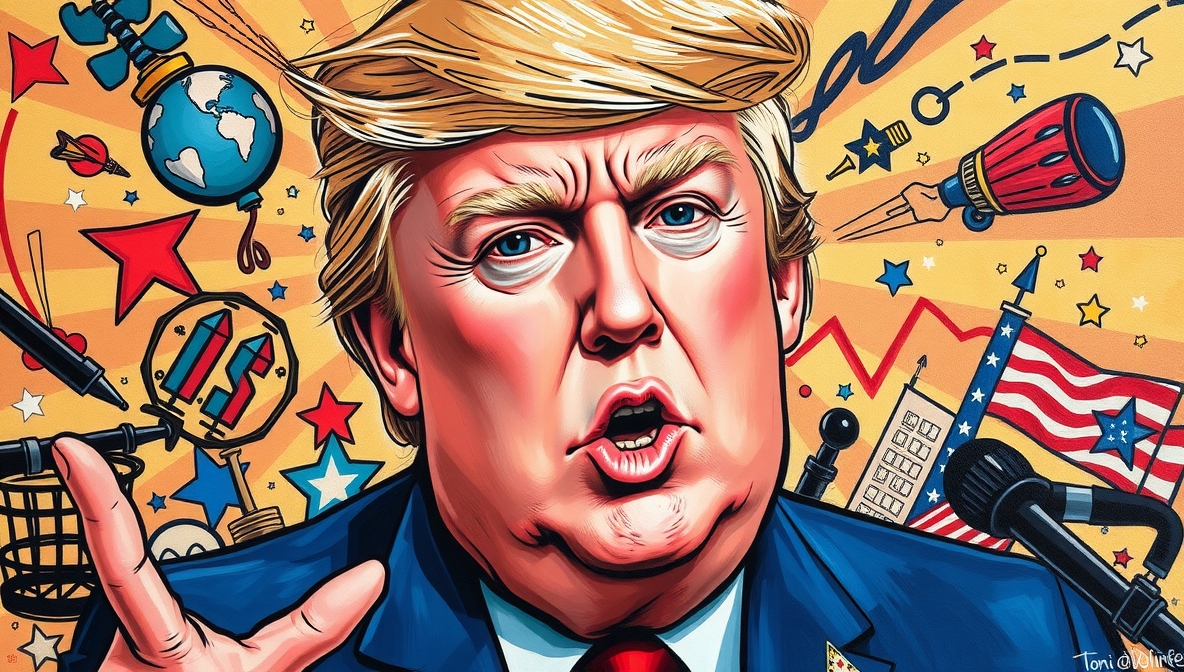
Trump’s Economic Speech: The Golden Age Nobody Can Afford
President Trump delivered an 18-minute address to the nation designed to reassure Americans that the economy is thriving, booming, and possibly curing seasonal allergies. The fact that millions of Americans were watching while wearing three sweaters indoors was clearly incidental.
According to the president, we are living in a “Golden Age,” which economists later clarified is a specialized alloy made of record stock prices, optimistic adjectives, and a complete refusal to acknowledge the cost of eggs. It’s gold in the same way spray paint is gold. Looks shiny from a distance, smells toxic up close.
Trump spoke from the White House, a location chosen for its insulation from grocery bills and utility statements. The message was simple: everything is great, anyone saying otherwise is lying, and if you feel poor, that’s probably because you’re listening to Democrats or checking your bank account.
Why Trump’s Speech Ignored Rising Cost of Living

One of the most notable features of the speech was what wasn’t said. For weeks, Trump had insisted that concerns about affordability were a “hoax” and a “con job.” On Wednesday night, affordability was treated like an embarrassing cousin no one invites to Thanksgiving.
The omission was not accidental. Advisers reportedly cringed at the earlier claim, possibly because even they had recently tried to buy gas or turn on a heater. Saying affordability is fake while Americans are rationing hot showers is bold messaging, but bold doesn’t mean smart. Sometimes it just means loud.
Economists refer to this rhetorical move as Strategic Silence. Regular people call it “changing the subject before someone mentions rent.”
Stock Market Records vs. Reality: Who Benefits from Economic Growth
Trump cited record highs in the stock market as proof the economy is flourishing. This is technically true, assuming you define “the economy” as “a handful of screens in Manhattan blinking green.”
The average American does not own stocks in quantities that meaningfully change their lives, unless you count the 401(k) they’re afraid to look at. For most households, the stock market is an abstract concept like dark matter or affordable child care.
When pressed, administration allies explained that rising markets eventually help everyone. This theory is known as trickle-down economics, a belief system based on the idea that wealth behaves like rain, despite decades of evidence showing it behaves more like a locked safe.
Rising Unemployment and Consumer Prices Trump Didn’t Mention
The speech unfolded against a backdrop of rising unemployment and higher consumer prices. These were not addressed directly, possibly because they clash with the overall tone of victory.
Instead, Trump leaned on vibes. The economy feels strong, he said. Confidence is high. Momentum is building. These are emotional support words economists use when numbers won’t cooperate.
If the economy were a car, this speech was the driver insisting it’s running perfectly while smoke pours out of the hood and everyone inside smells gasoline.
Federal Reserve Policy: Trump’s Convenient Scapegoat for Inflation
Trump briefly gestured at the Federal Reserve, a useful scapegoat because it is complicated and no one understands it fully, including the people who run it.
The Fed, we were reminded, is divided. This was framed as a tragic obstacle standing between America and endless prosperity. It was not mentioned that the Fed’s job involves stopping inflation, not validating campaign slogans.
Blaming the Fed is a long-standing presidential tradition, much like blaming the media or claiming credit for economic trends that began years earlier.
Trump Blames Democrats for Americans Noticing High Prices
As expected, Democrats were blamed for pessimism, negativity, and the rude act of noticing prices. According to Trump, concern itself is the real problem. If Americans would simply stop worrying about costs, everything would cost less. That’s basic economics, apparently.
This rhetorical strategy hinges on the belief that inflation is emotionally responsive. Groceries are expensive because you lack faith. Heating bills rise because you doubt the Golden Age. Believe harder, and maybe your paycheck will stretch.
Conclusion: The Speech Did Its Job, Just Not the One You Think
The address wasn’t meant to explain the economy. It was meant to define reality before reality could interrupt. For supporters, it reinforced a narrative of strength and success. For critics, it confirmed that we are living in two economic universes sharing the same checkout lines.
Trump didn’t convince Americans the economy is booming. He reminded them that he believes it is, and that disagreement remains a political act.
Which, in its own strange way, might be the most honest takeaway of all.