

President personally selects honorees after dismissing board members and taking over historic institution
When The President Becomes Arts Curator In Chief
In what historians will likely classify under “institutional capture meets ego project,” President Trump announced the 48th annual Kennedy Center Honors after personally taking control of the D.C. cultural institution, dismissing board members, and promising to transform it into something that combines luxury, glamour, and significantly less diversity of thought. The 2025 honorees, Trump proudly announced, are “outstanding people” he selected after rejecting “a couple of wokesters” who apparently failed his political litmus test. Nothing says “celebrating American arts” quite like the president vetoing artists based on their politics.
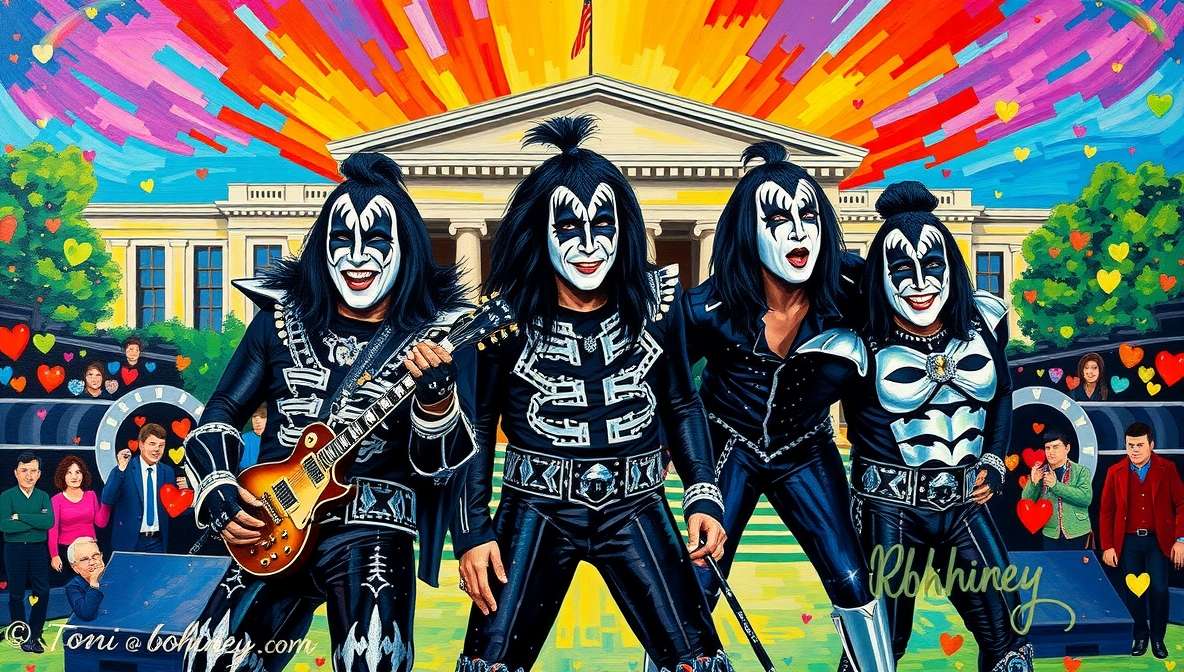
The ceremony, scheduled for December 7, 2025, will honor country legend George Strait, Hollywood icon Sylvester Stallone, rock band KISS, English actor Michael Crawford, and disco pioneer Gloria Gaynor. Trump, who claimed he was “98 percent involved” in the selection process, will host the event himself, marking the first time a sitting president has done so while simultaneously serving as Kennedy Center chairman. The conflict of interest is either breathtakingly obvious or completely invisible, depending on whether you think checks and balances still matter.
Jerry Seinfeld observed: “The president picking Kennedy Center Honorees is like letting the quarterback ref his own game. Sure, you can do it, but should you?”
The Board Purge and Institutional Takeover
Trump’s Kennedy Center
Trump’s path to Kennedy Center chairman began in February 2025, when he dismissed several board members and assumed control of an institution that had operated with relative independence since its founding. He promised to reverse what he called the “decline of this cherished national institution,” though critics noted the only decline visible was in the center’s independence from executive branch interference. The president told reporters he plans to spend money “bringing it back to the absolute TOP LEVEL of luxury, glamour, and entertainment,” which sounds less like preserving American culture and more like renovating a Trump property.
The Kennedy Center’s website crashed immediately after Trump’s announcement, with over 300 users in a virtual waiting room trying to access information about the honorees. Either the announcement generated unprecedented public interest, or the Kennedy Center’s IT department wasn’t prepared for the president’s preferred communication style: maximum publicity with minimum advance notice.
Dave Chappelle noted: “When the president fires the board and takes over a cultural institution, that’s not reform. That’s conquest with a ribbon-cutting ceremony.”
The Honorees and The 98 Percent Solution
Trump didn’t hold back when asked about his involvement in selecting honorees: “I was about 98 percent involved they all came through me.” He then bragged about rejecting candidates he deemed “too woke,” claiming “we have great people. This is very different than it used to be.” This represents a fundamental transformation of the Kennedy Center Honors from a recognition of lifetime artistic achievement to a political approval process where the president personally vets recipients based on their perceived ideological purity.
The selected honorees themselves are genuinely accomplished artists. George Strait has sold over 120 million records and earned 60 number-one hits. Sylvester Stallone created Rocky and Rambo, cultural touchstones that transcend politics. KISS revolutionized rock performance with theatrical concerts and sold over 100 million albums. Michael Crawford won Tony Awards and defined the role of the Phantom in “The Phantom of the Opera.” Gloria Gaynor’s “I Will Survive” became an anthem of resilience. These are legitimate honorees whose accomplishments speak for themselves.
Bill Burr quipped: “The artists deserve the honor. It’s just weird that they had to pass a political purity test to get it. That’s not how art is supposed to work.”
The “Wokester” Purge and Artistic Freedom
Trump’s statement that he “turned down plenty, they were too woke” transforms the Kennedy Center Honors from a celebration of artistic excellence into a political loyalty test. The implication is clear: your lifetime of artistic contribution matters less than whether the president approves of your politics. This isn’t preserving American culture; it’s curating it based on partisan preferences. The National Endowment for the Arts was created precisely to keep government support for the arts separate from political interference, a principle Trump has demolished.
What qualifies as “too woke” in Trump’s assessment remains undefined, but presumably it means any artist who has criticized him, supported progressive causes, or failed to demonstrate sufficient loyalty. This creates a chilling effect where artists must consider political ramifications before speaking honestly, transforming the Kennedy Center from a celebration of free expression into a reward for approved speech.
Chris Rock reflected: “When the president decides who gets arts awards based on their politics, he’s not supporting the arts. He’s weaponizing them.”
Trump’s Kennedy Center
The CBS Broadcast and Corporate Sponsorship
The ceremony will air on CBS and stream on Paramount+, continuing a partnership that dates back to 1978. However, CBS’s current broadcast rights expire after this year’s event, with no new agreement announced. The uncertainty suggests that even corporate sponsors are unsure how to navigate the Kennedy Center’s transformation from independent cultural institution to presidential vanity project. Boeing remains the exclusive underwriter of the Kennedy Center Honors Gala, and Delta Air Lines serves as the official airline, corporate partnerships that must now reconcile their brands with an explicitly politicized awards process.
Trump took the opportunity to swipe at the Oscars during his announcement, positioning the Kennedy Center Honors as an alternative to Hollywood awards shows he deems too liberal. The message is clear: if you want artistic recognition without political litmus tests, don’t look to the Oscars. If you want recognition with different political litmus tests, come to the Kennedy Center. Progress!
Amy Schumer observed: “Complaining about Hollywood politics while making the Kennedy Center explicitly political is like complaining about traffic while blocking the road.”
The Renaming Dreams and Personal Branding
Trump has repeatedly hinted at his desire to rename the Kennedy Center after himself, posting on Truth Social about the “tremendous work” being done to bring it to “the absolute TOP LEVEL of luxury, glamour, and entertainment.” The subtext isn’t particularly subtle: he believes his involvement automatically elevates the institution, regardless of its previous 50-year track record of celebrating American artistic achievement. The Kennedy Center was named for President John F. Kennedy, who established government support for the arts as a national priority. Renaming it after Trump would be like renaming the Library of Congress after someone who doesn’t read.
Ambassador Richard Grenell, serving as Kennedy Center President, praised the honorees in language that could have been written by Trump’s communications team: “For nearly half a century, this tradition has celebrated those whose voices and visions tell our nation’s story and share it with the world.” The statement carefully avoids mentioning that for 47 of those 48 years, the president didn’t personally veto artists for being “too woke.”
Ricky Gervais deadpanned: “Renaming the Kennedy Center after yourself while you’re still president isn’t confidence. It’s a cry for validation so loud it needs its own zip code.”
The Impact on American Arts and Culture
The Kennedy Center Honors has historically recognized artists across the political spectrum, united by their contributions to American culture rather than their voting records. Previous honorees include everyone from liberal icons to conservative favorites, bound together by artistic excellence rather than political alignment. Trump’s transformation of the selection process into a personal approval system fundamentally changes that tradition, replacing merit-based recognition with loyalty-based rewards.
The message to American artists is unmistakable: your work matters less than your politics. Speak freely and risk being labeled “too woke” for recognition. Support the president and your path to honors becomes smoother. This isn’t supporting American culture; it’s controlling it. It’s the kind of approach typically associated with authoritarian regimes where artists must demonstrate political loyalty to receive state recognition.
Trevor Noah concluded: “The day the president started personally approving who gets arts awards based on their politics is the day American culture became a little less free.”
The December Ceremony and What It Represents
Trump’s Kennedy Center
On December 7, 2025, the honorees will sit in the Box Tier of the Kennedy Center Opera House, accepting recognition from their peers through performances and tributes. The ceremony will be spectacular, expensive, and thoroughly Trump-branded. CBS will broadcast it, corporate sponsors will underwrite it, and audiences will watch a celebration of artistic achievement that’s been filtered through political approval. The artists themselves deserve the recognition. The process that selected them represents everything wrong with mixing presidential power and cultural institutions.
George Strait, Sylvester Stallone, KISS, Michael Crawford, and Gloria Gaynor have spent lifetimes creating art that transcends politics. They’ve earned recognition for their contributions to American culture. It’s just unfortunate that their moment of honor comes wrapped in a presidential power grab that transforms the Kennedy Center from an independent celebration of artistic excellence into a tool for political messaging and personal brand management.
Kevin Hart summed it up: “The artists should be celebrated. The process that selected them should be investigated. That’s not a contradiction; that’s just 2025.”
As Trump prepares to host the Kennedy Center Honors himself while serving as both president and chairman, the institution that bears John F. Kennedy’s name continues its transformation into something Kennedy likely wouldn’t recognize. The ceremony will be glamorous, the performances will be spectacular, and the artists will be celebrated. But the price of that celebration, extracted in lost independence and political interference, might be higher than anyone realized when they handed the president the keys to American cultural recognition.
Auf Wiedersehen, amigos.
