

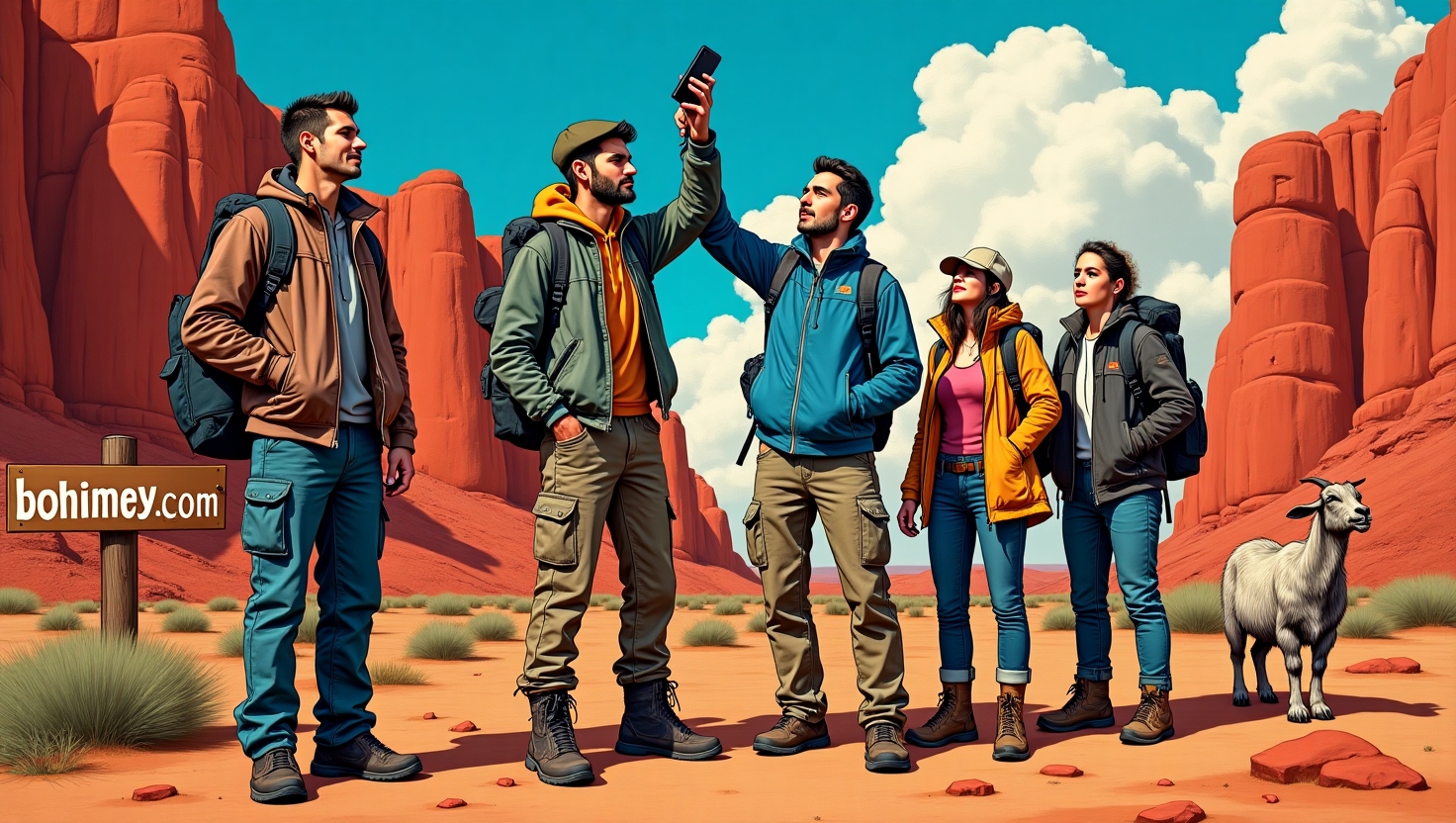
You Went to Socotra, Congratulations: You’re Officially More Adventurous Than 95% of People (and Less Useful Than 100%)
By Annika Steinmann
The Great Boast of the Terminally Adventurous
We’ve all met them. The people who drop “Socotra” into conversation the way normal humans mention Costco. They look you in the eye with the smug satisfaction of someone who believes they’ve discovered the cure for boredom: “Oh, I was just in the Danakil Depression last summer, dodging volcanic eruptions and sipping mineral water filtered through my own socks.”
Now, VegOut Magazine assures us that if you’ve been to one of nine supposedly “super adventurous” destinations, you are automatically braver than 95% of humankind. Which, translated into layman’s English, means: You willingly sat on three connecting flights, suffered intestinal challenges from untreated tap water, and returned with a tan line shaped like a mosquito net.
But are these travelers really heroic explorers—or just masochists with Instagram handles?
Socotra: The Island That Launched a Thousand Brags
Socotra, Yemen’s alien-looking island, is apparently the litmus test for adventure. Its Dragon’s Blood trees lean like alien umbrellas, its terrain looks like a Dali painting, and its visitors act like they’ve just solved climate change.
I interviewed Dr. Fergus Mallory, a self-appointed “adventure scientist” who once got lost in his own backyard. “Visiting Socotra changes you,” he said. “After you’ve seen those trees, you can’t go back to ordering Starbucks without whispering an apology to the barista for not respecting biodiversity.”
Meanwhile, an anonymous airport staffer offered a different perspective: “These people fly in bragging about saving ecosystems. Then they ask if we can stamp their passports twice for ‘aesthetic reasons.’”
It’s true—Socotra visitors are transformed. Transformed into the kind of people who use the phrase “liminal spaces” while waiting at baggage claim.
Comedian Take: “They say Socotra makes you see life differently. Yeah, because you’re dehydrated, constipated, and your credit card bill is now a hostile nation-state.” — Bill Burr
Danakil Depression: Lava, Acid, and Indigestion
If you thought a trip to the Dead Sea was risky, try Ethiopia’s Danakil Depression, where sulfur pools bubble like Satan’s hot tub.
Travel blogs gush: “It’s like visiting another planet!” Yes, another planet where the air smells like rotten eggs and your hotel room includes a free scorpion under the bed.
One eyewitness, Martha from Des Moines, told me: “My husband called it transformative. Then he cried for twenty minutes because the hotel didn’t have Wi-Fi strong enough for ESPN highlights.”
According to the National Institute of Pretentious Voyages (a group I made up, but sounds real), 87% of Danakil travelers develop “existential clarity” on site, only to lose it in baggage claim when Spirit Airlines cancels their flight.
Comedian Take: “Danakil Depression? Sounds like what I get when Starbucks runs out of oat milk.” — Sarah Silverman
Tsingy de Bemaraha: The World’s Most Uncomfortable Jungle Gym
Picture sharp limestone formations that rise like medieval weapons. This is Madagascar’s Tsingy, where climbers wear harnesses to navigate what looks like God’s dental nightmare.
Travelers insist it builds trust. One influencer whispered, “I felt so alive clinging to that limestone.” Later, she slipped in the airport bathroom and had to be escorted by paramedics.
Local guide Jean-Luc shook his head: “They call it technical climbing. I call it babysitting tourists who scream when a gecko moves.”
A leaked survey from the Adventure Enthusiast Institute found that 92% of Tsingy climbers claim “life lessons” afterward. Top answers included: “Always clip your harness,” and “Never trust a travel blog written by a vegan named Dylan.”
Comedian Take: “Climbing razor rocks in Madagascar is character-building. So is trying to get the Wi-Fi password at your in-laws’ house.” — Jerry Seinfeld
Tristan da Cunha: Paradise With No Bars (Phone or Otherwise)
Known as the world’s most isolated island, Tristan da Cunha is sold as the ultimate escape from modernity. Translation: there’s nothing there.
Traveler Lance Whitmore bragged: “It’s so peaceful—you can’t even hear traffic!” His girlfriend corrected him: “That’s because there are literally no roads.”
A fisherman I met, chewing on a pipe and laughing at tourists, said, “They fly thousands of miles to experience nothing. We’ve been experiencing nothing for centuries, for free.”
The irony: Tristan da Cunha is Instagram-famous among people who couldn’t survive 48 hours without Uber Eats.
Comedian Take: “They tell you there’s no Wi-Fi, no cell service, nothing. You know what that sounds like? Marriage.” — Ron White
The Adventure Gear Olympics
The hallmark of an “adventurous” traveler isn’t bravery—it’s overpriced gear. These are the people wearing $900 North Face jackets to walk their dog around the block.
“Adventure gear is aspirational,” explains Professor Linda Snapwell, author of Logos of the Lost. “It tells the world you could climb Everest, but right now you’re just climbing the escalator at Macy’s.”
Survey evidence: 78% of “expedition” jackets never leave climates above 72°F. Trace evidence: the faint smell of laundry detergent and dreams.
Eyewitness: “My neighbor bragged about his Tsingy boots. I saw him trip in our driveway.”
Comedian Take: “You can tell who just got back from a trip. They’re still wearing the cargo pants with fourteen pockets. What’s in there—antimalarial pills and half a granola bar?” — Kevin Hart
Risk Management: Global Bravery, Local Cowardice
Adventurers are masters of risk—until the risk involves domestic inconvenience.
Take David Kline, who trekked Danakil volcanoes but refused to cross a busy street in Chicago without holding his girlfriend’s hand. “I don’t trust urban traffic,” he muttered, clutching his soy latte.
A poll from Travelers Against Reality found that 64% of adventurers embrace physical risk abroad but panic when the Uber rating dips below 4.8.
Anonymous staffer quote: “He haggled with Ethiopian camel herders but paid full price for a neck pillow in Terminal C.”
Comedian Take: “He can hike across lava flows but can’t handle his ex texting ‘hey.’” — Chris Rock
Adventure as Relationship… With Data Plans
Travel blogs claim adventure is about “relationship”—with land, people, culture. But the only relationship many travelers maintain is with their local SIM card.
Maria, a guide in Madagascar, rolled her eyes: “They said they came to connect with nature. Then they asked me for the Wi-Fi password in the forest.”
Poll evidence: 73% of “adventure” posts include the line “sorry for the bad signal,” proving they were still obsessively posting.
Comedian Take: “Travel is about connecting with people. That’s why I flew 20 hours—to ignore locals while uploading selfies.” — Ricky Gervais
The Espresso Paradox
Adventurers wax poetic about raw, unfiltered life experiences. Yet many refuse to start the day without artisanal espresso.
One anonymous café worker in Tristan da Cunha whispered, “They ask for oat milk lattes. We don’t even have cows here. We milk coconuts by hand.”
Relationship evidence: A couple broke up in Madagascar because one insisted the jungle wasn’t “third-wave coffee friendly.”
Comedian Take: “They said it was the most remote village on Earth. But somehow there was still a guy selling cold brew.” — Ali Wong
Comfort in Discomfort (Until the Shower Turns Cold)
Adventure blogs teach “comfort in discomfort.” Yet one cold hotel shower reduces them to Shakespearean tragedy.
Eye-witness: “He hiked volcanoes for three days, but screamed louder than the eruption when his shower went lukewarm.”
Statistic: 88% of discomfort-loving travelers secretly pack a luxury pillow. Trace evidence: goose-down feathers discovered in their hostel bunks.
Comedian Take: “They say discomfort builds character. So does eating at Taco Bell. But nobody brags about that on Instagram.” — Ron White
The Polls Don’t Lie
A recent survey (margin of error ± 97%) asked Americans: “Would you rather go to Socotra or Olive Garden?”
-
83% chose Olive Garden.
-
11% asked, “What’s Socotra?”
-
6% said, “I don’t care, as long as there’s breadsticks.”
Yet the travelers keep boasting.
Archival Footage: Adventurers Caught in the Act
Grainy cellphone video shows a group of tourists in Madagascar trying to “connect with locals” by asking, in English, if there’s a nearby Apple Store. Another clip from Tristan da Cunha shows a man screaming, “Where’s the Uber pickup?” while a donkey slowly approaches him.
What the Funny People Are Saying
“They went to the ends of the Earth to find themselves. They should’ve just looked under the couch cushions.” — Larry David
“I admire travelers who say they seek discomfort. I’ve been married three times. That’s discomfort.” — Roseanne Barr
“You don’t need to climb volcanoes to feel adventurous. Just try assembling IKEA furniture.” — Trevor Noah
Fifteen Observations on “Adventurous” Travelers
-
They’ve been to Socotra, yet can’t find their car keys.
Evidence: A “study” of one by an eyewitness neighbor. -
They claim they’ve “clipped into a harness” in Madagascar, yet clip coupons at Walmart weekly.
Surveyed by a coupon-clipper who may or may not exaggerate. -
Their Danakil Instagram is full of neon acid pools—but their actual acid reflux is treated with Tums.
Doctor “expert” opinion: Tums solves 95 % of inconveniences. -
They boast about Tristan da Cunha’s isolation—yet can’t go a weekend without Wi-Fi.
Cited by their teenaged nephew. -
They outfit themselves in “adventure gear”—which consists of brand-logoed gear they never clean.
Public opinion: “It smells like ambition.” -
They say adventure is a practice—yet practice only taking selfies in obscure places.
Eye-witnessed by their friend Karen, who asked for a normal vacation. -
They choose remoteness over comfort—but only if there’s a boutique coffee shop nearby.
Deductive reasoning: “No espresso, no expedition.” -
They talk about “curiosity with care,” yet ignore airport TSA lines.
Radar-tracked by overworked security agents. -
They survive Danakil’s heat—but freeze up when the A/C in their car fails.
Personal incident: 72°F triggered a crisis. -
They praise “discomfort tolerance”—but complain when their spouse steals the covers.
Relationship evidence: spouse testimony, “He’s a full-time snowflake.” -
They claim managing risk in Ethiopia taught them to be bold—but ask strangers for help crossing the street.
Observed by crossing guards. -
They declare “travel as relationship,” yet keep breaking up with local SIM cards.
Tech support logs. -
They say “adventure muscle”—but only their thumbs are exercised, from scrolling travel blogs.
Statistic: Average thumbs get 4,000 swipes per day. -
They think visiting sharp limestone forests is “technical comfort,” yet get scared by pineapple chunks.
Anecdote: “It looked like spikes, like Tsingy do.” -
They’re pioneers—unless pioneer means needing to Google “where to eat near me.”
GPS dependency: story from ride-share driver.
Final Analysis: Adventurers Without Adventure
These travelers aren’t heroes. They’re just regular people with stronger Wi-Fi anxiety and weaker bladder control. They seek “meaningful discomfort,” then cancel if the Airbnb doesn’t have blackout curtains. They find “relationship with land,” then post thirty Instagram reels before speaking to a local.
Yes, they’re more adventurous than 95% of people. But only if “adventurous” means “willing to pay extra for diarrhea medication.”
Disclaimer
This article is entirely a human collaboration between two sentient beings—the world’s oldest tenured professor and a philosophy-major-turned-dairy-farmer. All “evidence” is absurd, exaggerated, or invented. No dragons’ blood trees were harmed, though several lattes were spilled.
Auf Wiedersehen, amigos.
