

Where Coffee Costs $7 and Sunshine Costs Your Sanity
Seattle: The City Where Gray Skies Are a Personality Trait
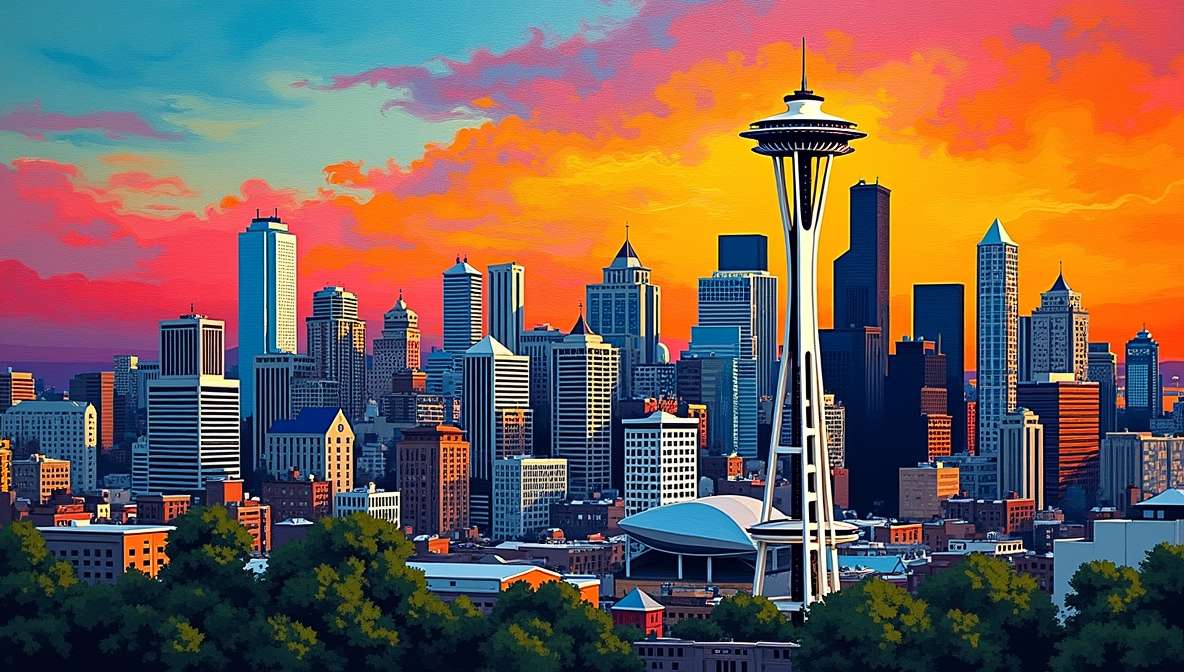
Seattle perches on the Puget Sound like a soggy testament to human adaptability, a city that has convinced hundreds of thousands of people that nine months of overcast drizzle constitutes acceptable living conditions. This Emerald City earned its nickname not from lush vegetation but from the mold growing on everything that stays still too long. The Space Needle punctures the perpetual cloud cover, serving as a constant reminder that somewhere above those clouds, the sun theoretically still exists. Mountains surround the city on all sides, visible approximately twelve days per year when the weather cooperates enough to reveal them.
The Weather: Fifty Shades of Gray Clouds
Seattle weather operates on a simple principle: rain, drizzle, mist, or the anticipation of one of these conditions. The city doesn’t get dramatic thunderstorms or torrential downpours that would at least provide entertainment value. Instead, it delivers a persistent, soul-crushing drizzle that falls with the regularity of a metronome and the enthusiasm of someone who’s given up on life. Locals claim they don’t use umbrellas, wearing this fact like a badge of honor, as if getting slowly soaked demonstrates toughness rather than stubbornness.
The famous “Seattle freeze” isn’t just social coldness but also literal temperature conditions that hover around 50 degrees for what feels like eternity. Summer arrives in July, lasts approximately six weeks, and features temperatures that residents treat like natural disasters despite barely reaching 80 degrees. According to The Seattle Times, the city averages 152 rainy days annually, though that number feels conservative to anyone who’s actually lived through a Seattle winter that starts in October and ends sometime around June.
Seasonal Affective Disorder as a Lifestyle
The lack of sunlight transforms vitamin D supplements from optional health products to essential survival tools. Residents discuss their light therapy lamps with the casualness other people mention coffee makers. The perpetual gloom creates a population that’s either completely adapted or slowly descending into seasonal depression, and sometimes both simultaneously. The weather perfectly matches Seattle’s reputation for introversion and flannel, as if the climate itself encourages people to stay inside and develop antisocial tendencies.
Coffee Culture: Where $7 Lattes Are Considered Reasonable
Seattle birthed Starbucks and apparently decided that one coffee chain wasn’t sufficient to express the city’s caffeination obsession. Coffee shops occupy every corner, sometimes multiple corners of the same intersection, creating a density that suggests residents require constant IV drips of espresso to function. These establishments serve drinks with names that sound like Italian poetry and prices that suggest the beans were hand-harvested by Olympic athletes and blessed by coffee deities.
Local roasters maintain fierce reputations and loyal followings, with residents arguing about which shops serve the best coffee with intensity usually reserved for religious debates. The third-wave coffee movement started here, transforming coffee from morning beverage to artisanal experience requiring extensive knowledge about bean origins, roasting methods, and brewing techniques. According to Seattle Met, the city contains more coffee shops per capita than anywhere else in America, proving that if you build sufficient coffee infrastructure, depressed people in rainy climates will come and overcaffeinate themselves into productivity.
Tech Industry: Where Hoodies Cost More Than Suits
Amazon has colonized Seattle like an aggressive corporate entity, constructing biospheres downtown and driving up real estate prices to levels that make long-time residents weep into their expensive lattes. The company employs tens of thousands of tech workers who flood neighborhoods with their six-figure salaries and complete inability to merge properly on I-5. Microsoft lurks in nearby Bellevue, providing the original tech presence that started Seattle’s transformation from port city to programmer playground.
Tech workers wear fleece vests and expensive sneakers like uniforms, identifying themselves without needing name tags. They discuss algorithms and cloud computing in coffee shops, apparently unaware that nobody around them cares about their sprint planning meetings. The influx of tech money has gentrified neighborhoods with efficiency that suggests hostile takeover rather than organic growth. According to GeekWire, the tech industry continues expanding despite everyone complaining about it, creating a situation where residents simultaneously benefit from economic growth and resent everything it represents.
Real Estate: Where Bungalows Cost What Mansions Should
Seattle real estate markets operate in dimensions where normal economic principles don’t apply and starter homes cost $800,000. Houses that would be teardowns in other cities somehow command prices that require dual tech incomes and generational wealth. Real estate listings describe properties using creative language: “charming” means old and possibly unstable, “cozy” means small enough to touch opposite walls simultaneously, “up-and-coming neighborhood” means currently sketchy but tech workers are arriving soon.
Bidding wars erupt over properties that haven’t been updated since the 1970s, with buyers waiving inspections and offering $200,000 over asking price. The median home price continues climbing despite everyone agreeing it’s unsustainable, creating a housing crisis that forces service workers to commute from increasingly distant suburbs. According to Zillow, Seattle home prices rank among America’s highest, proving that people will pay almost anything to live somewhere that rains constantly if that place also has good coffee and tech jobs.
Traffic: Where Rush Hour Lasts All Day
Seattle traffic operates on principles designed to punish anyone foolish enough to drive anywhere during daylight hours. I-5 functions as a parking lot that occasionally moves, creating commutes that transform twenty-minute distances into ninety-minute psychological endurance tests. The city added tolled express lanes that charge dynamic prices based on traffic, creating a real-time auction system where wealthy people pay to arrive slightly less late than everyone else.
The viaduct collapse and replacement with tunnels somehow made traffic worse, an achievement that required impressive incompetence or deliberately hostile planning. Bridges connecting Seattle to surrounding areas create bottlenecks where thousands of cars funnel through infrastructure designed for a smaller population. According to Washington State Department of Transportation, Seattle ranks among America’s most congested cities, information that surprises nobody who’s ever attempted to drive here during any hour that ends in “AM” or “PM.”
Pike Place Market: Tourist Trap With Actual Fish
Pike Place Market serves as Seattle’s primary tourist destination, a historic public market where fish throwers perform for crowds and overpriced produce attracts people who apparently enjoy paying $8 for a single apple. The original Starbucks location features lines that wrap around corners, filled with tourists photographing a coffee shop that looks identical to thousands of other Starbucks except this one has historical significance and longer wait times.
The market sprawls across multiple levels, featuring artisan crafts, flower vendors, and the famous gum wall that’s exactly what it sounds like and somehow considered an attraction rather than biohazard. Street performers play music ranging from talented to “learning their instrument in public,” while tourists navigate crowds that make movement a full-contact sport. According to Pike Place Market, the market attracts millions of visitors annually, all seeking authentic Seattle experiences and leaving with overpriced souvenirs and questionable memories of throwing fish.
Neighborhoods: A Patchwork of Distinct Personalities and Parking Problems
Capitol Hill maintains Seattle’s LGBTQ+ center and hipster headquarters, featuring dive bars, boutiques selling vintage clothes at non-vintage prices, and restaurants serving fusion cuisine that shouldn’t work but does. The neighborhood attracts young professionals and artists who can’t quite afford Queen Anne but won’t admit they’re being slowly pushed to cheaper areas. Street art covers buildings, providing Instagram opportunities for people who moved here last year and already claim they’re “true Seattleites.”
Ballard transformed from Scandinavian fishing village to craft brewery destination, featuring more taprooms than seems physically possible in one neighborhood. The locks connecting Puget Sound to Lake Union attract tourists watching boats navigate water level changes, which is either fascinating engineering or the most boring tourist attraction depending on your interest in maritime infrastructure. Fremont declares itself “the center of the universe” with characteristic Seattle irony, hosting a solstice parade featuring naked cyclists that’s either liberating expression or public indecency that somehow became tradition.
Pioneer Square: Historic Charm Meets Urban Grit
Pioneer Square offers historic architecture and Seattle’s original downtown, now featuring homeless encampments that the city addresses through committees and initiatives that produce reports but not solutions. The underground tour reveals the city’s past, taking visitors through subterranean passages that exist because Seattle decided raising street levels was easier than proper urban planning. The neighborhood perfectly captures Seattle’s contradictions: beautiful historic buildings and persistent social problems existing simultaneously while everyone argues about solutions.
Food Scene: Farm-to-Table and Four-Dollar Toast
Seattle’s culinary scene embraces farm-to-table dining with religious fervor, serving locally-sourced ingredients at prices suggesting the farmers hand-delivered everything via golden carriages. Restaurants list the specific farms providing ingredients, information that supposedly justifies charging $32 for a salad. The city invented the $4 toast, convincing people that bread costs more when artisanal bakers make it and fancy butter accompanies it.
Seafood dominates menus, with salmon appearing in forms ranging from traditional grilled to poke bowls to items where salmon seems shoehorned in because Seattle restaurants apparently have salmon quotas. Sushi restaurants proliferate despite being thousands of miles from Japan, serving raw fish to people who trust that supply chains and refrigeration make this reasonable. According to Eater Seattle, the restaurant scene continues expanding, with new concepts opening weekly and closing slightly less frequently, creating dining landscapes that require constant attention to remain current.
Outdoor Culture: Where Gore-Tex is Formal Wear
Seattle residents maintain aggressive outdoor enthusiasm, hiking, kayaking, and camping despite weather that actively discourages these activities. The Cascades and Olympics provide mountain access for residents who apparently enjoy trudging through mud and rain to experience nature that’s mostly obscured by fog. REI headquarters in Seattle feels appropriate, as if the outdoor retailer recognized that people who voluntarily live here need maximum gear to survive their recreational choices.
Everyone owns expensive rain jackets, hiking boots, and outdoor equipment that costs more than reasonable people spend on vehicles. The outdoor culture creates social pressure where not hiking or climbing or kayaking marks you as somehow deficient, despite these activities being optional rather than mandatory. Lake Washington and Lake Union provide water access for kayakers, paddleboarders, and people who apparently don’t mind that the water temperature rarely exceeds “hypothermia-adjacent.”
The Seattle Freeze: Social Coldness as Culture
The Seattle Freeze describes locals’ reputation for superficial friendliness that never develops into actual friendship, creating social dynamics that make newcomers feel perpetually excluded. Seattleites will chat pleasantly but never actually follow through on vague plans to “hang out sometime,” creating a city of polite acquaintances rather than genuine connections. The phenomenon reflects either cultural preference for privacy or collective social dysfunction, depending on whether you’re defending it or criticizing it.
Making friends in Seattle apparently requires extensive effort, existing social networks, or accepting that your closest relationships will be with baristas who know your coffee order. The freeze combines with weather-induced isolation to create a city where loneliness is common despite dense population. According to Thrillist, the Seattle Freeze remains one of transplants’ biggest complaints, suggesting that maybe Seattleites aren’t actually as friendly as they pretend to be or that newcomers just need to try harder to break through decades of cultural conditioning.
Conclusion: The City That’s Beautiful When You Can See It
Seattle remains one of America’s most livable cities if you can tolerate rain, traffic, and social coldness as baseline conditions. Visitors leave either enchanted by the mountains, water, and culture or depressed by the weather and wondering why people voluntarily live somewhere that requires vitamin D supplements and light therapy. The city’s greatest trick is convincing people that paying exorbitant housing costs to experience perpetual gloom is worthwhile because of coffee, tech jobs, and occasional mountain views. Come for the Space Needle, stay because your tech job’s stock options haven’t fully vested, leave when you finally calculate how many actual sunny days you’ve experienced and realize the number is depressingly low but somehow you’re still considering returning because Stockholm Syndrome is apparently real.
