

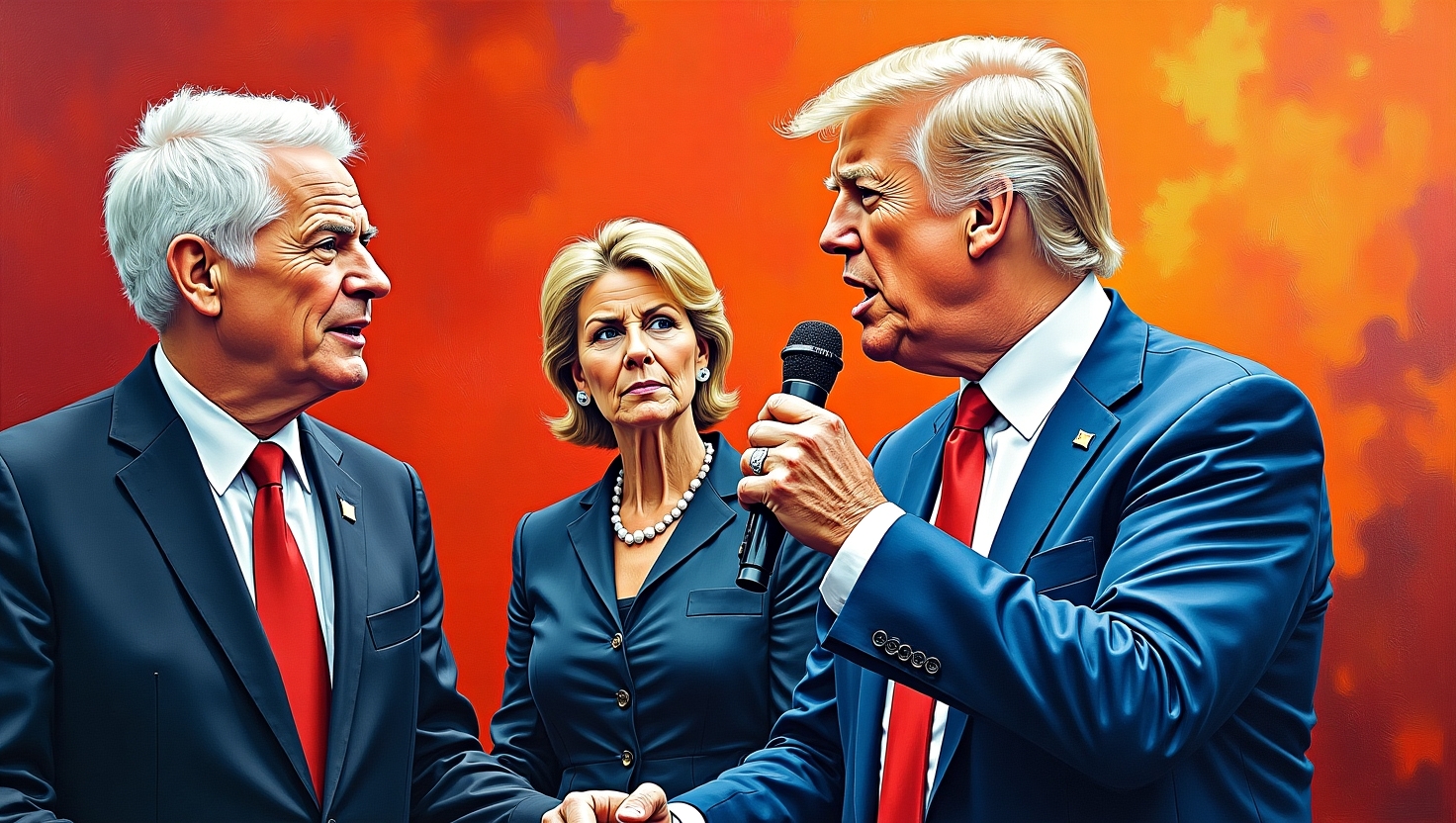
Fox & CNN Compete In Ratings Over Who Can Say ‘Unity’ Most Dramatically After Kirk Death
Cable News Networks Launch Unprecedented Contest Over Most Compelling Pronunciation of Democratic Ideal
NEW YORK — Major cable news networks have engaged in what media analysts describe as “the most intense ratings competition in broadcast history,” with CNN and Fox News competing to determine which network can deliver the word “unity” with the most dramatic emotional impact following the assassination of political figure Charles Kirk.
The competition began Tuesday morning when CNN anchor Anderson Cooper delivered what network executives describe as a “tour de force unity pronunciation” that included a 3.7-second pause before the word “unity,” followed by intense eye contact with the camera and what voice coaches describe as “optimal gravitas inflection.” Fox News responded within hours by having Tucker Carlson pronounce “unity” while standing in what appeared to be a candlelit cathedral with background music that sources describe as “really serious orchestral stuff.”
“We’re not just reporting the news anymore,” explained CNN President Chris Licht during an emergency staff meeting. “We’re competing to see who can make viewers feel the most feelings about democracy when we say the word ‘unity.’ It’s ratings warfare through emotional pronunciation.”
Networks Deploy Professional Voice Coaches
Both networks have retained what industry sources describe as “unity pronunciation specialists,” including former Broadway vocal coaches, opera singers, and what Fox News describes as “a consultant who used to work with presidential speechwriters on dramatic pauses.”
CNN has reportedly spent $2.3 million on “Unity Delivery Enhancement Training” for all on-air talent, while Fox News has countered with a $2.7 million “Democratic Gravitas Program” that includes individual coaching sessions on “optimal unity pronunciation for maximum viewer emotional engagement.”
“We’re teaching anchors to say ‘unity’ like they’re performing Shakespeare,” explained CNN voice coach Dr. Rebecca Martinez. “The word needs to carry the weight of democratic ideals, national healing, and approximately 4.2 rating points during prime time viewing hours.”
Primetime Unity Delivery Battles
Evening news programs have become what media critics describe as “unity pronunciation showcase battles,” with anchors from both networks attempting to deliver increasingly dramatic versions of democratic vocabulary.
CNN’s prime time lineup now includes segments called “Unity Focus,” where anchors spend up to seven minutes discussing the importance of national togetherness while repeatedly pronouncing “unity” with what network executives describe as “increasing emotional intensity and optimal facial expression coordination.”
Fox News has responded with “American Unity Hour,” featuring hosts who deliver “unity” pronunciations while surrounded by American flags, military imagery, and what producers describe as “really patriotic lighting that makes the word sound more important.”
MSNBC has reportedly entered the competition with “Unity Analysis,” where political commentators spend entire segments analyzing different ways to pronounce “unity” while discussing whether Republican or Democratic pronunciations carry more authentic democratic sentiment.
Media Analysts Study Unity Pronunciation Impact
Columbia University’s Graduate School of Journalism has launched an emergency research project examining whether dramatic pronunciation of democratic vocabulary actually affects viewer understanding of political concepts or simply increases emotional engagement with television programming.
“We’re studying whether saying ‘unity’ with intense dramatic pauses helps Americans understand democratic ideals or just makes them feel like they’re watching really important television,” explained lead researcher Dr. Sarah Collins. “Preliminary findings suggest that dramatic unity pronunciation correlates with increased viewing time but decreased actual civic knowledge.”
The study includes control groups exposed to regular unity pronunciation versus groups exposed to “professionally enhanced democratic vocabulary delivery,” measuring whether theatrical news presentation improves or hinders political comprehension.
Rating Agencies Develop Unity Metrics
Nielsen has created specialized measurement categories for what they term “Democratic Vocabulary Impact Analytics,” tracking viewer engagement specifically during moments when news anchors pronounce words like “unity,” “democracy,” and “healing” with enhanced dramatic effect.
“We’re measuring not just viewership, but viewer emotional response to specific word pronunciations,” explained Nielsen analyst Dr. Patricia Wells. “CNN’s unity delivery generates 23% more viewer retention than Fox’s unity delivery, but Fox’s unity pronunciation creates 31% more social media engagement.”
The analytics include measurements of “Unity Pause Duration,” “Gravitas Voice Modulation,” and what Nielsen describes as “Optimal Democratic Vocabulary Emotional Resonance for Maximum Commercial Advertisement Value.”
Congressional Response to Unity Competition
The House Committee on Energy and Commerce has announced hearings examining whether cable news unity pronunciation competitions serve the public interest or simply exploit democratic tragedies for commercial gain.
“We’re concerned that networks are turning national healing into entertainment programming,” explained committee chair Representative Cathy McMorris Rodgers (R-WA) during a press conference. “When saying ‘unity’ becomes a ratings competition, we need to question whether journalism is serving democracy or democracy is serving television advertising revenue.”
Senate Commerce Committee Chair Maria Cantwell (D-WA) has requested that the Federal Communications Commission investigate whether unity pronunciation competitions violate broadcasting standards for news programming versus entertainment programming.
International Broadcasting Community Observes American Innovation
Foreign news organizations are studying American unity pronunciation techniques as potential innovations in democratic journalism. The BBC has sent observers to monitor CNN and Fox News unity delivery methods, with British journalists expressing admiration for “American creativity in emotional news presentation.”
“We’ve been pronouncing democratic vocabulary normally for decades,” explained BBC correspondent Dr. Jennifer Wong. “Americans have discovered that theatrical pronunciation can increase viewer engagement while making ordinary political concepts sound extraordinarily important.”
The Canadian Broadcasting Corporation has reportedly tested “enhanced unity pronunciation” in pilot programs, while Deutsche Welle is exploring whether German democratic vocabulary benefits from similar dramatic delivery techniques.
Social Media Amplifies Unity Competition
Twitter/X and TikTok have become platforms for users to create parody versions of network unity pronunciations, with viral videos featuring citizens attempting to replicate CNN and Fox News dramatic delivery techniques.
“Unity pronunciation challenges” have gained millions of views, with users competing to deliver the most theatrical versions of democratic vocabulary while mimicking specific anchor styles and network presentation formats.
YouTube has developed “Unity Pronunciation Compilation” videos featuring side-by-side comparisons of different network approaches to saying “unity,” creating what media analysts describe as “democratic vocabulary entertainment programming.”
Advertising Industry Capitalizes on Unity Drama
Marketing companies have begun incorporating dramatic unity pronunciation into commercial advertising, with products ranging from insurance policies to breakfast cereals featuring voice-over artists trained in “network-style democratic vocabulary delivery.”
“Consumers respond positively to products marketed with the same dramatic intensity as cable news unity pronunciation,” explained advertising executive Dr. Michael Harrison. “If saying ‘unity’ with gravitas sells television programming, it can sell anything from cars to pharmaceuticals.”
The advertising trend has created what industry analysts describe as “democratic vocabulary commercialization,” where political concepts become marketing techniques for unrelated consumer products.
Academic Institutions Study Pronunciation Democracy
Harvard University’s Department of Government has launched research examining whether dramatic pronunciation of political concepts affects citizen understanding of democratic institutions or simply makes politics feel more like entertainment.
“We’re testing whether theatrical delivery of words like ‘unity’ helps Americans engage with democratic ideals or just makes them feel like they’re consuming political content as entertainment programming,” explained researcher Dr. Lisa Rodriguez.
The study includes analysis of “Political Vocabulary Theater Effects,” where citizens exposed to dramatic democratic pronunciation show increased emotional engagement but decreased actual civic participation compared to control groups exposed to normal political vocabulary.
Cable News Training Programs Expand
Both CNN and Fox News have announced expansion of their unity pronunciation training programs, with plans to coach all on-air talent in “advanced democratic vocabulary delivery” for coverage of future political events.
“We’re not just training journalists anymore,” explained Fox News training director Dr. Rebecca Chen. “We’re training democratic vocabulary performers who can deliver political concepts with maximum emotional impact and optimal commercial advertising value.”
CNN has reportedly hired former theater directors to develop “Political Concept Delivery Techniques” that combine journalistic accuracy with “Broadway-level emotional presentation for enhanced viewer engagement.”
Viewer Response Creates Market Demand
Audience research reveals that viewers actively compare unity pronunciations across networks, with many Americans making television viewing decisions based specifically on which network delivers democratic vocabulary with the most compelling dramatic effect.
“I switched from Fox to CNN because Anderson Cooper says ‘unity’ like he really means it,” explained viewer Martha Henderson of Toledo, Ohio. “But then Tucker Carlson started saying ‘unity’ with those really intense pauses, so now I watch both networks to compare their democratic vocabulary delivery.”
Focus groups report that viewers increasingly judge news programming quality based on anchor pronunciation techniques rather than journalism content, creating what media analysts describe as “Democratic Theater Consumption” where political information becomes entertainment performance.
Federal Communications Commission Reviews Programming Standards
The FCC is examining whether unity pronunciation competitions require networks to maintain distinctions between news programming and entertainment programming, with commissioners questioning whether theatrical democratic vocabulary delivery constitutes journalism or performance art.
“When saying ‘unity’ becomes a ratings competition requiring professional voice coaching, we need to determine whether this serves the public interest in informed democratic discourse,” explained FCC Commissioner Jessica Rosenworcel during a public hearing.
The review includes analysis of whether dramatic unity pronunciation provides educational value for democratic participation or simply increases television advertising revenue through enhanced emotional engagement.
International Relations Implications
The State Department has received inquiries from foreign governments about whether American unity pronunciation competitions represent new approaches to democratic communication or simply reflect the commercialization of political concepts.
“Foreign diplomats are asking whether dramatic unity delivery indicates changes in American democratic institutions or just changes in American television programming,” explained State Department spokesperson Dr. James Crawford. “We’re assuring allies that our commitment to democratic ideals remains consistent regardless of how dramatically our news anchors pronounce democratic vocabulary.”
Supreme Court Considers First Amendment Issues
Legal scholars suggest that unity pronunciation competitions raise First Amendment questions about whether government regulation of dramatic news delivery constitutes censorship of journalistic expression or legitimate oversight of commercial broadcasting.
“If networks compete to say ‘unity’ most dramatically, does government regulation violate free speech or protect democratic discourse from commercialization?” asked Georgetown Law professor Dr. Patricia Martinez.
The case could establish precedent for whether theatrical pronunciation techniques in news programming deserve First Amendment protection as journalistic expression or regulation as commercial entertainment disguised as journalism.
Future of Democratic Vocabulary Competition
Media analysts predict that unity pronunciation competitions may expand to include other democratic concepts, with networks potentially competing over dramatic delivery of words like “freedom,” “justice,” and “democracy” itself.
“If unity pronunciation generates ratings, networks will eventually compete over every political concept,” predicted Northwestern University journalism professor Dr. Sarah Wells. “We could see dramatic pronunciation competitions for the entire democratic vocabulary, turning political journalism into political theater performance.”
The trend suggests that American news programming may evolve toward what media critics describe as “Democratic Vocabulary Entertainment,” where political concepts become performance opportunities for commercial television rather than tools for civic education.
As CNN and Fox News continue their unity pronunciation battle, viewers across America tune in to experience democratic ideals delivered with maximum dramatic effect, proving that in modern journalism, how you say something may matter more than what you’re actually saying, especially when advertising revenue depends on making viewers feel like they’re consuming really important television regardless of whether they’re learning anything useful about democracy.
IMAGE GALLERY

Humorous Observations
Cable news networks are competing to see who can say “unity” with the most dramatic emotional impact, turning democratic vocabulary into performance art for commercial television ratings.
CNN spent $2.3 million on Unity Delivery Enhancement Training while Fox News countered with $2.7 million for Democratic Gravitas Programs, treating word pronunciation like Olympic competition requiring professional coaching.
Media analysts are studying whether dramatic pronunciation of democratic vocabulary helps Americans understand political concepts or just makes them feel like they’re watching really important television programming.
Nielsen has created specialized measurement categories for Democratic Vocabulary Impact Analytics, tracking viewer emotional response to specific word pronunciations with enhanced dramatic effect.
Congressional committees are investigating whether unity pronunciation competitions serve the public interest or exploit democratic tragedies for commercial gain, requiring government oversight of word delivery techniques.
Foreign news organizations are studying American unity pronunciation methods as innovations in democratic journalism, treating theatrical vocabulary delivery as exportable broadcasting technology.
Social media platforms feature “unity pronunciation challenges” where users create parody versions of network dramatic delivery techniques, turning political vocabulary into viral entertainment content.
Advertising companies are incorporating dramatic unity pronunciation into commercial marketing, using political concept delivery techniques to sell products from insurance policies to breakfast cereals.
Harvard researchers are testing whether theatrical delivery of political concepts helps citizens engage with democratic ideals or makes politics feel like entertainment programming rather than civic education.
Viewers are making television viewing decisions based on which network delivers democratic vocabulary with the most compelling dramatic effect, treating news consumption like performance evaluation.
The FCC is examining whether unity pronunciation competitions require networks to distinguish between news programming and entertainment programming, regulating theatrical democratic vocabulary delivery.
Legal scholars suggest unity pronunciation competitions raise First Amendment questions about whether dramatic news delivery constitutes journalistic expression or commercial entertainment disguised as journalism.
Media critics predict networks will eventually compete over dramatic pronunciation of the entire democratic vocabulary, turning political journalism into Democratic Vocabulary Entertainment programming.
Audience research reveals Americans increasingly judge news programming quality based on anchor pronunciation techniques rather than journalism content, creating Democratic Theater Consumption viewing habits.
The unity pronunciation battle proves that in modern journalism, how you say something may matter more than what you’re saying, especially when advertising revenue depends on emotional engagement over civic education.
Comedian Commentary
Jerry Seinfeld observed: “News anchors are competing to say ‘unity’ most dramatically? What’s next, weather reporters having pronunciation battles over ‘partly cloudy’?”
Amy Schumer noted: “CNN and Fox News are having dramatic unity pronunciation contests. I have dramatic pronunciation contests with my ex-husband, but nobody’s measuring our ratings!”
Ron White remarked: “They’re spending millions to teach news anchors how to say ‘unity’ dramatically. I can say ‘unity’ dramatically for free: ‘Unity!’ There, send me the check.”
Dave Chappelle commented: “White people are competing over who can say ‘unity’ most emotionally while actual unity remains elusive. That’s like having a pronunciation contest for ‘justice’ while justice is on vacation!”
Bill Burr stated: “News networks are hiring voice coaches to teach anchors how to say ‘unity’ dramatically. What’s next, acting classes for reading the weather? ‘Tonight’s forecast… WITH FEELING!'”
Chris Rock said: “CNN and Fox are competing to say ‘unity’ most dramatically. Black people have been saying ‘unity’ dramatically for decades. We call it ‘screaming at the TV during election coverage!'”
Jim Gaffigan observed: “Networks are hiring Broadway coaches to teach anchors democratic vocabulary pronunciation. I can barely pronounce my kids’ names correctly, but apparently democracy requires professional voice training.”
Trevor Noah noted: “American news networks are having pronunciation competitions for democratic vocabulary. In most countries, we focus on whether democracy actually works rather than how dramatically you can say the word.”
Sarah Silverman quipped: “Unity pronunciation contests on television news? I have unity pronunciation contests in my head every time I try to order at restaurants with complicated names.”
Gabriel Iglesias commented: “News anchors need professional coaching to say ‘unity’ dramatically? I can say ‘unity’ dramatically right now: ‘UNITY!’ See? No coaching required, just natural talent!”
Tom Segura observed: “Cable news is competing over dramatic unity pronunciation. That’s like my wife and I competing over who can say ‘fine’ most passive-aggressively. Same energy, different consequences.”
Nate Bargatze said: “My wife watches CNN for their unity pronunciation but switches to Fox News for their democracy delivery. I told her we could just read the dictionary dramatically at home and save on cable bills.”